.webp)

.svg)
.svg)

.svg)
.webp)

.svg)
.svg)


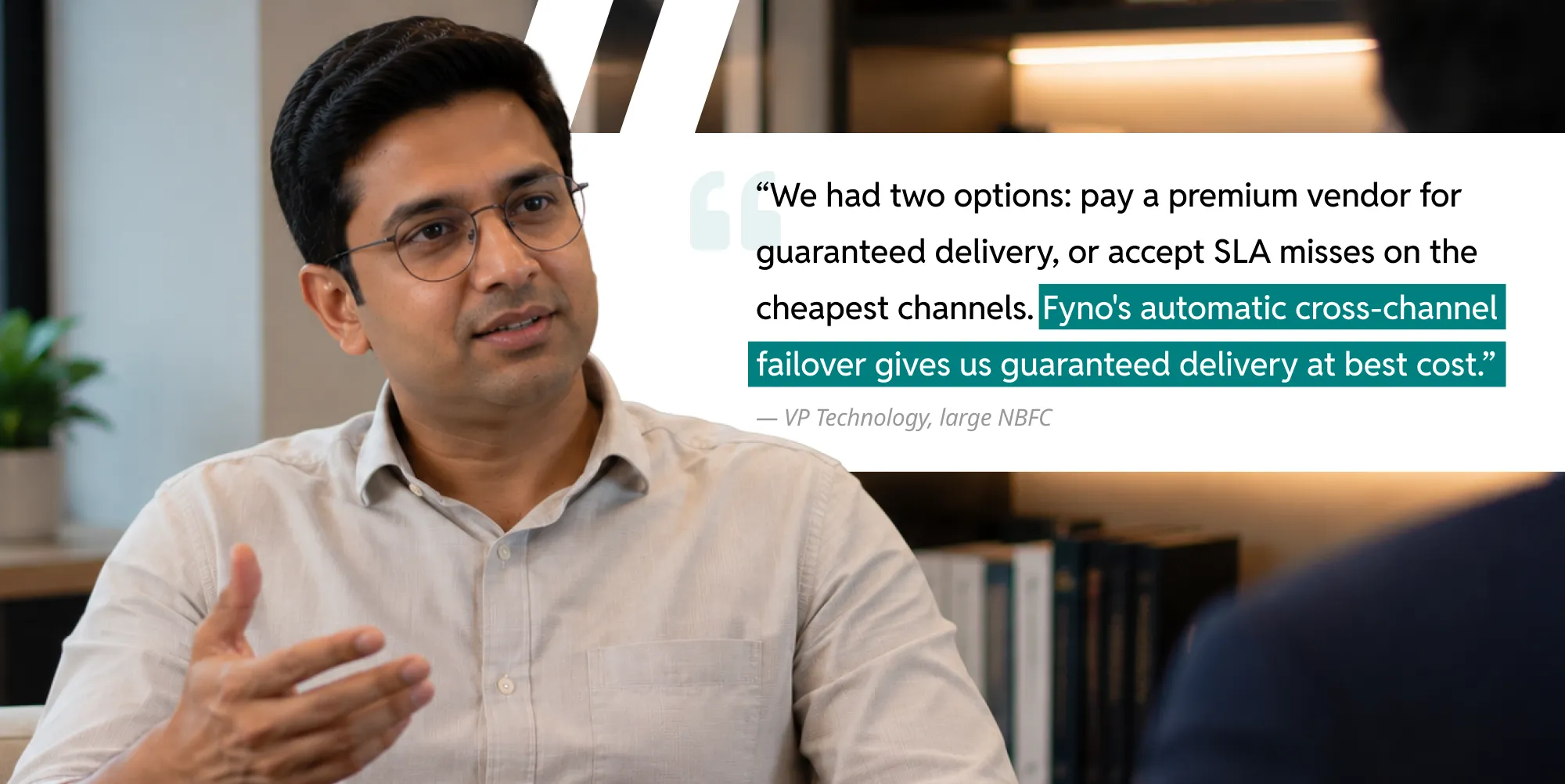
Stop choosing between cost and delivery performance.
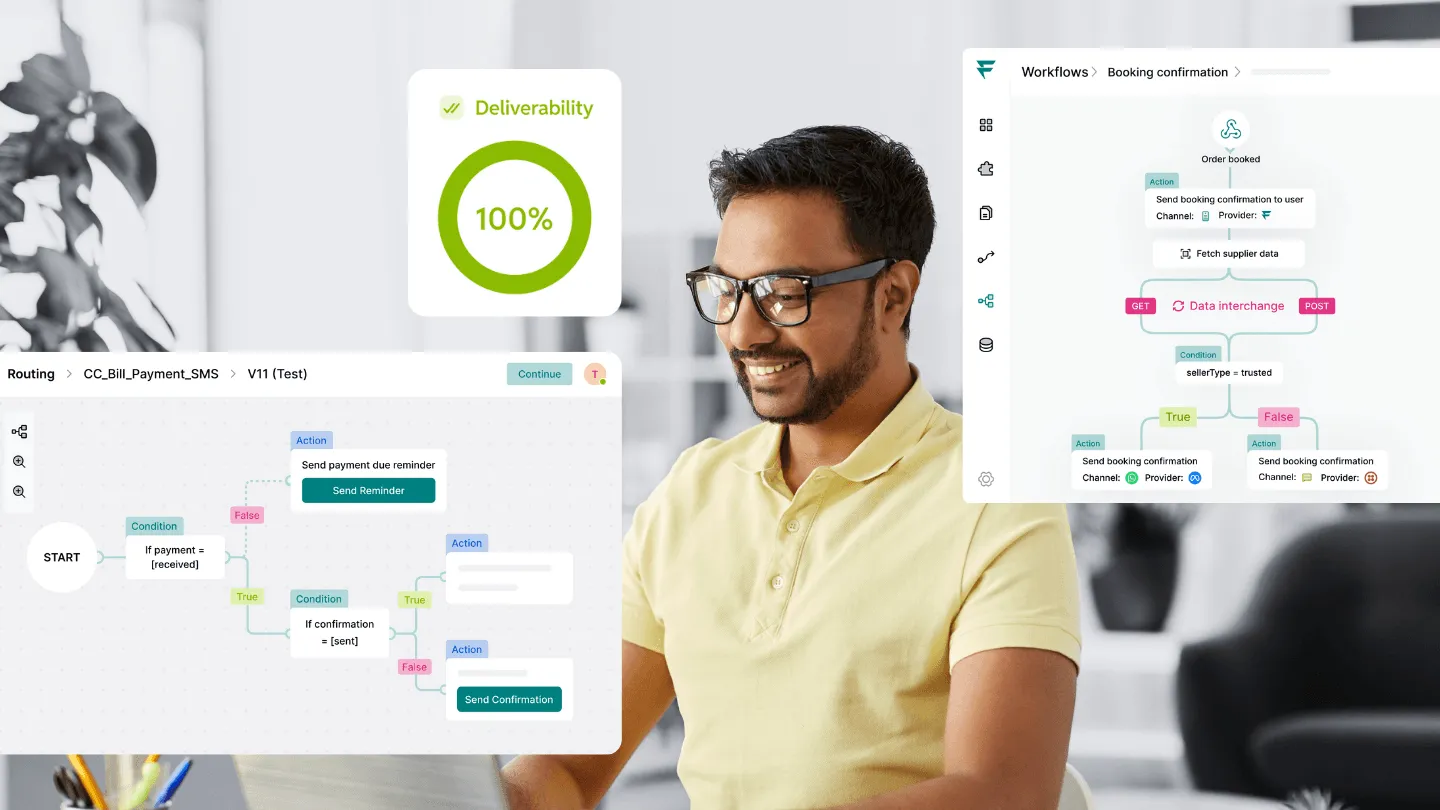
NO-CODE ROUTING
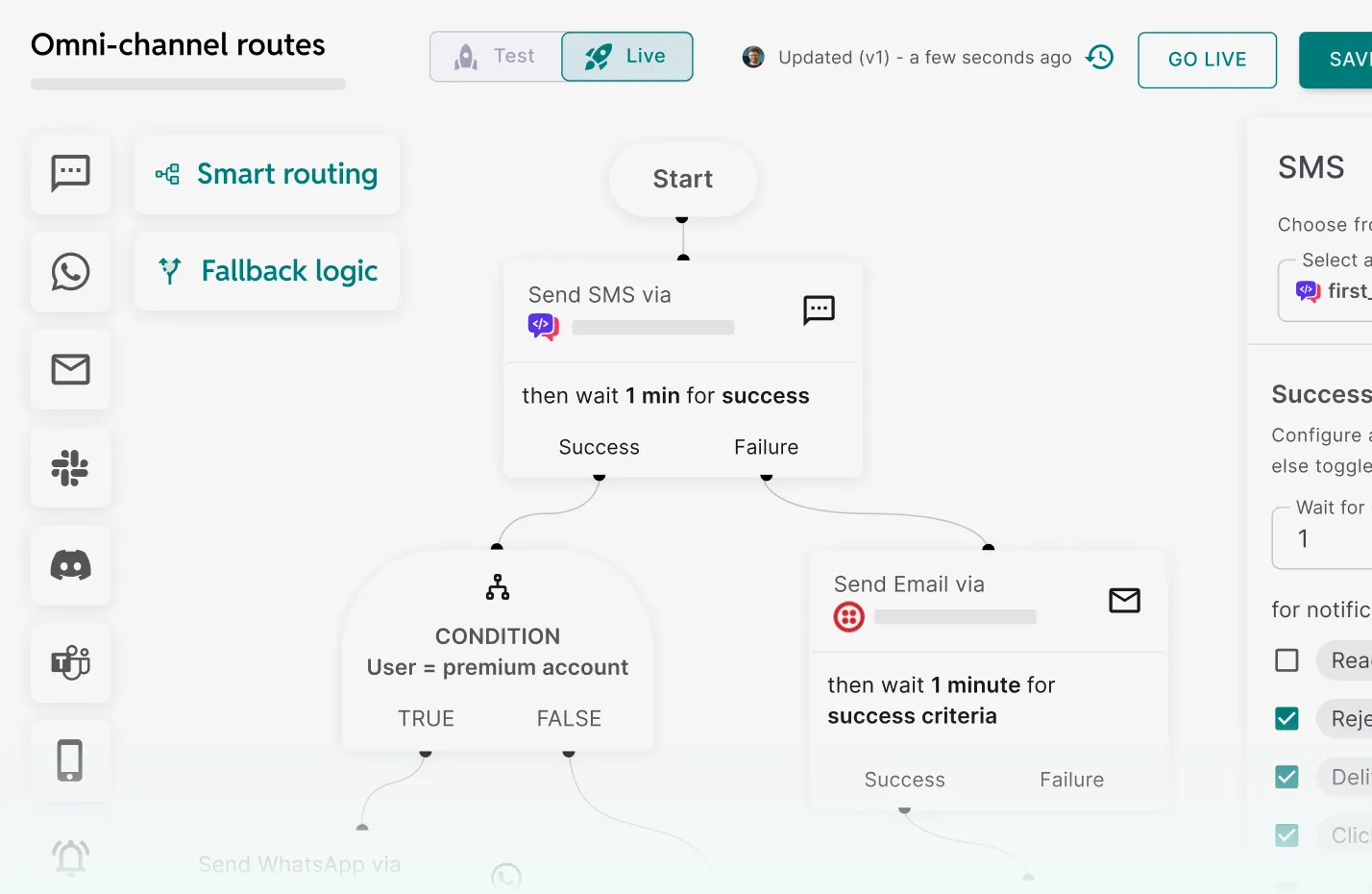
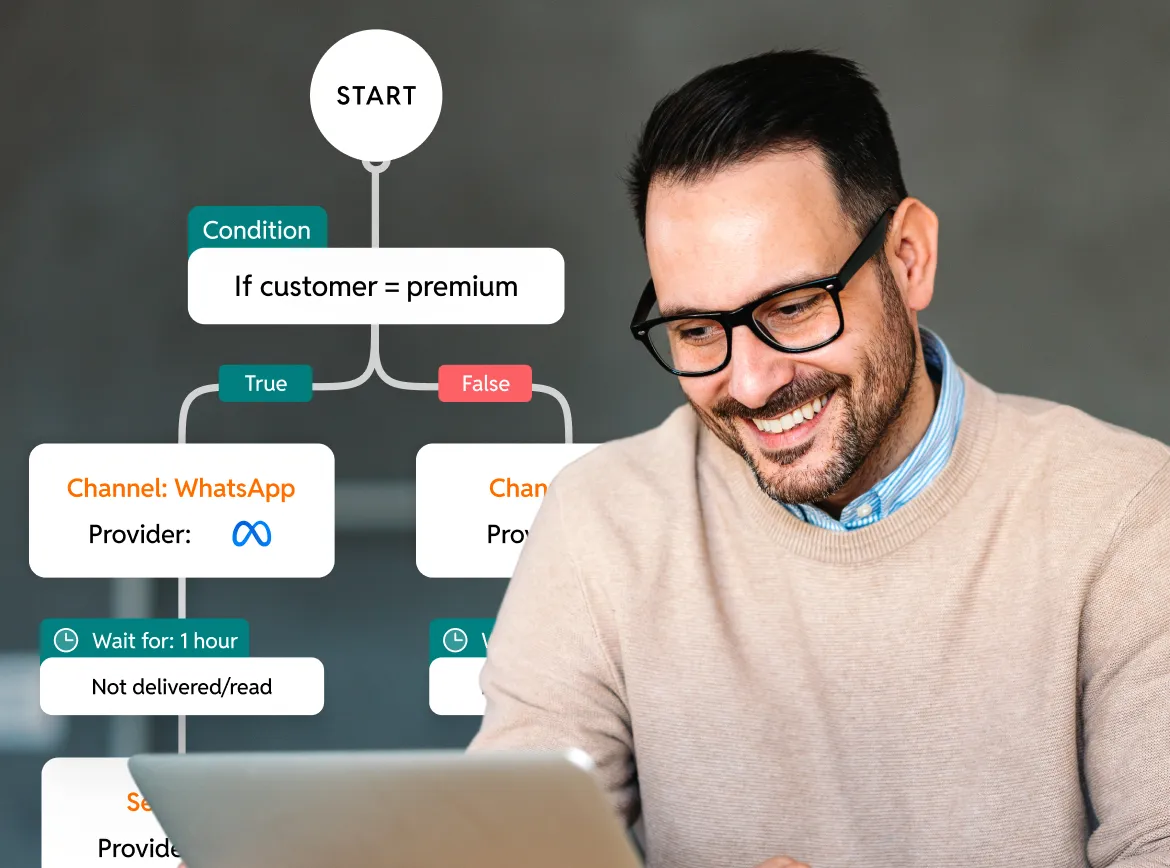
Configure routing rules without engineering involvement
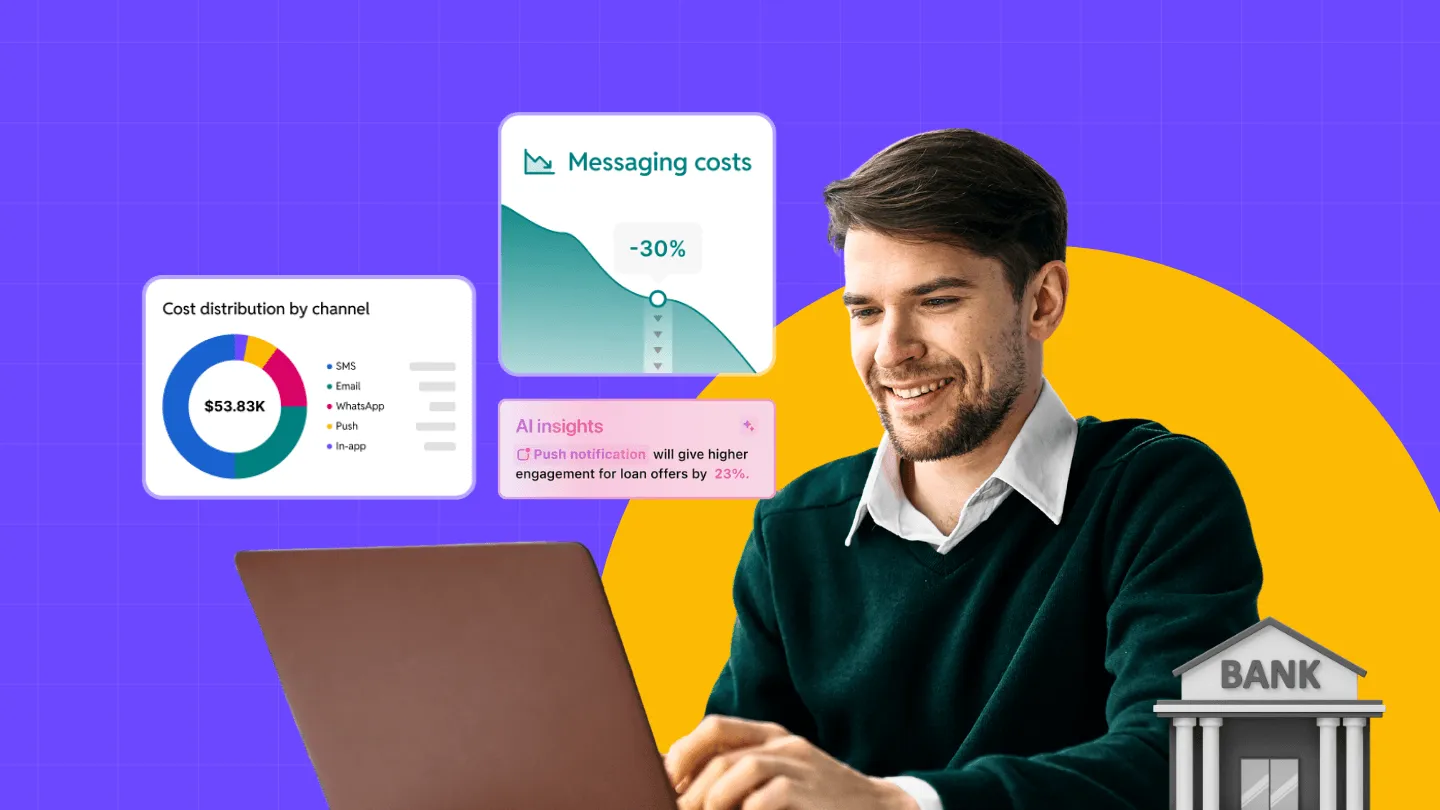
COST-AWARE ROUTING
Spend less on every send
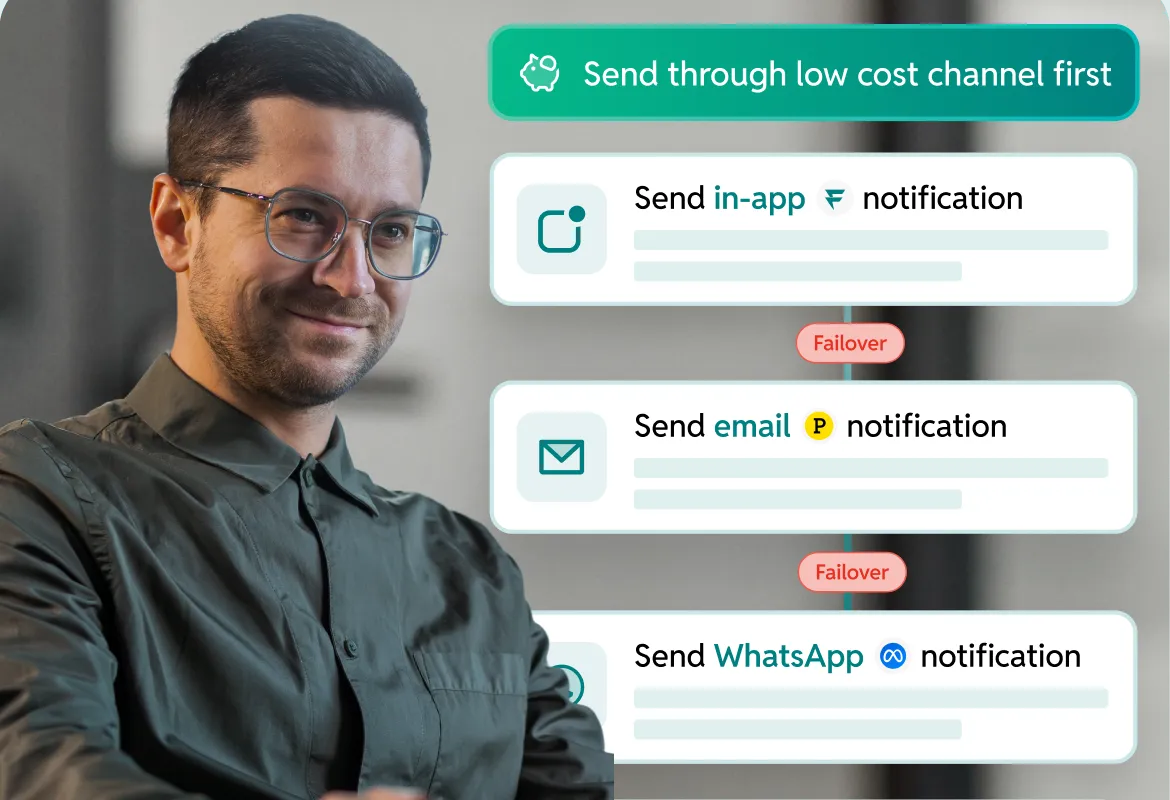
Route to the cheapest vendor that meets your delivery threshold. Cost evaluated per send. No manual rules, no static priority lists, no engineering ticket.
PERFORMANCE-BASED ROUTING
Real-time delivery routing
Live delivery rates, latency, and vendor health inform every routing decision. Underperforming vendors are automatically deprioritised.
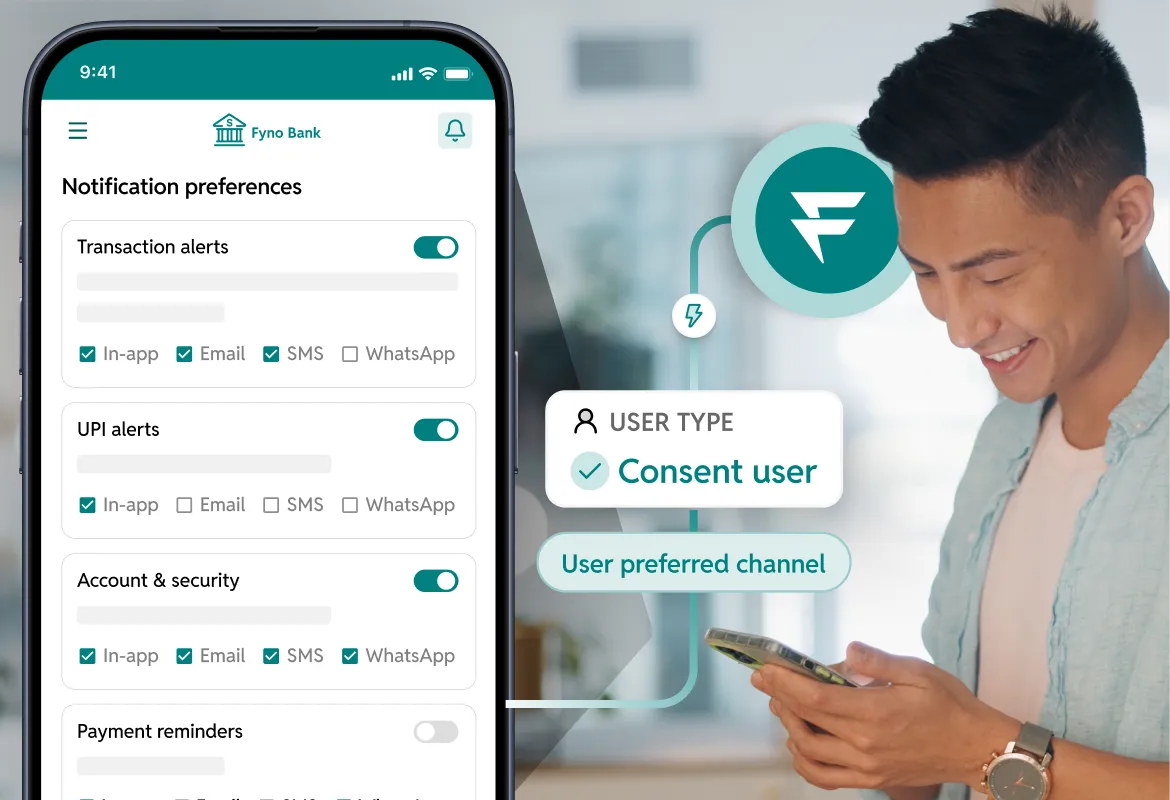
CONSENT-BASED ROUTING
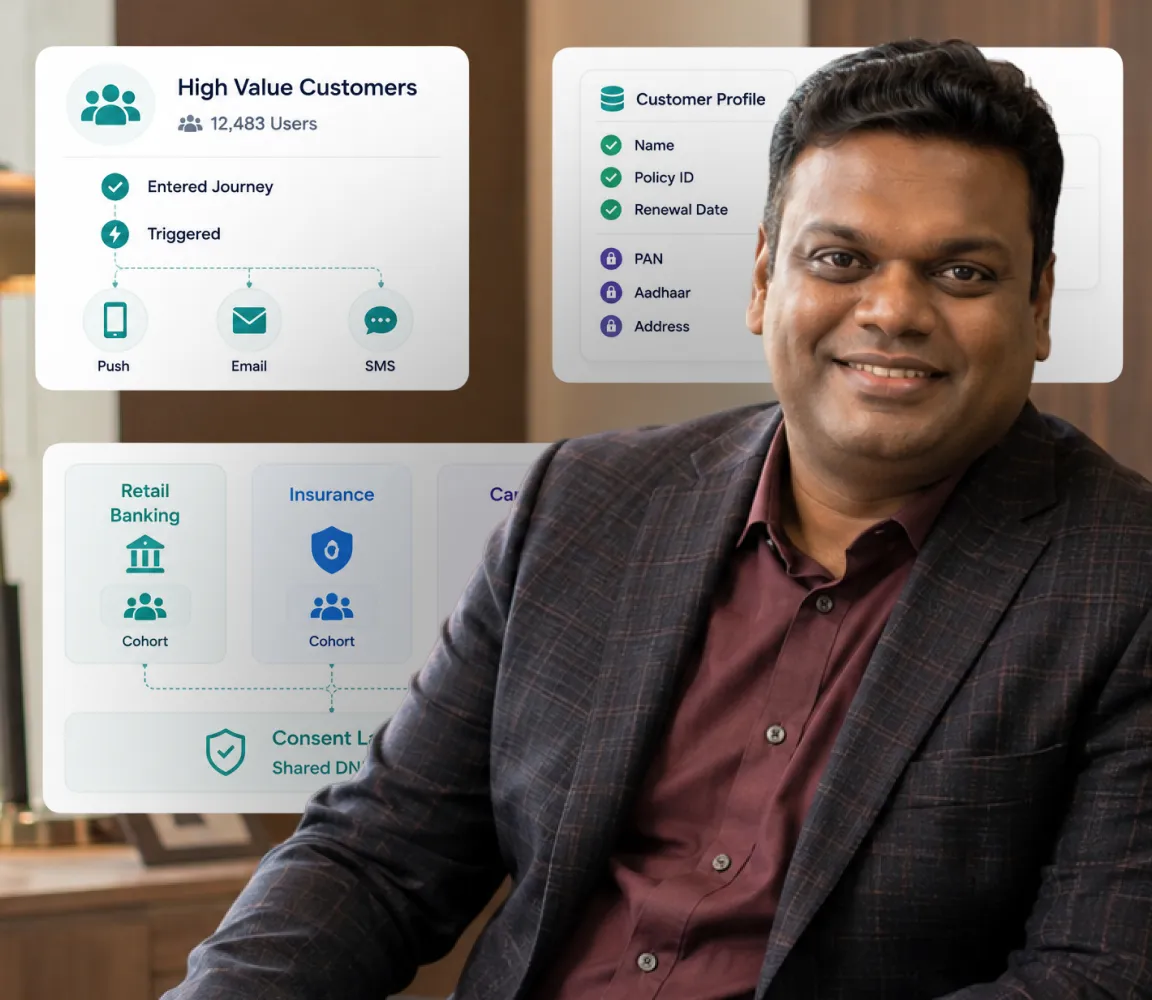
Enforce consent at routing
Consent checked at the routing layer before every send. Channels without consent blocked automatically. DPDP-compliant routing without a separate workflow.
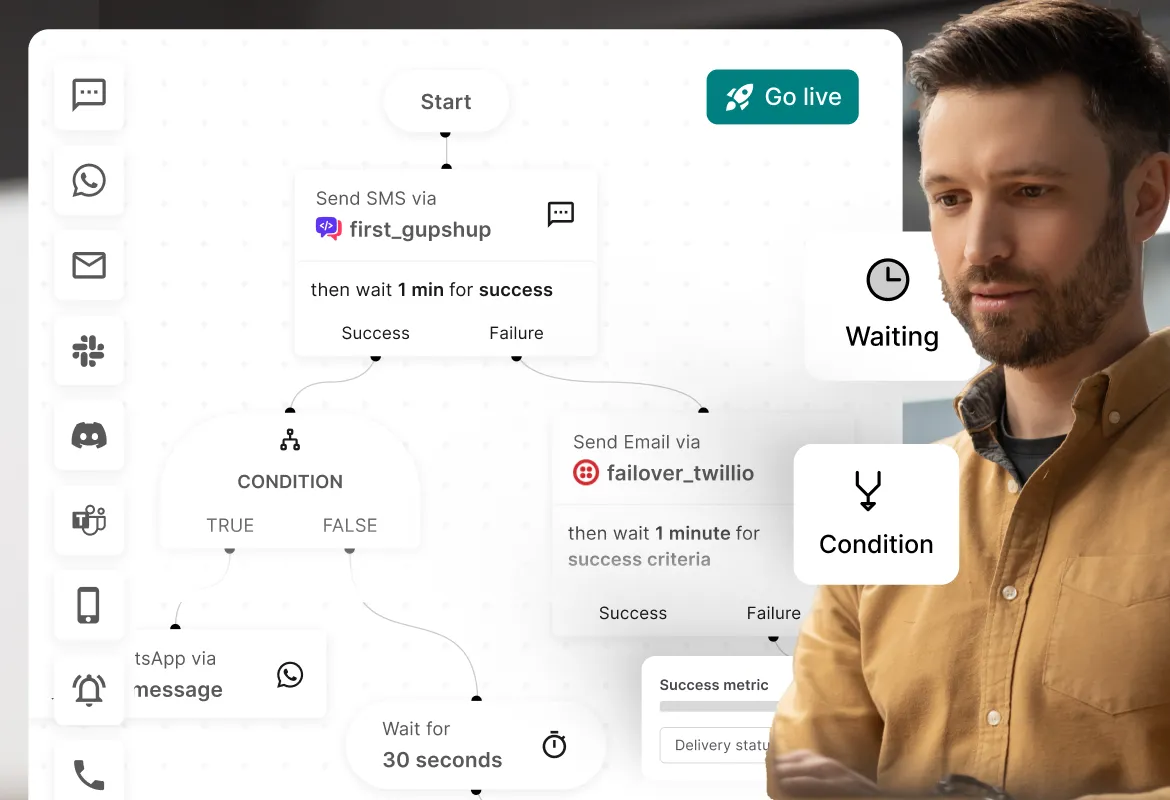
CROSS-CHANNEL ROUTING
Escalate across channels
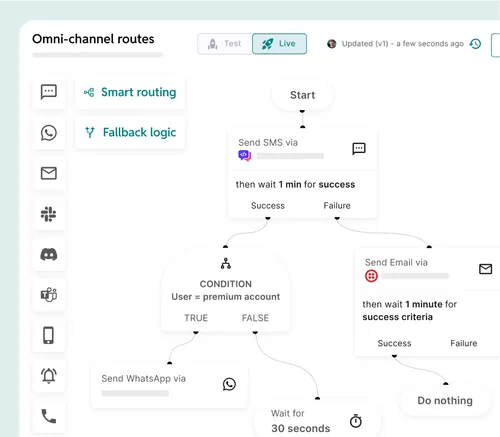
SMS undelivered? Escalate to WhatsApp. WhatsApp undelivered? Try voice. Configurable per message type. Critical messages always reach the customer.
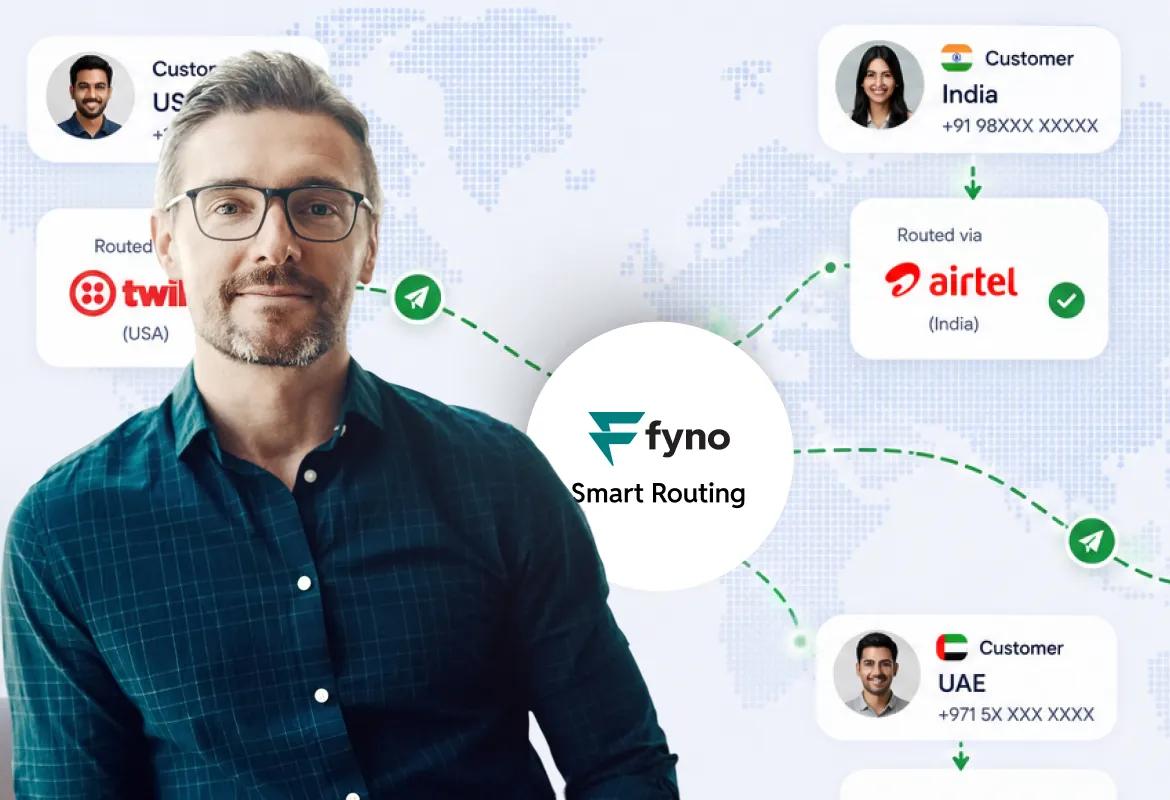
COUNTRY-BASED ROUTING
In-country routing always
International numbers routed through in-country providers. Local sender IDs preserved, local regulations enforced. Consistent delivery across geographies.
Reliability controls
AUTOMATIC FAILOVER
Auto-switch vendors
Vendor down? Fyno switches to backup automatically. No disruption to delivery.
TRAFFIC SPLIT AND BALANCING
Split traffic across vendors
Split traffic across vendors by percentage. No single-vendor dependency.
While you’re still here, check out some other features!
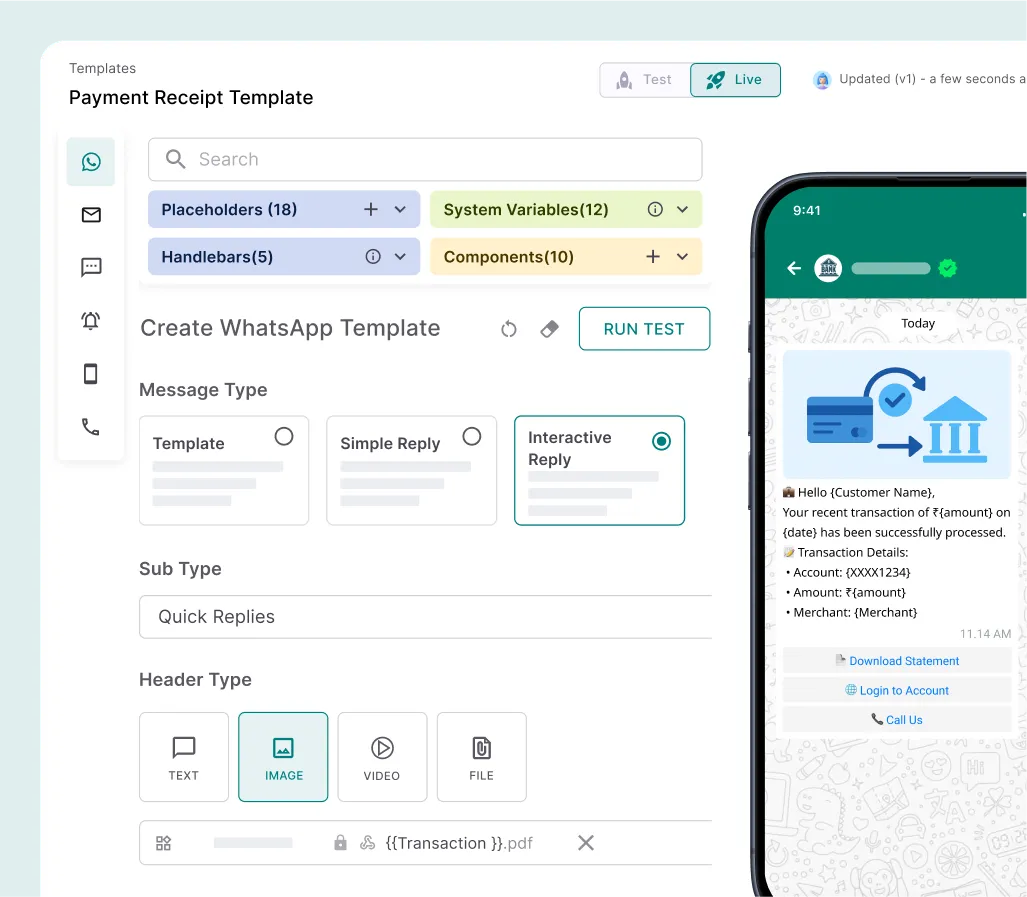
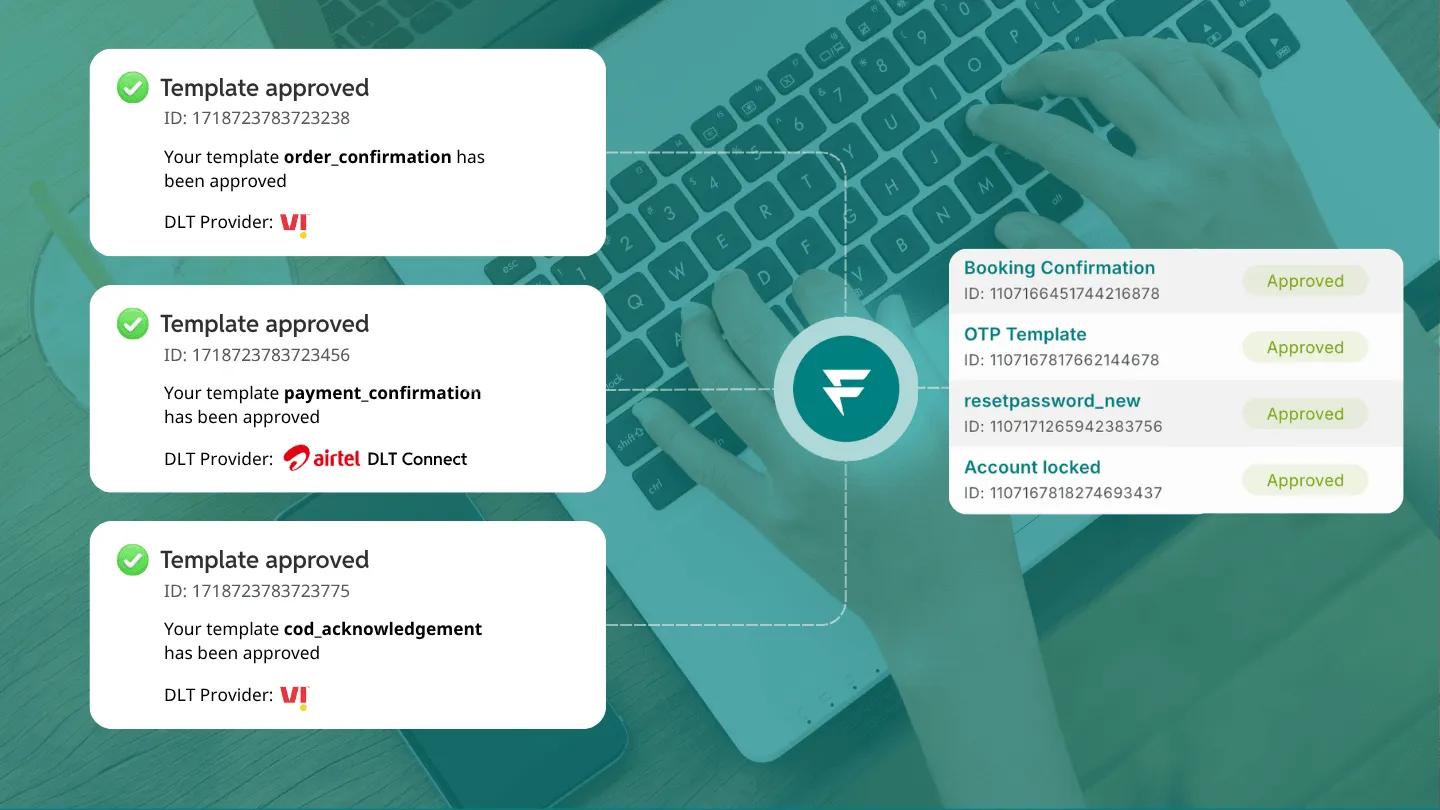
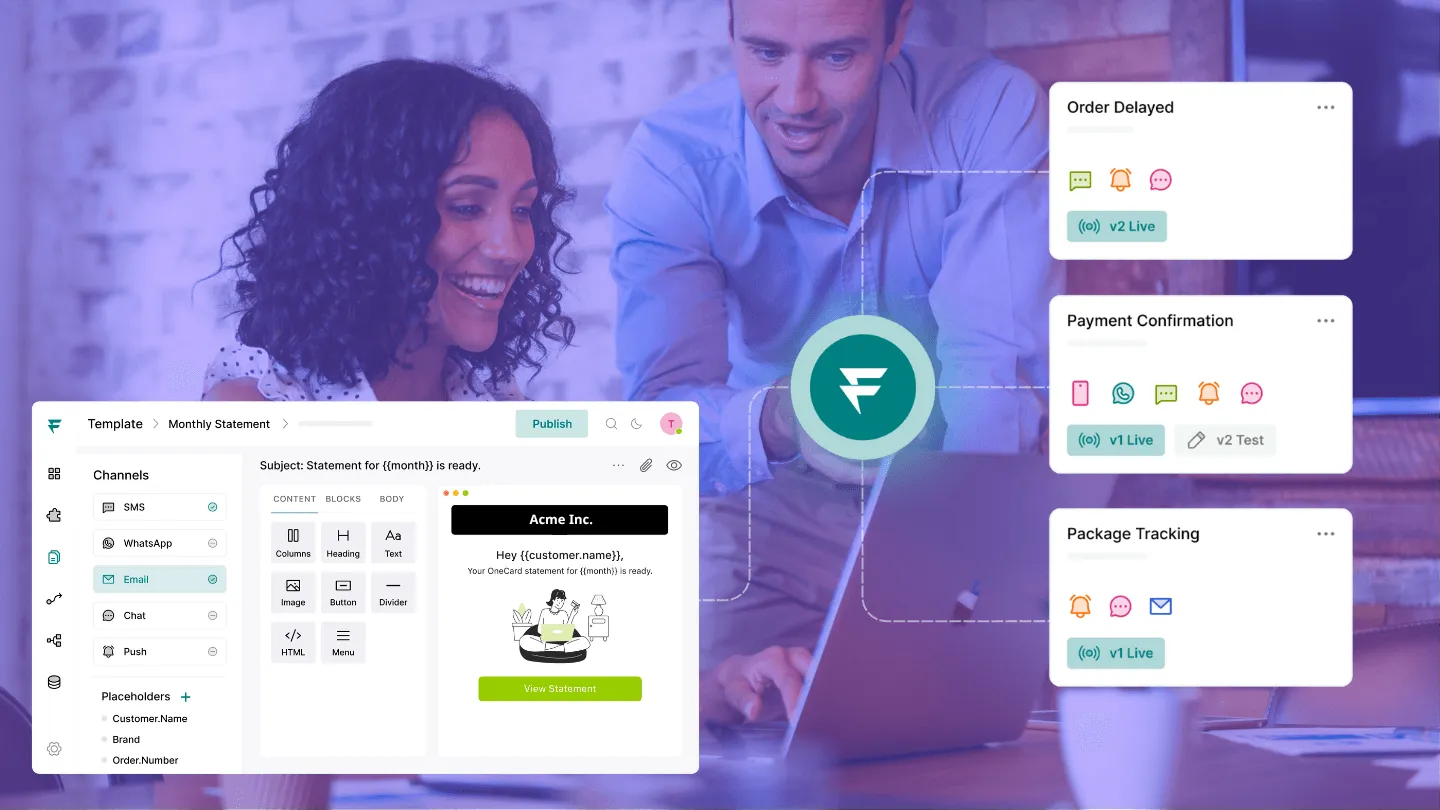
Simplify template management with one powerful, easy-to-use editor
The most powerful communication orchestrator
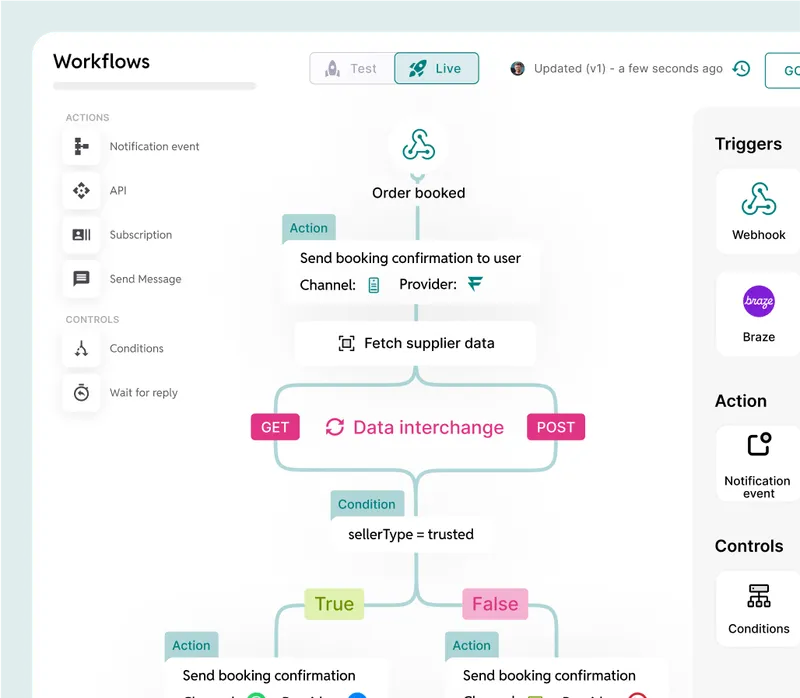
Build and manage complex routing protocols instantly
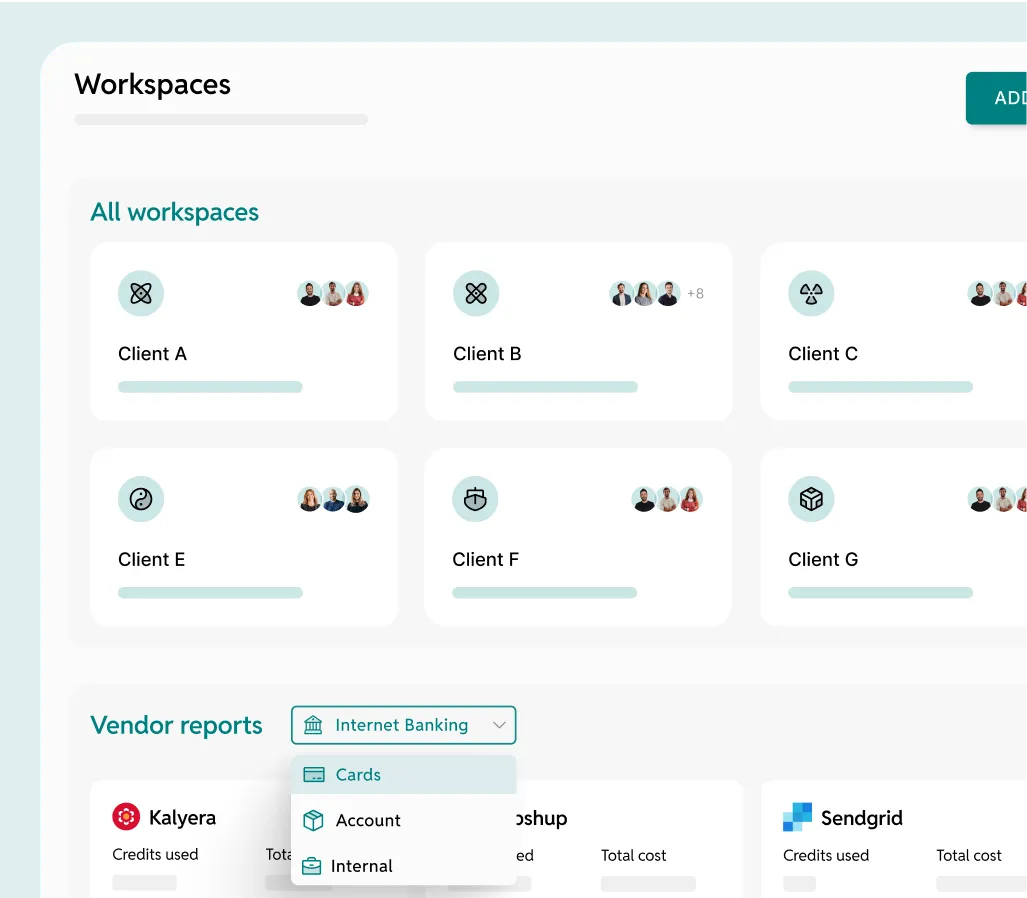
Manage distinct communication requirements better
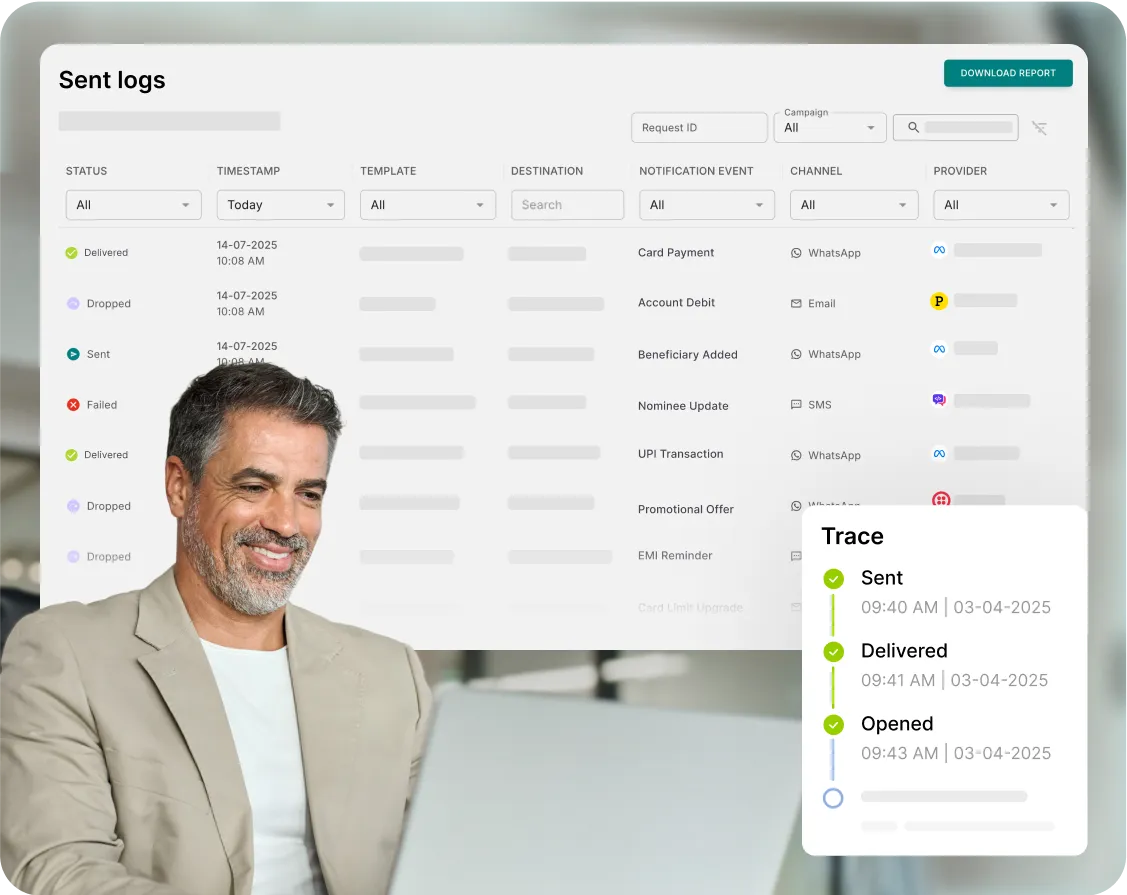
Unified communication logs: complete visibility, effortless compliance
Find the answers that you need
No. Fyno's Route Builder is a no-code platform designed for ops and product teams. Routing rules, vendor preferences, failover conditions, and cross-channel escalation logic are all configurable through a visual canvas without raising an engineering ticket. When your vendor changes, your pricing changes, or your delivery SLAs shift, your ops team updates the routing rule directly. No sprint cycle, no redeployment, no code change.
Fyno does not route to the cheapest vendor unconditionally. Cost-aware routing evaluates each vendor against a performance threshold you define: delivery rate, latency, or SLA. Only vendors meeting that threshold are eligible for cost comparison. The message then routes to the cheapest among the qualifying vendors. This means you are never trading delivery reliability for cost savings. Both conditions are evaluated simultaneously on every send.
Relying on one vendor for OTP or payment alert delivery creates a single point of failure (SPOF). Fyno detects vendor downtime in real time and automatically switches to a pre-configured backup vendor. There is no manual intervention required and no disruption to your messaging queue. For high-volume BFSI use cases like OTP delivery, payment alerts, and fraud notifications, this means your customers receive critical messages even during vendor outages. Every switchover is logged with a full audit trail for your ops and compliance teams to review.
The DPDP Act 2023 requires that consent be valid at the moment a message is sent, not just at the point of collection. Fyno's routing layer is connected to your consent records in real time. When a message is triggered, the Route Builder checks consent status before selecting a channel. If a customer has not consented to SMS, that channel is automatically blocked at the routing layer, regardless of what the upstream workflow specified. This enforcement happens at the millisecond of every send, so that a consent withdrawal between segment build time and send time is always caught. For enterprises preparing for Data Protection Act India enforcement, this removes a compliance gap that most routing configurations leave open.
CPaaS companies in India route within their own network. They optimise for their own delivery rates, using their own vendor pool — which creates vendor lock-in by design. Fyno is vendor-neutral: it connects to 100+ CPaaS providers and routes across all of them based on your cost, performance, and consent rules. When one vendor underperforms, Fyno switches to another without you changing any integration. You also retain full visibility into delivery rates, costs, and SLA performance across every vendor from a single dashboard, which no single CPaaS provider can offer. This is the difference between communication orchestration and a delivery API.
Yes. Fyno's traffic split feature lets you define the percentage of traffic each vendor carries. You can assign 60% to your primary vendor and 40% to a secondary, or distribute across three vendors based on cost tiers and delivery performance. This eliminates vendor lock-in, protects against volume-based outages, and lets you negotiate better pricing by maintaining committed volumes across multiple providers. The split percentages are configurable by your ops team without engineering involvement.
Discover insights
Learn how teams streamline communication, manage templates, and scale faster with Fyno.



.svg)