SINGLE / UNIFIED API
One endpoint for every message your bank sends
Each new vendor means a new SDK, new payload, new maintenance. Fyno connects 100+ vendors through one endpoint. Your code never rewrites.

.webp)

.svg)
.svg)


.svg)
.webp)

.svg)
.svg)


Pre-built infra.
Configured for your bank.
One API, Every channel
Replace per-vendor SDKs with a single endpoint
UNIFIED API ENDPOINT
One API call, all channels
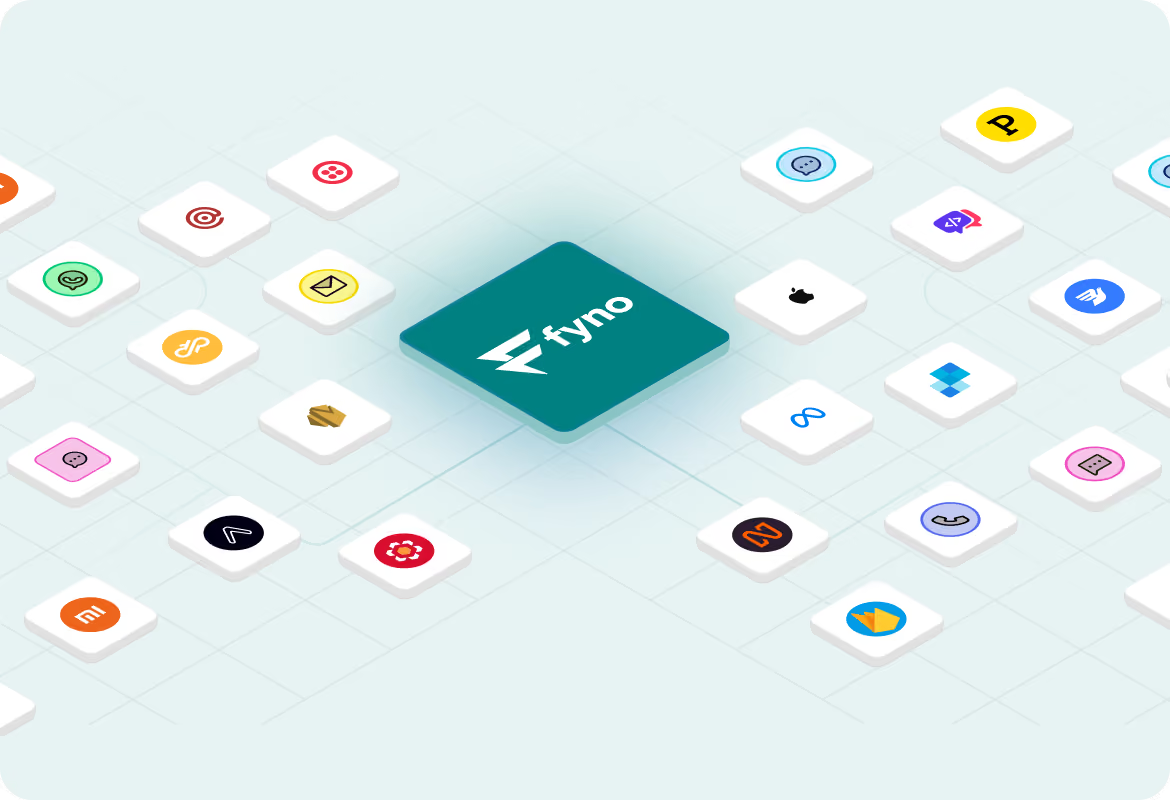
SMS, WhatsApp, email, push, in-app, voice, and RCS from one endpoint. One JSON payload, one auth flow, no per-vendor SDK to build or maintain.
PAYLOAD TRANSFORMATION
Banks keep their format
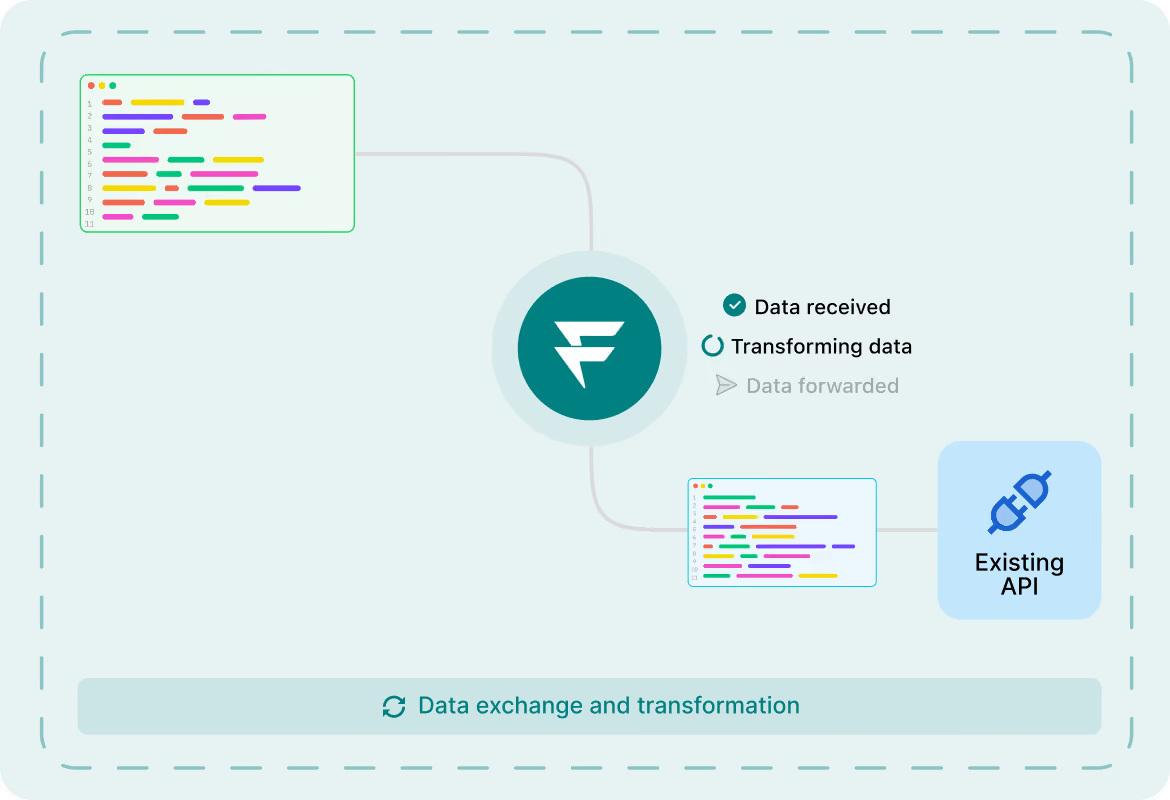
Fyno maps your existing payload to its own. Just a change of URL, not the source systems.
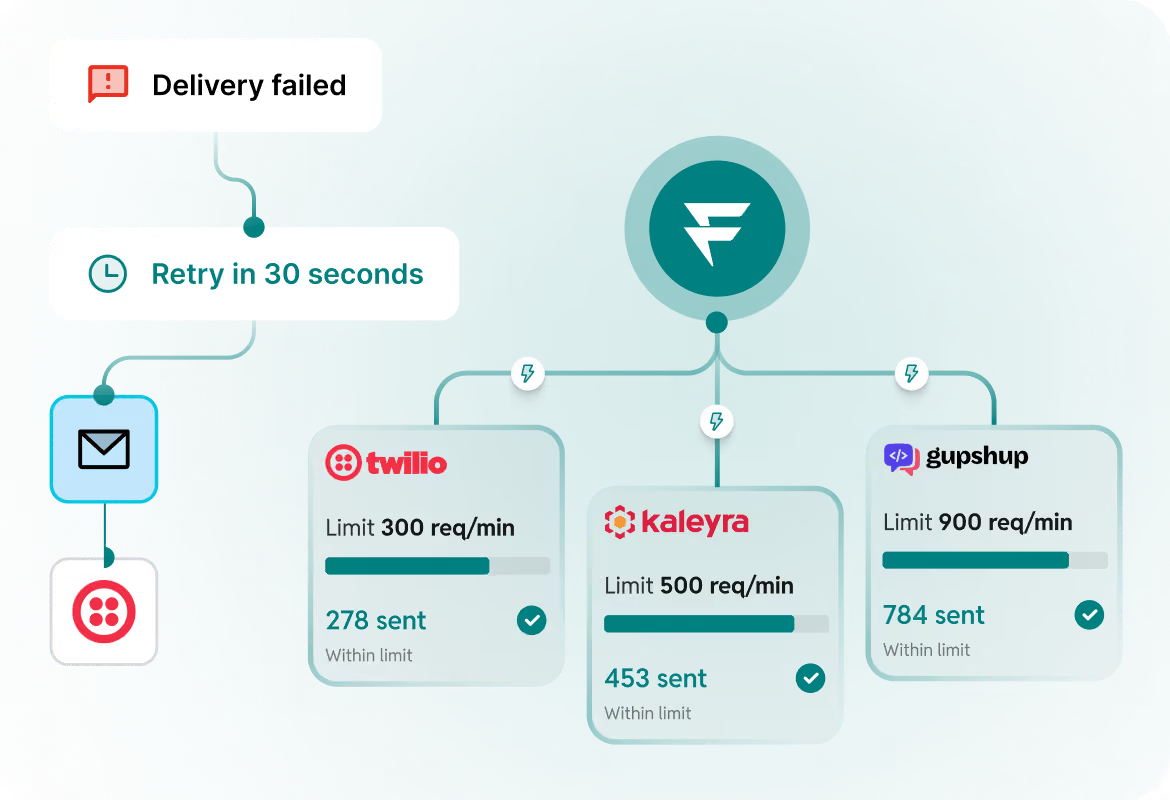
BUILT-IN RELIABILITY
Retries without code
Automatic retries, per-vendor rate limits, batching. No queue code on your side.
NO VENDOR DEPENDENCY
Swap vendors real-time
Switch providers from the dashboard while traffic is live. No rewrite, no redeploy, no release. Source systems call the same Fyno endpoint.
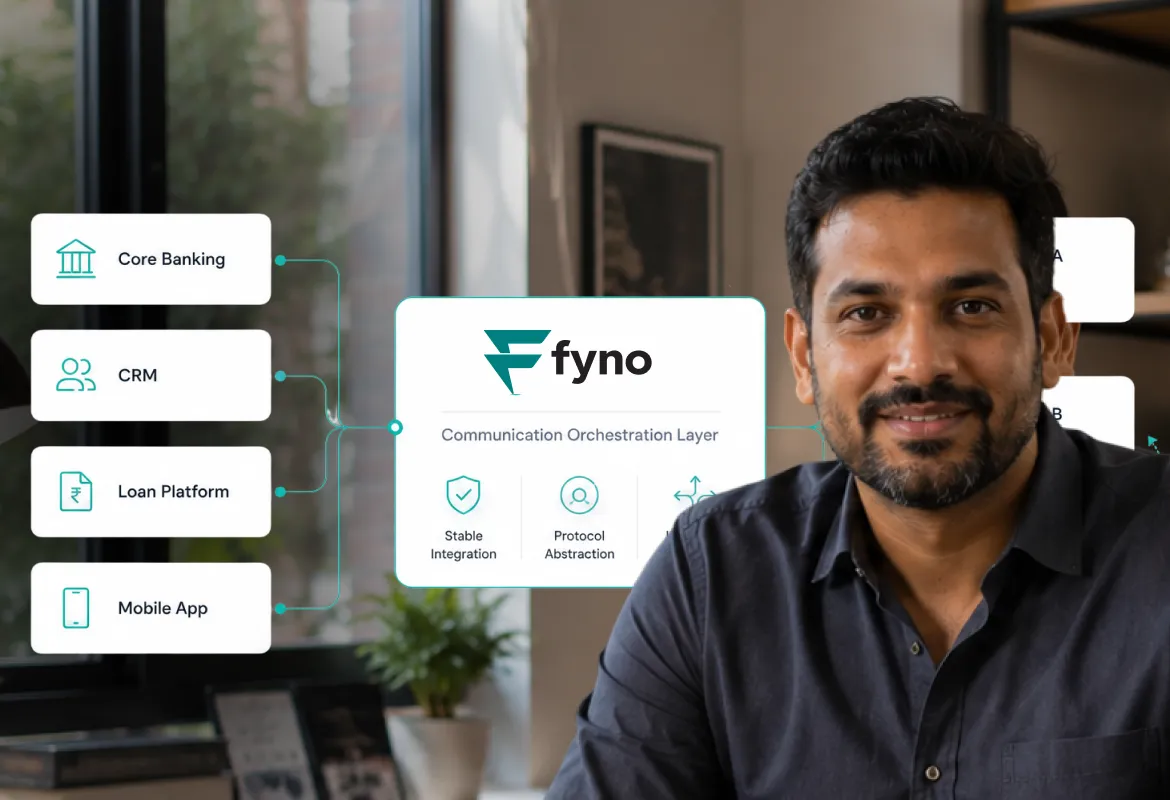
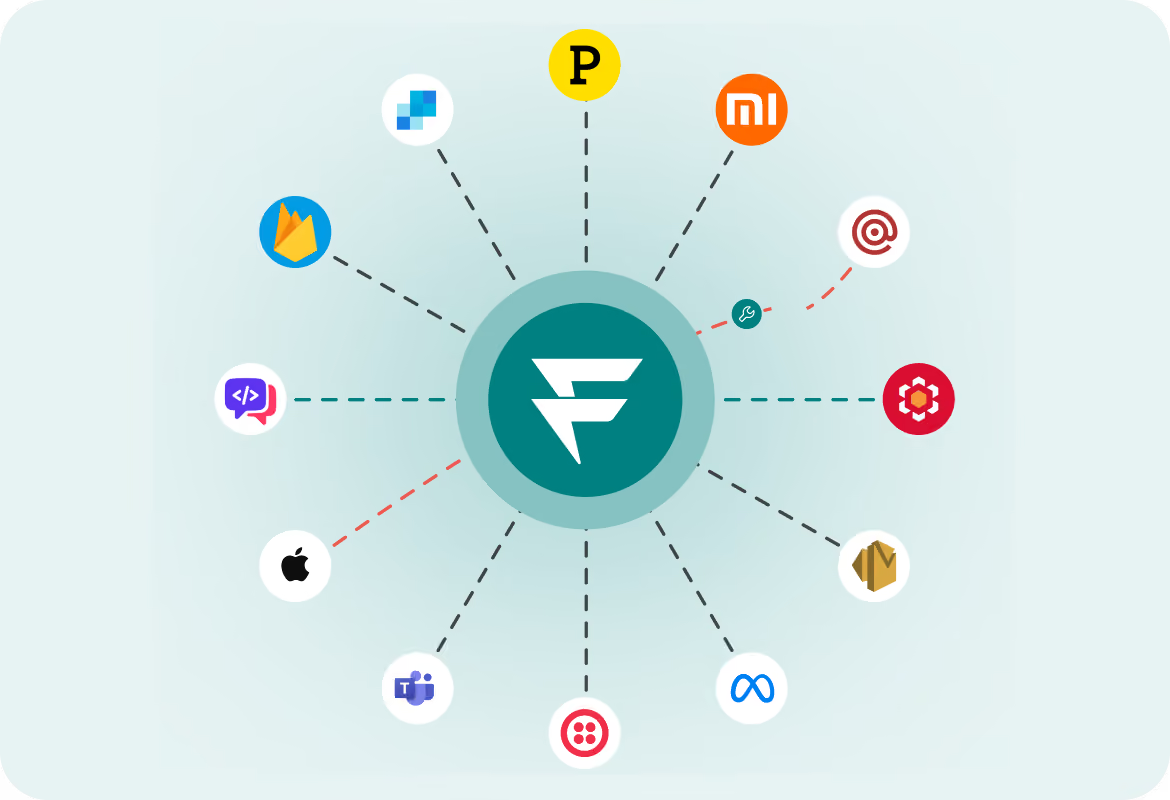
ZERO API MAINTENANCE
Fyno absorbs all changes
Vendors change endpoints and webhooks. Fyno absorbs it. Your code stays put.
While you’re still here, check out some other use-cases!
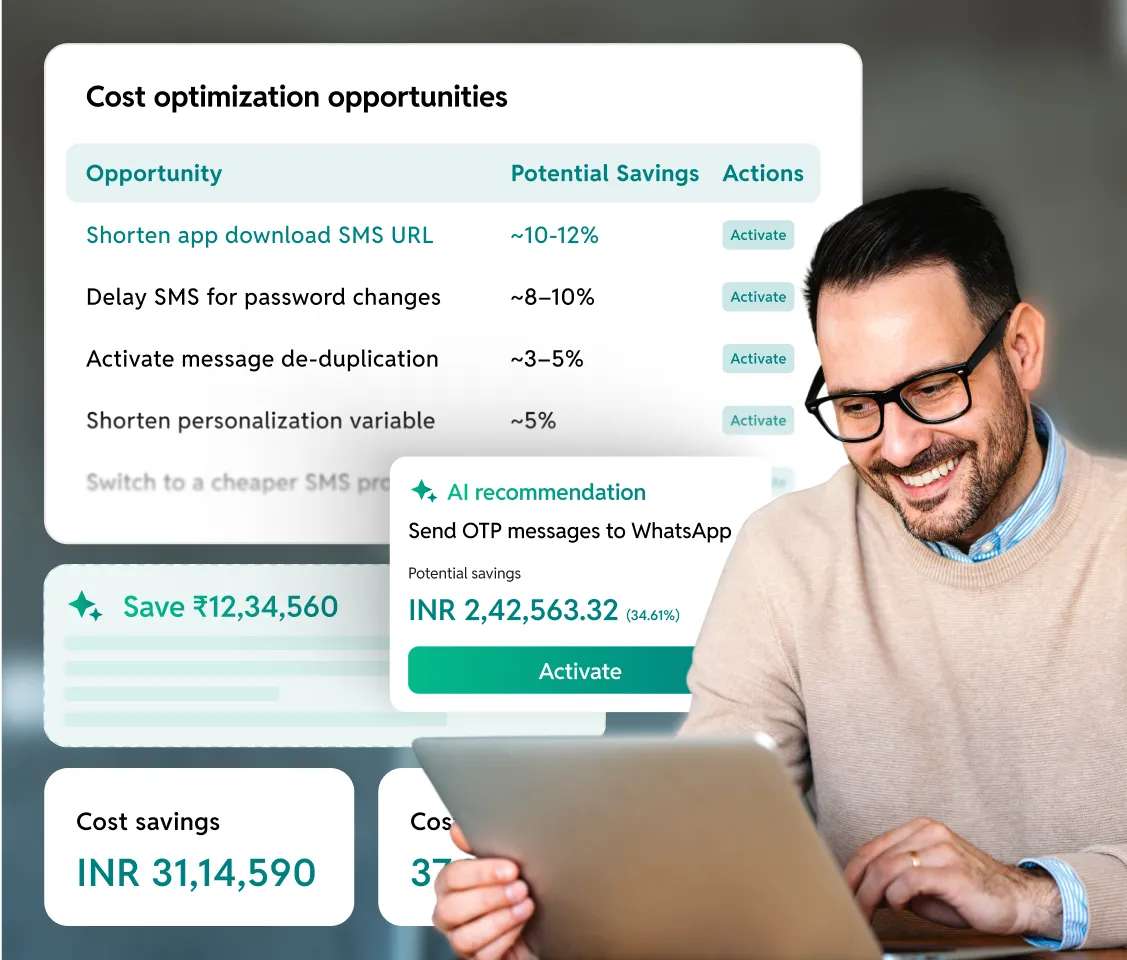
Save up to 40% on communication cost without any manual effort
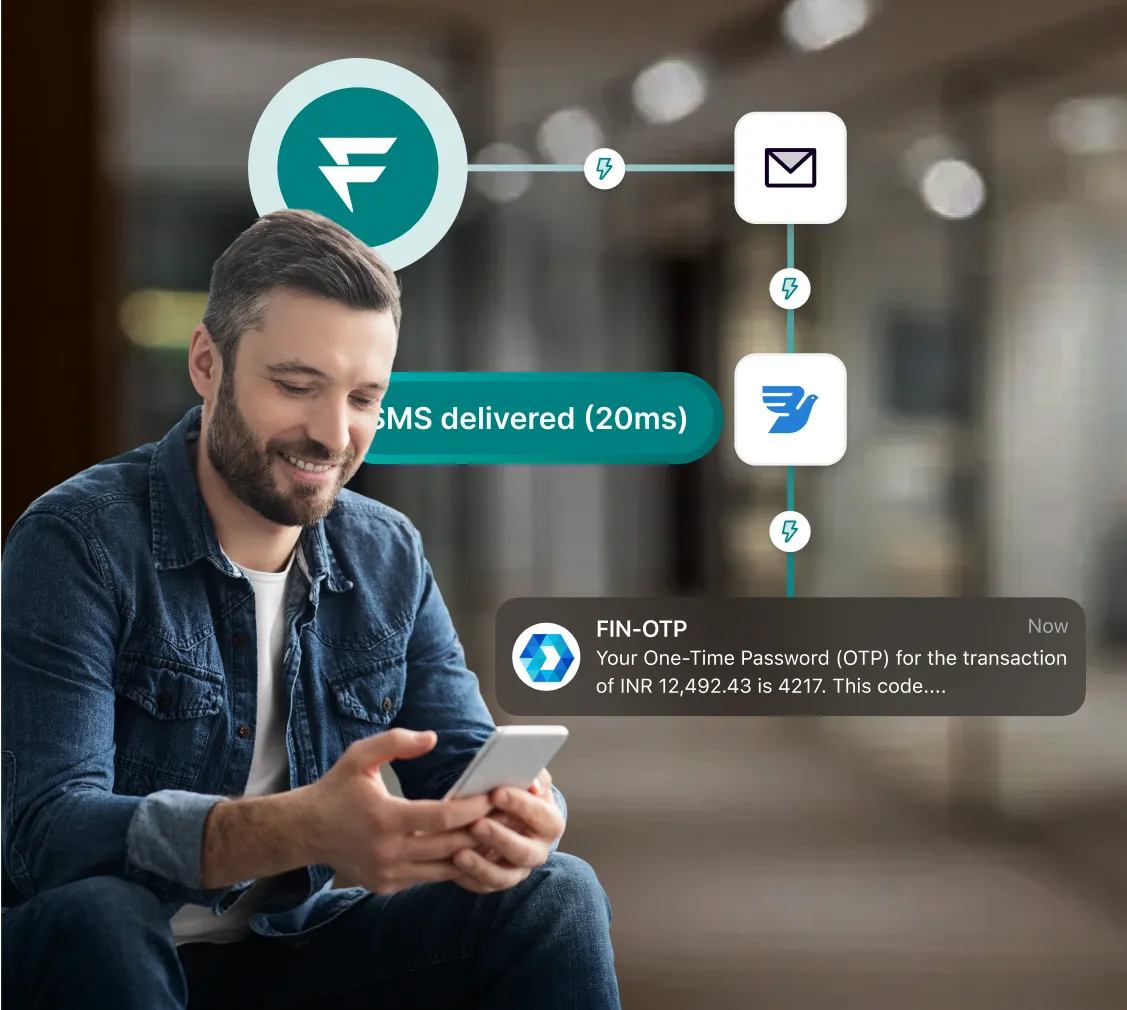
Processing every message with lightening speed
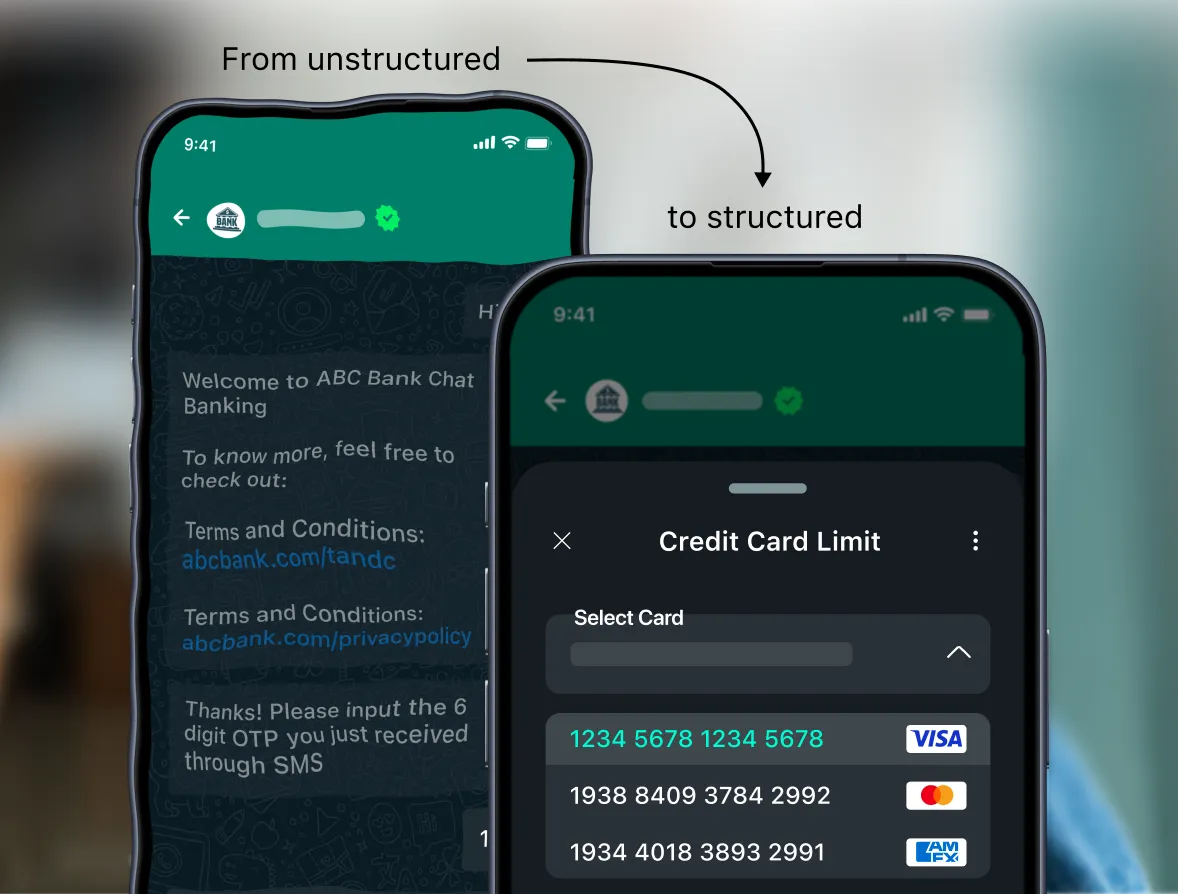
Upgrade your WhatsApp banking experience
Frequently asked questions about Fyno's Single API
Fyno's unified API replaces six things teams typically build in-house when running multi-vendor communication. First, per-vendor SDKs and authentication handling for providers like Twilio, MSG91, Karix, Gupshup, Meta, AWS SES, and SendGrid. Second, payload transformation logic that converts each vendor's request format to yours. Third, retry and backoff code for transient failures. Fourth, rate-limit awareness per vendor to avoid throttled rejections. Fifth, queue management for batched and scheduled sends. Sixth, webhook handlers for delivery receipts, opens, clicks, and bounces across every vendor's format. Once Fyno's API is in place, source systems make one call with one JSON payload. Fyno handles authentication, payload mapping, retries, rate limits, queuing, and delivery tracking for every connected vendor.
The first channel goes live in days, not weeks. Source systems like LOS, LMS, CRM, and payment platforms point at one Fyno endpoint with a standard JSON schema. If your source systems already send payloads in a vendor-specific format, Fyno's payload transformation consumes that format as-is and maps it to Fyno's standard. Your applications change only the destination URL. SDKs are available in Python, Node, Java, and Go. Direct REST works equally well. Most BFSI customers complete full migration from a multi-vendor setup to Fyno within four to six weeks, including UAT, parallel run, and production cutover. Adding a new vendor inside Fyno after initial integration takes hours per provider because 100+ pre-built integrations handle authentication, payload mapping, and delivery receipt parsing automatically.
Fyno absorbs the change. The platform team monitors API updates across every connected vendor and updates the underlying integration layer without affecting your source code. Your systems continue calling the same Fyno endpoint with the same JSON payload. Vendor-side breaking changes, webhook format updates, authentication migrations, and rate-limit policy changes are all handled inside Fyno. This is structurally different from running per-vendor integrations, where every API deprecation becomes an engineering ticket that competes with your product roadmap. With Fyno, the maintenance contract moves from your engineering team to the platform. Over time, this compounds: BFSI customers running five or more vendors through Fyno report engineering hours saved equivalent to one full-time developer per vendor previously integrated.
Yes. Fyno does not require you to switch vendors or re-register DLT templates. The migration path is non-disruptive: source systems point at Fyno's endpoint, and Fyno routes through your current SMS, WhatsApp, email, and voice vendors using payload transformation. Existing TRAI DLT registrations, your Meta WhatsApp Business Account, and commercial contracts stay intact. Over time, you can add new vendors for failover or cost-based routing, but migration itself preserves your current vendor relationships. For BFSI procurement teams who have spent quarters negotiating vendor rates, this means day-one migration does not restart those conversations.
Every vendor has a different payload format. Twilio, Sinch, Infobip, Gupshup, and MSG91 each expect different field names, authentication methods, and request structures. Banks running on one vendor's format cannot change 200 source applications to match a new vendor's schema. Fyno solves this by consuming the bank's existing payload in whatever format it arrives at and mapping it to Fyno's standard schema using configurable field mapping in Fyno's workflow engine. The bank changes only the destination URL from the old vendor to Fyno. All source applications, whether LOS, LMS, CRM, or payment systems, keep sending the same payload they always have. Fyno transforms it, routes it to the right vendor, and sends the message. For SMS templates, Fyno also provides handlebar functions like trim that truncate field values to stay within TRAI DLT's 30-character placeholder limit, preventing message failures caused by oversized variables.
All three are handled at the platform level through Fyno's route builder. Retries are configurable per channel and per vendor with custom backoff strategies. Transient failures like timeouts, 5xx errors, and vendor maintenance windows trigger automatic retries before any failover logic activates. Batching is automatic for bulk sends: messages going to the same vendor within a configurable window are grouped to reduce per-message overhead. Rate limiting is vendor-aware: Fyno tracks each vendor's published rate limits and applies throttling on the platform side before the vendor rejects. Your source systems do not need queue management code, exponential backoff implementations, or rate-limit awareness. Fyno does that once for every vendor.
CPaaS providers like Twilio, MSG91, Sinch, Karix, and Gupshup deliver messages at the network layer. Each has its own API, payload format, retry semantics, and webhook structure. Fyno is the orchestration layer above CPaaS. It provides one API that connects to 100+ CPaaS providers and exposes a single endpoint to your source systems. CPaaS handles delivery. Fyno handles orchestration: which vendor to use, how to format the payload, when to retry, when to fail over, and how to report results. You still need CPaaS providers to deliver messages. Fyno makes integrating with all of them a single engineering decision instead of one decision per vendor per channel.
Discover insights
Learn how teams streamline communication, manage templates, and scale faster with Fyno.


.svg)