FYNO FOR RETAIL BANKING
Communication orchestration built for retail banking
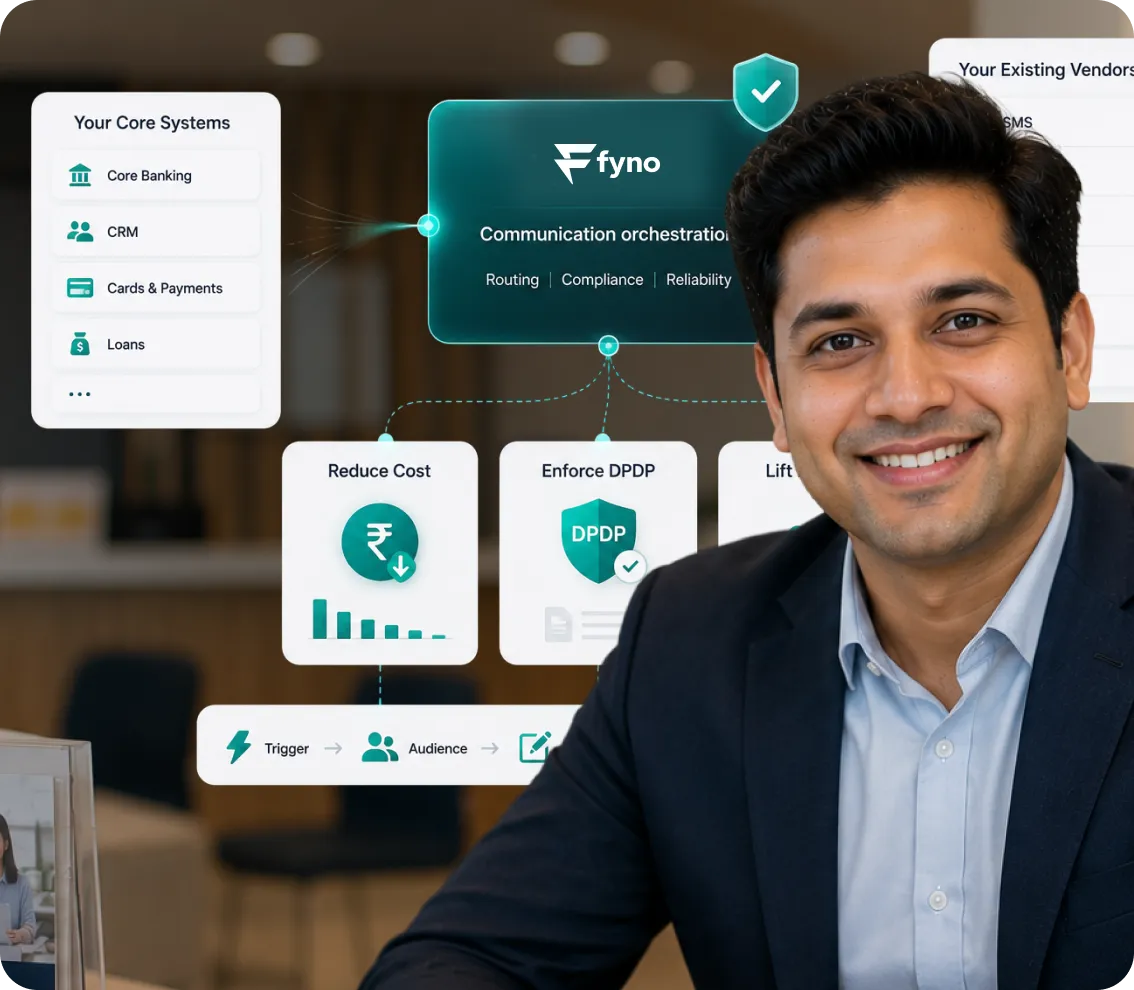
Fyno sits between your core systems and your existing vendors, cutting messaging cost, enforcing DPDP, and lifting delivery. No rip-and-replace.

.webp)



.svg)
.svg)


.svg)

.webp)

.svg)
.svg)


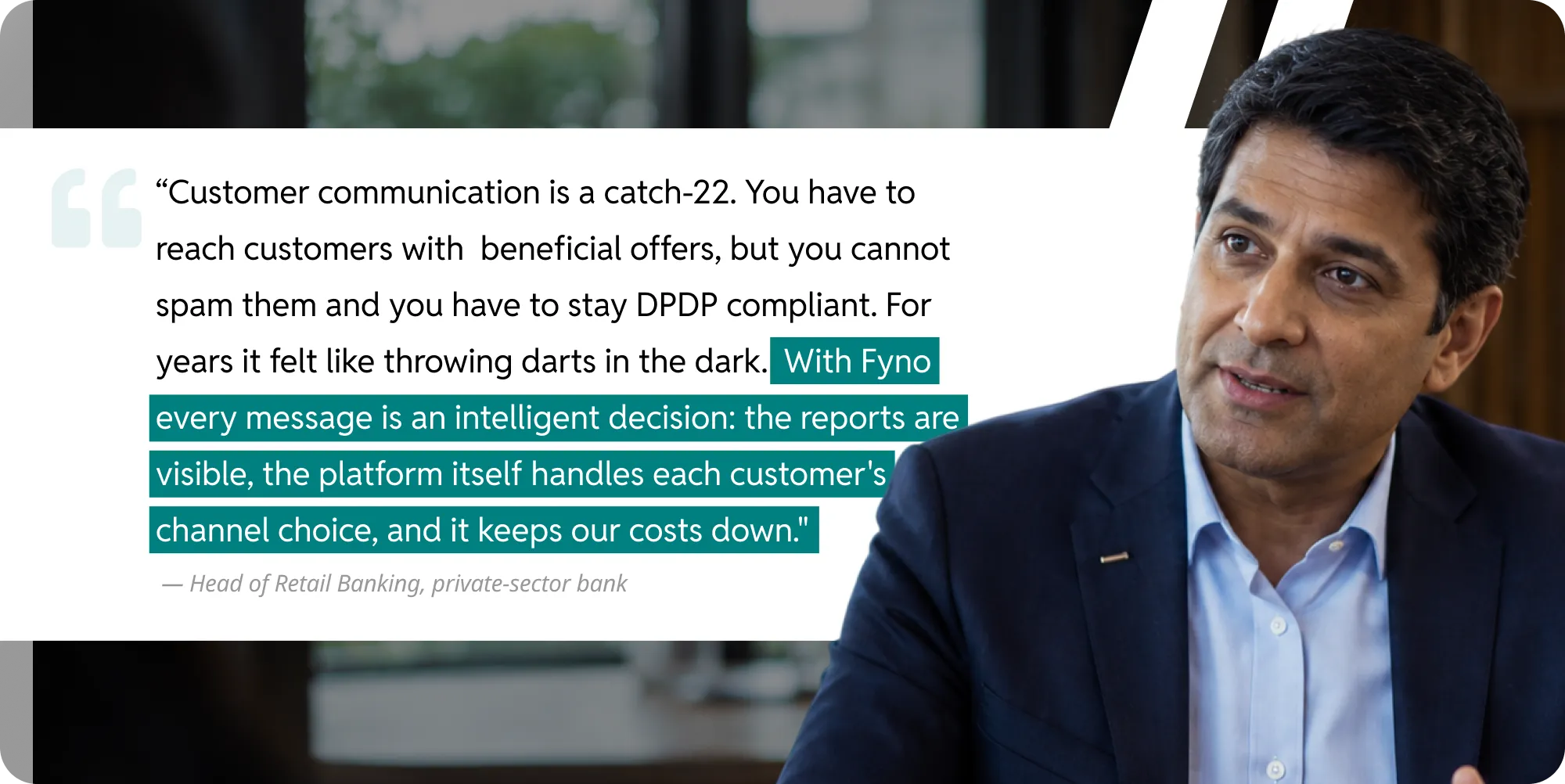
Customer communications is an intelligent decision, not spam
What’s costing your retail banking business today?
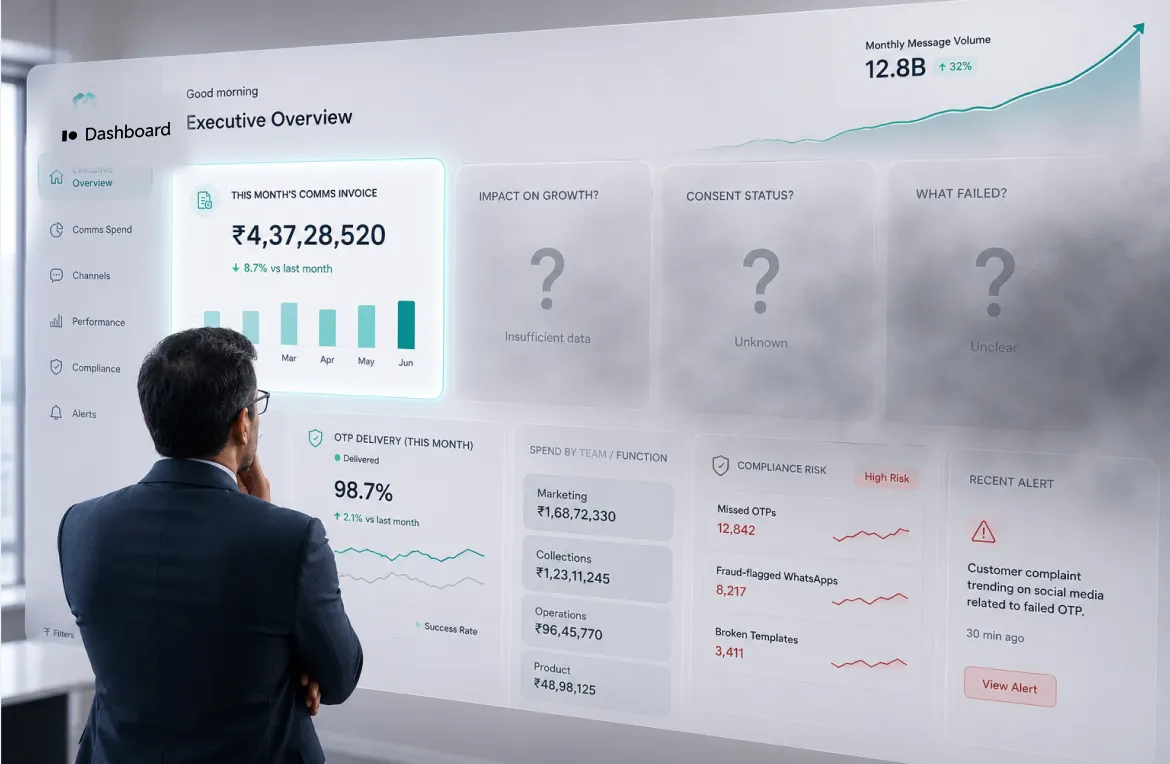
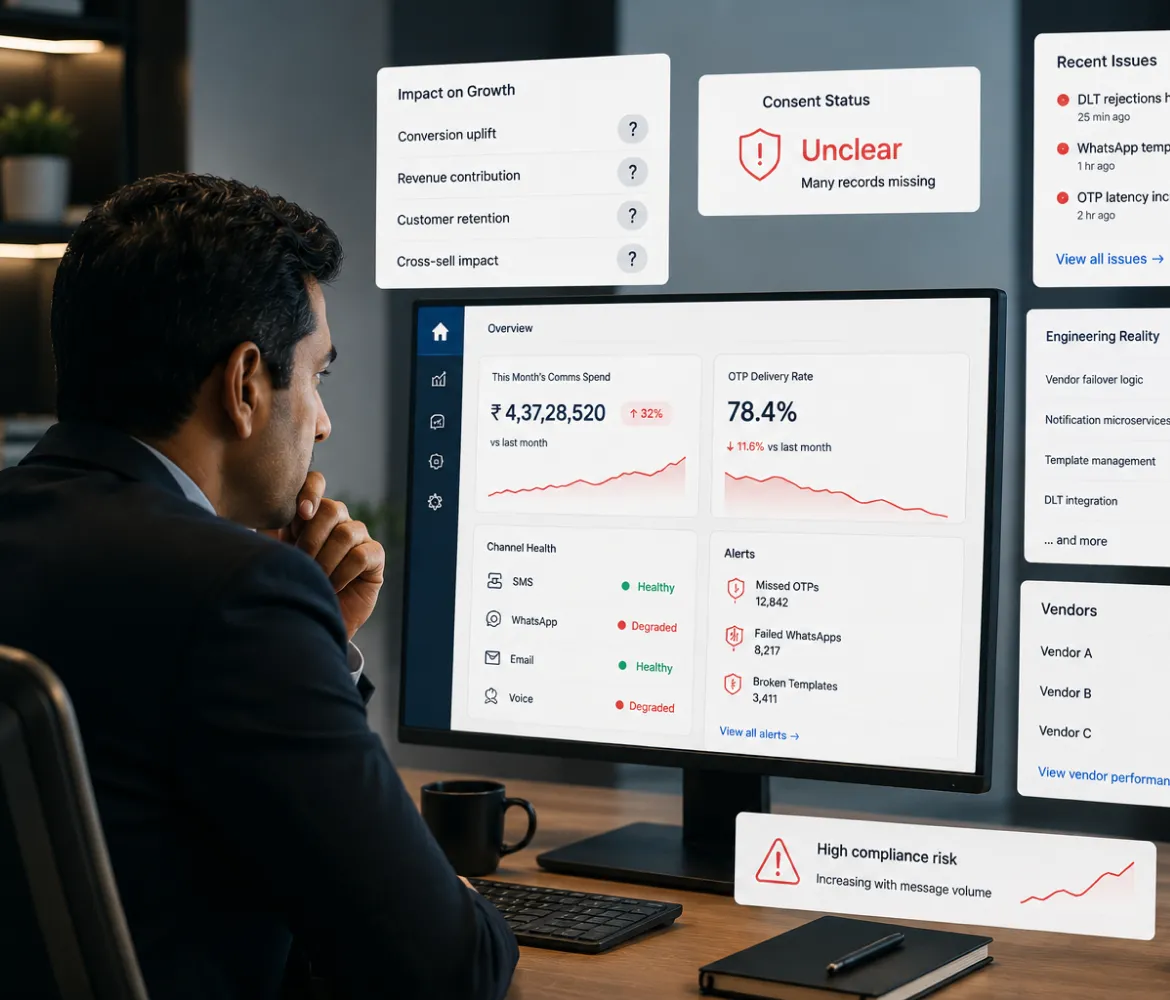
Comms spend is a blackbox
Marketing, collections, ops, and product each pay vendors separately. The CFO sees the total. No one can tell what it did to business growth.
Compliance risk grows with volume
Missed OTPs, fraud-flagged WhatsApps, and broken templates erode trust. The board hears about it after a customer complaint goes public.
Missed moments, missed revenue
Every message that delivers just transaction details is a missed moment to do more for your customers, without spamming or adding costs.
Build vs buy never settles
Building in-house always sounds cheaper. Engineering runs comms infrastructure, not the core business.
Here’s how Fyno helps retail banking
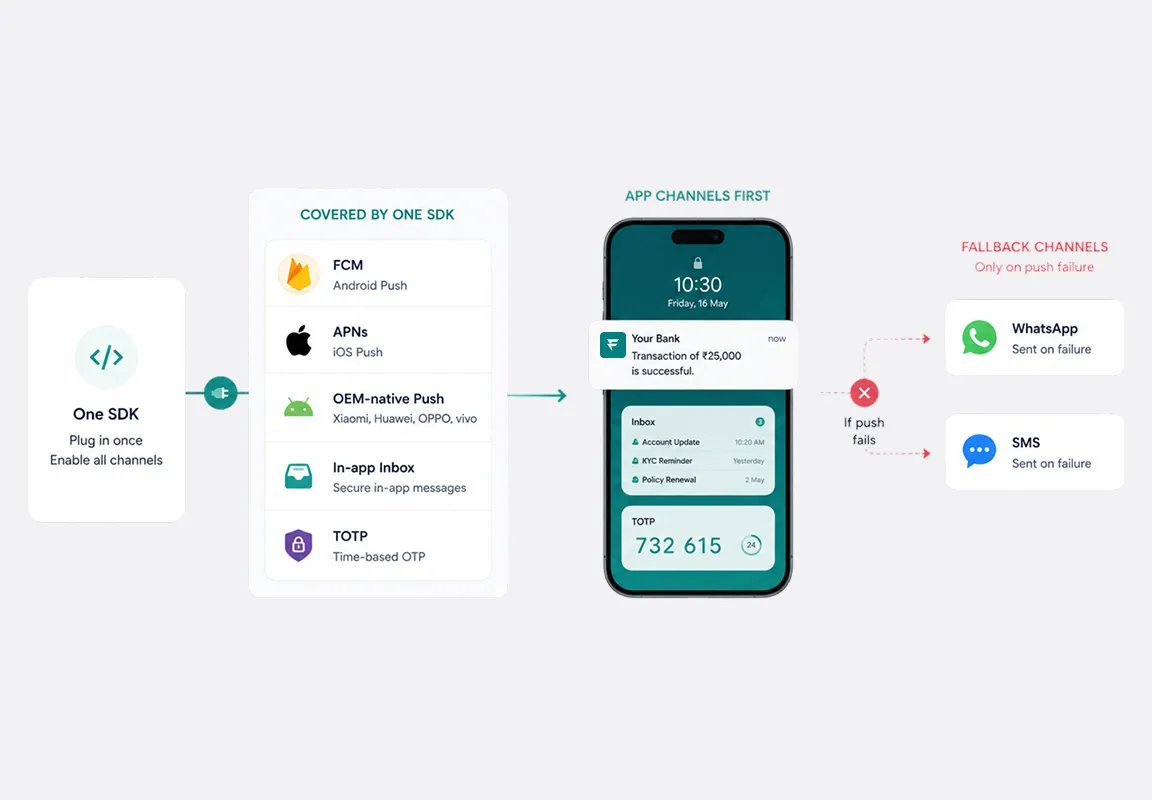
Ready to plug in, in-app capabilities
One SDK covers FCM, APNs, OEM-native push, the in-app inbox, and TOTP. Alerts route through app channels first, so that SMS or WhatsApp fire only on push failure and spend falls as adoption grows.
Compliance, built in
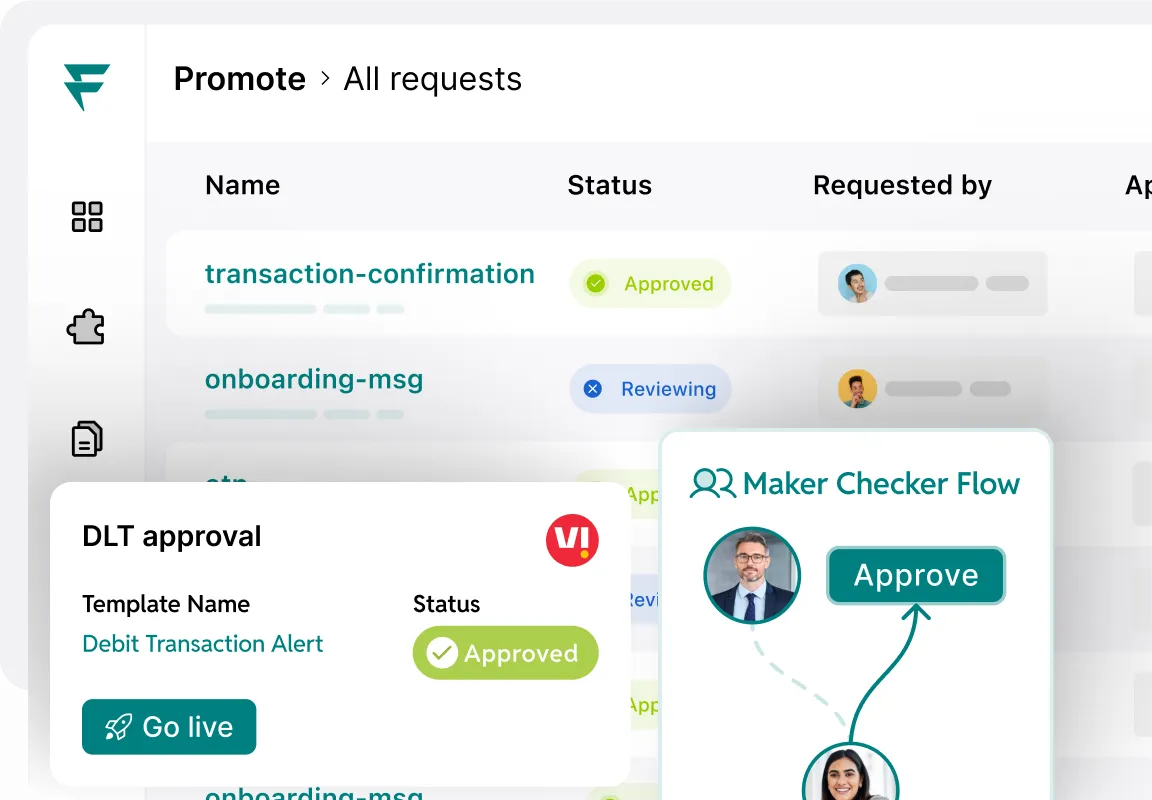
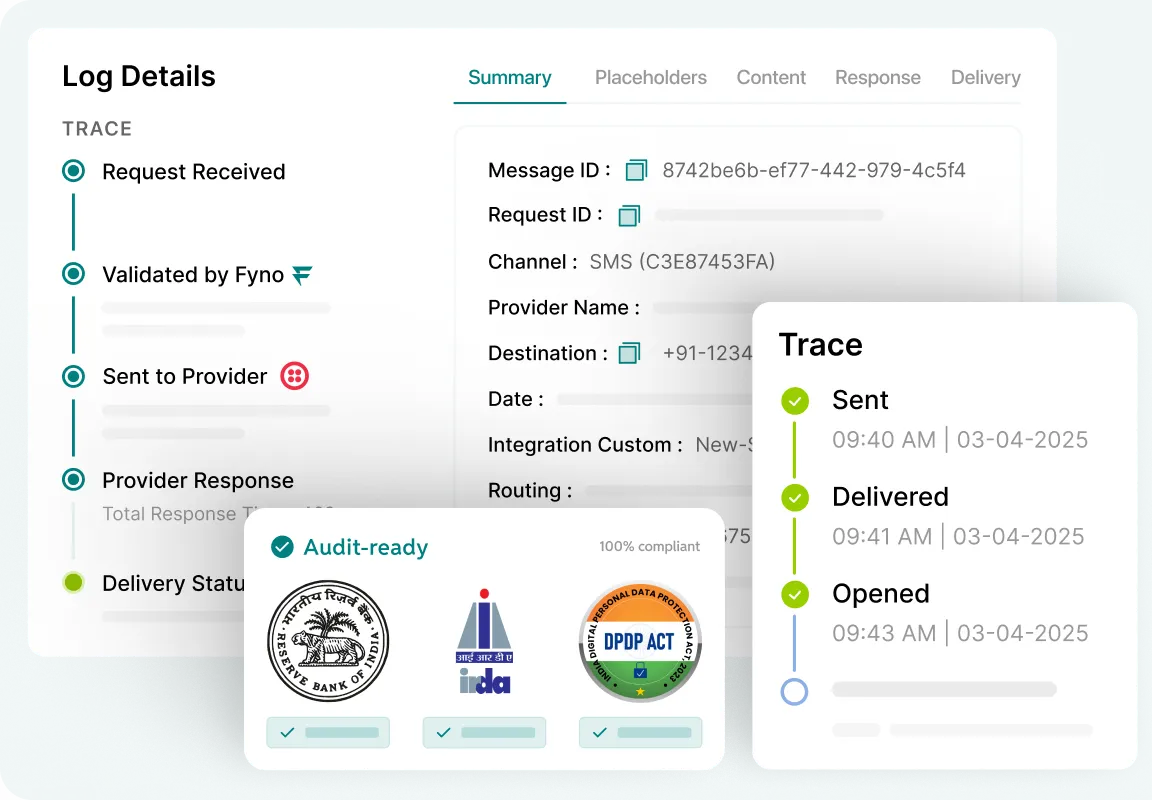
Template governance, maker-checker, and DLT or Meta sync are enforced before message ships. Every send is logged with template version and outcome, audit-ready for RBI, IRDAI, or DPDP.
Consent enforced at send
DPDP requires real-time consent validation before every marketing communication. Fyno enforces this at the middleware layer, so that no communication can go out without consent.
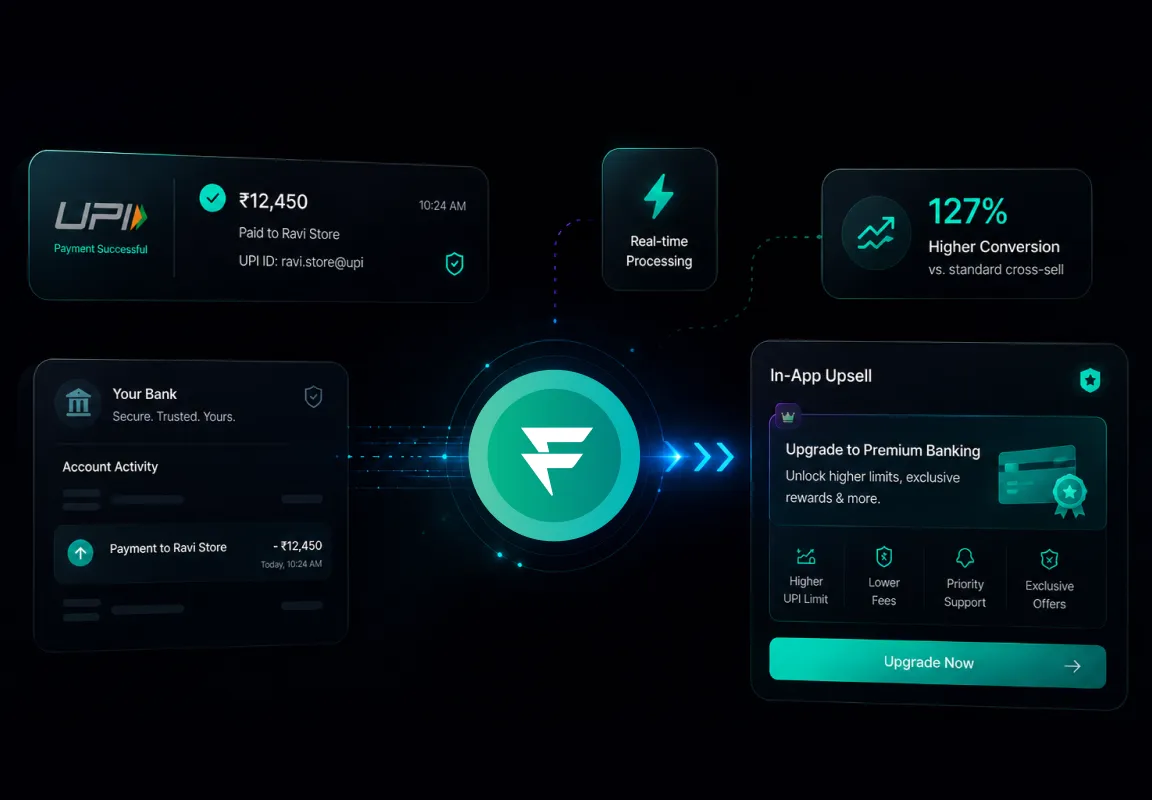
UPI alerts that upsell
Fyno processes the transaction as it flows and appends an in-app upsell above your threshold. Delivered at confirmation, where it converts 127% better than standard cross-sell.
Cost cut on many levers
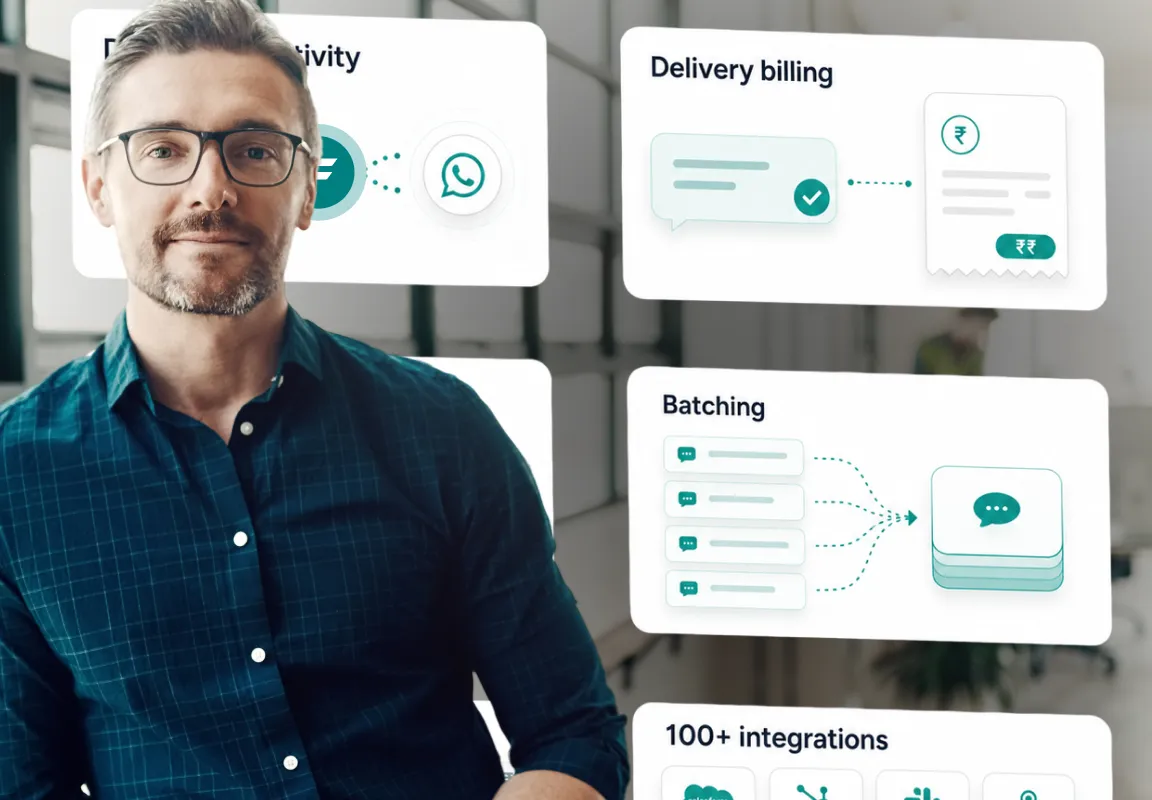
Most platforms give you one cost lever. Fyno runs many: direct telco and Meta connectivity, delivery-based billing, payload trimming, batching, and least-cost routing. 100+ no-code integrations
Custom communication charging policy
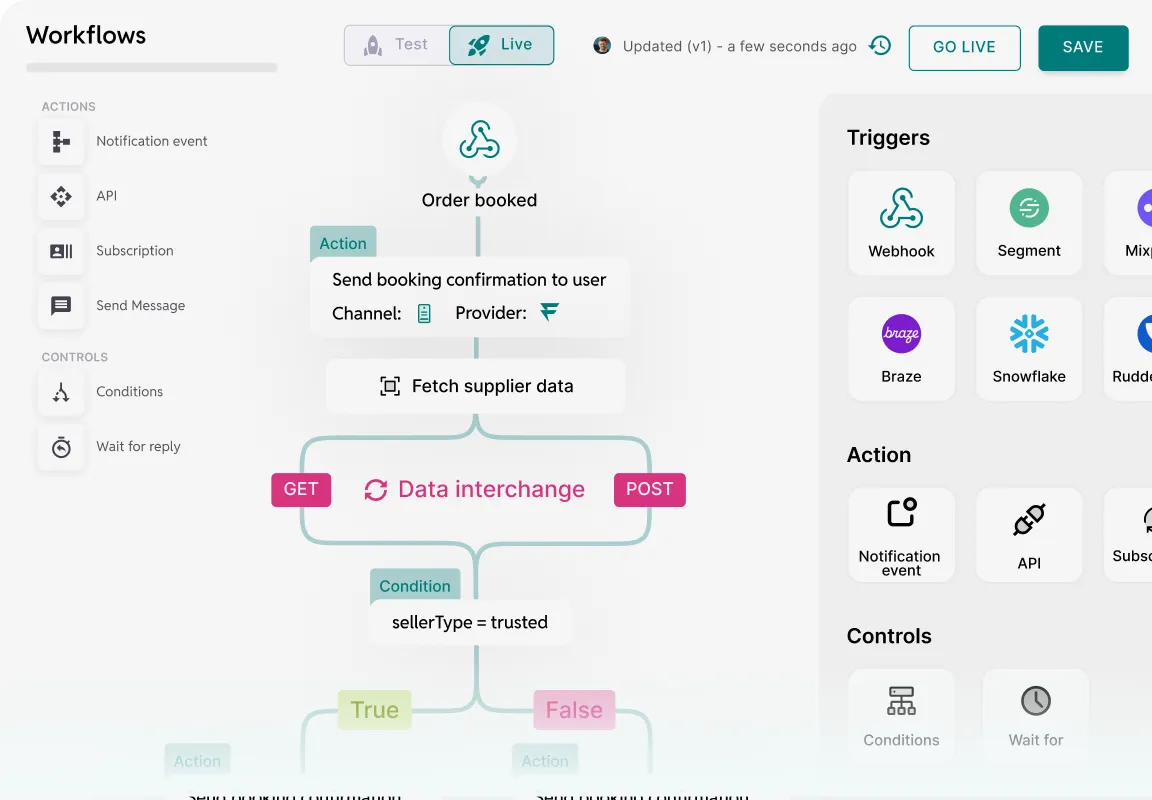
Different banks take different positions: charge all customers, charge none, or a tiered approach. Fyno gives the business team a no-code interface to set, modify, and enforce these policies in real time, under maker-checker.
App-native OTP
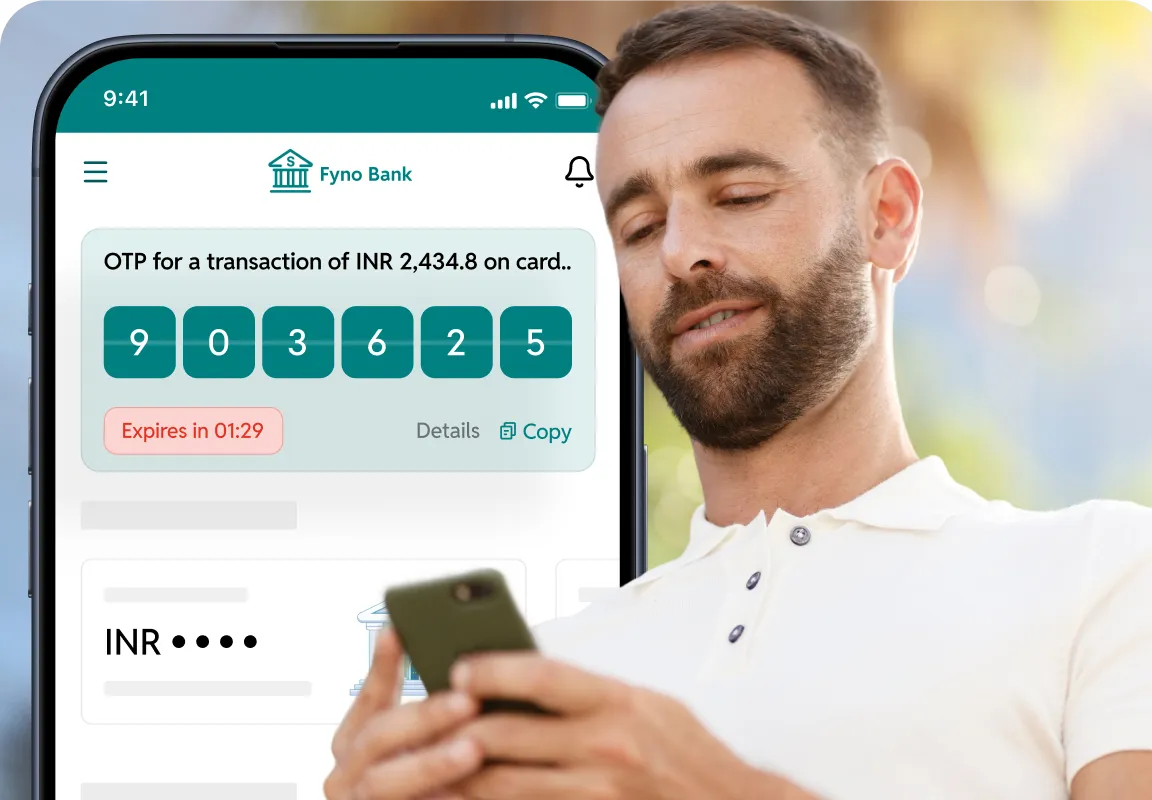
Every SMS OTP carries an SMS cost, a carrier cost, and a DLT charge. Fyno generates time-based OTP inside your app, or TOTP. It generates codes on the device itself, verified centrally.
100% delivery
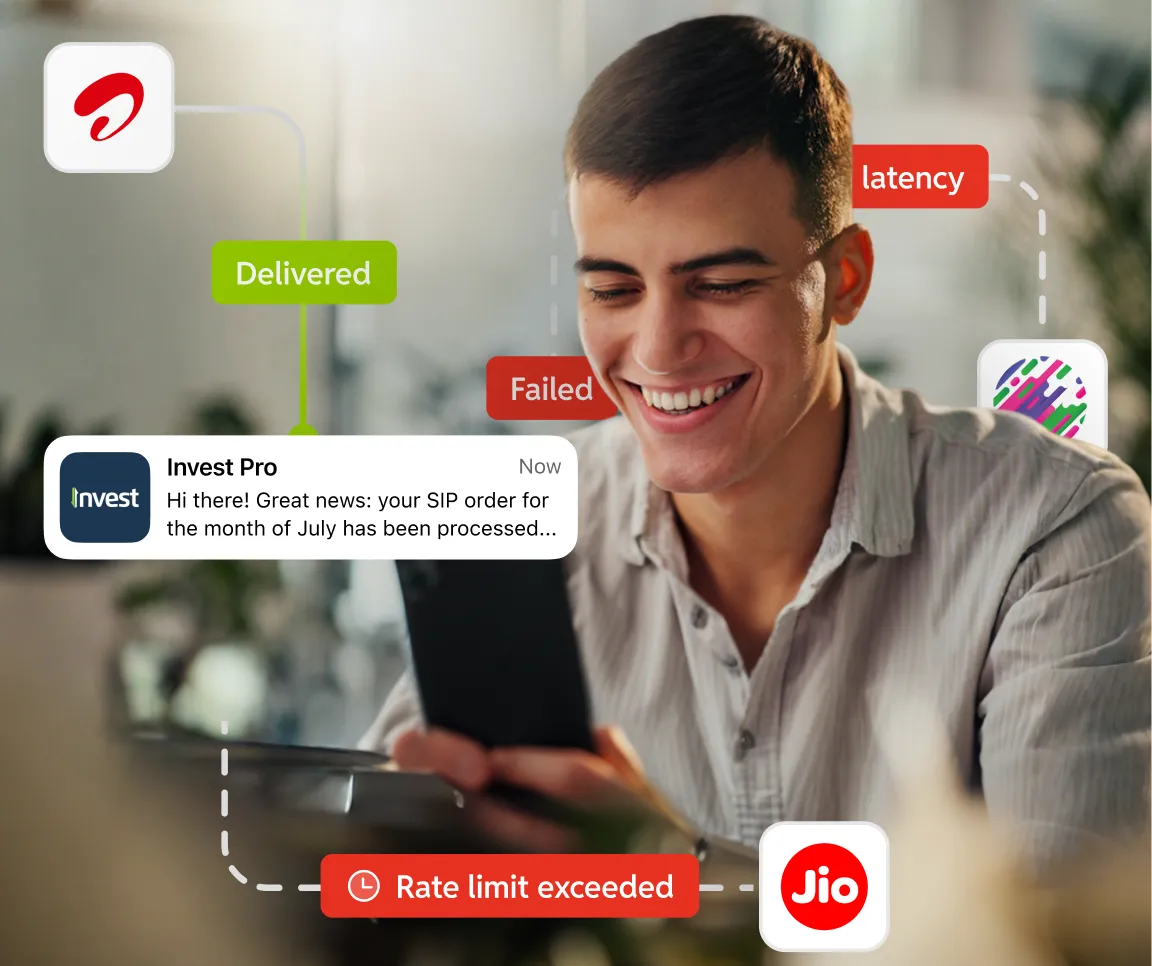
SMS deliverability at scale sits at 91-93%. Fyno adds real-time vendor failover, health monitoring, and multi-channel routing at the infrastructure layer to ensure every message is delivered.
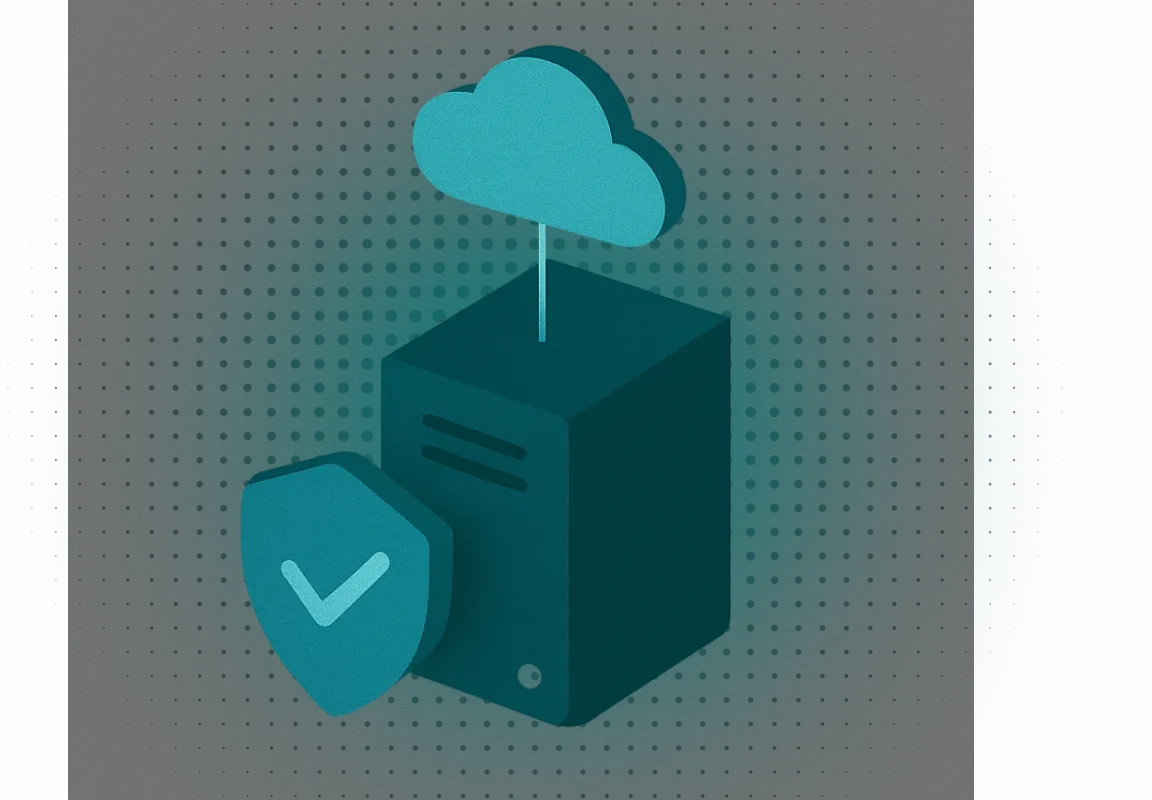
Your data never leaves your premises or cloud
Customer PII never duplicates into a third-party martech tool. Fyno reads your data where it lives and can run on-prem or in your cloud, so every log stays inside your environment and inside India.
While you’re still here, check out some other features!
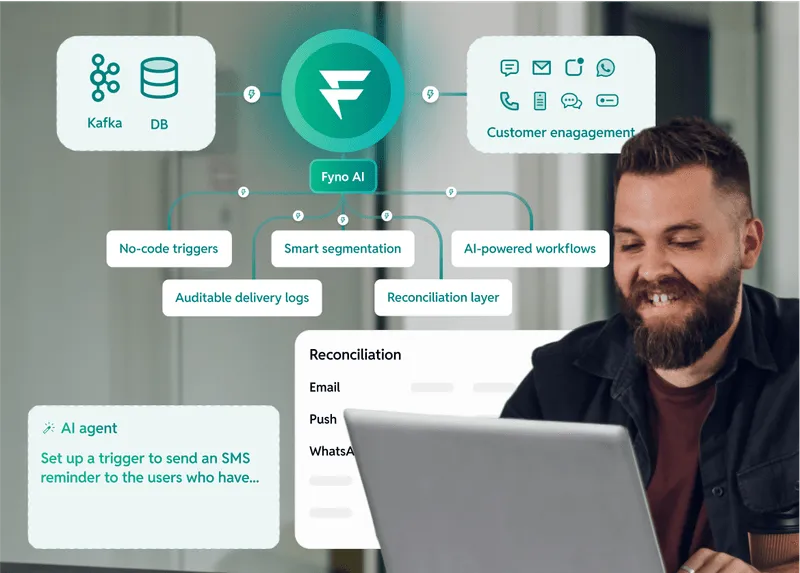
Securely automate communication operations (now with AI)
The most powerful notification center for your app
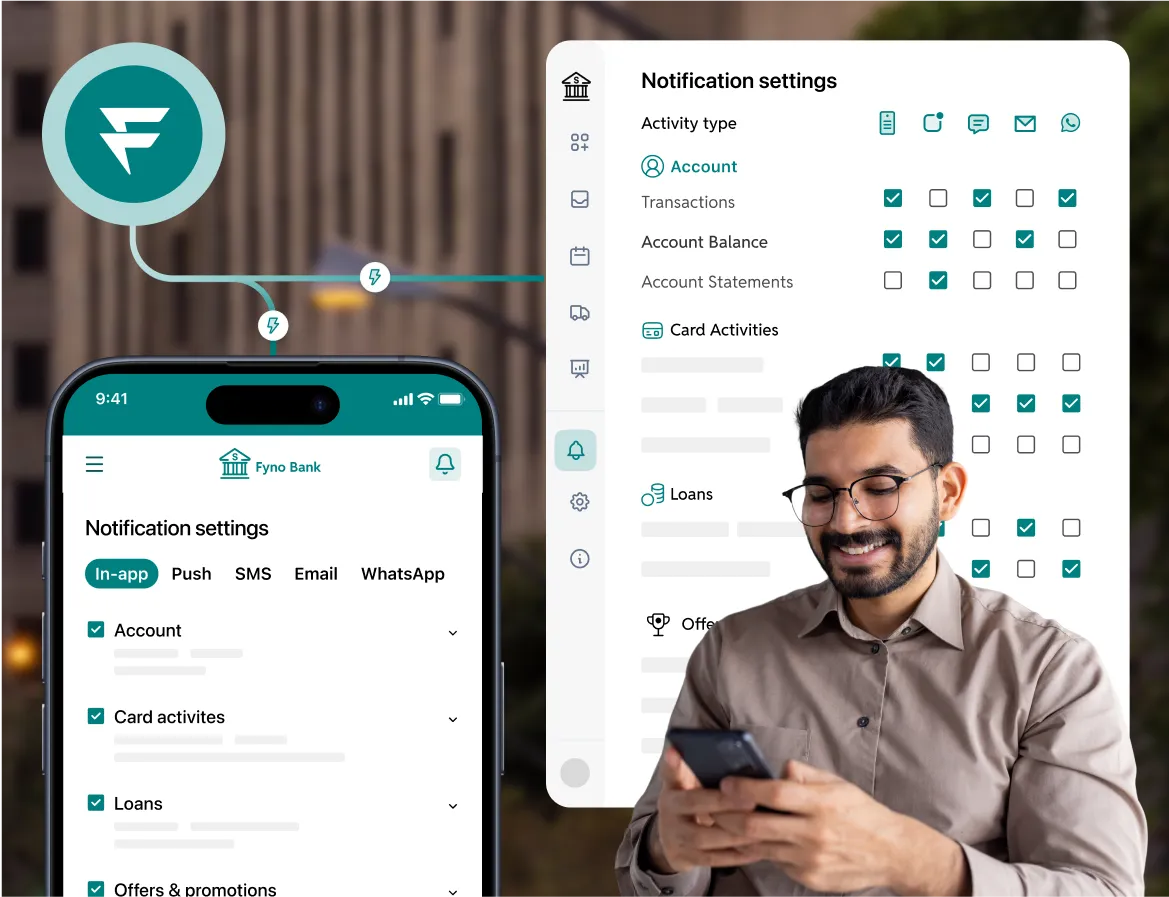
Build trust through intelligent preference management
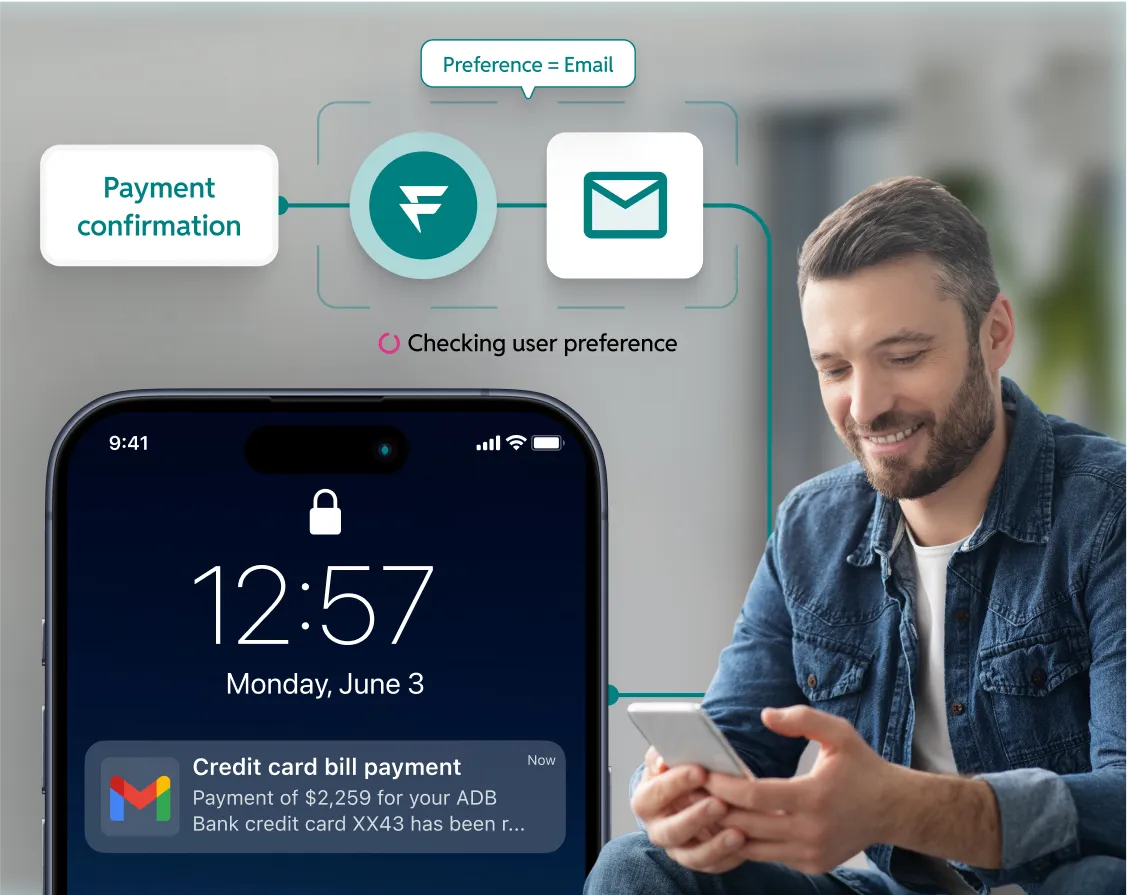
Each lever activates independently and they operate simultaneously, with no custom engineering build.
Find the answers that you need
Your vendor sends messages and optimises for sending volumes hence doesn't prioritise cost optimisation or customer experience optimisation. Fyno governs how, where, and whether you send that message. It sits between your core systems and your existing vendors as an orchestration layer, so you keep your vendor contracts and add least-cost routing, delivery-based billing, deduplication, and real-time failover on top. The vendor cannot do two things Fyno does: route across multiple vendors based on live delivery health, and enforce DPDP consent at the moment of send. You are not replacing the vendor. You are removing the CPaaS markup and the manual reconciliation around it, while lifting delivery from the 91-93% SMS baseline.
No. Fyno reads customer and event data from your existing systems and keeps customer PII inside your environment. It does not duplicate your data into a third-party martech tool, and it can run on-prem or in your private cloud. For banks under RBI data-localisation expectations and DPDP data-minimisation requirements, this means adding orchestration does not create a new data-residency risk. Delivery logs and consent records can be forwarded to your own data lake in real time, so your single source of truth stays yours.
Every SMS OTP carries an SMS cost, a carrier cost, and a DLT charge. In-app TOTP removes all three by generating a time-based OTP inside your app, with the secret stored in Android Keystore or iOS Keychain; no code travels over SMS. At 20% app penetration this cuts OTP SMS cost by about 20%, and the saving scales linearly with adoption. TOTP is a standard strong-authentication factor suitable for high-value actions, and Fyno ships native SDKs for Android, iOS, Flutter, and React Native, so your team integrates it without building authentication infrastructure in-house.
Yes. Fyno gives the business team a no-code interface to decide whether SMS and notification costs pass to account holders, and to vary that by customer tier or tag, for example basic savings, salary, NRI, or above a defined transaction-value threshold. A change takes effect immediately across every source system that routes through Fyno, with no IT release. Every policy creation or edit moves through maker-checker approval and is logged with user ID, timestamp, and before/after state, giving you a full audit trail for governance and regulatory review.
Fyno validates every marketing message against live consent status in the routing layer, so no individual source system needs its own consent logic. If consent is absent or withdrawn, the send is blocked, a reason code is logged, and an audit-ready suppression record is filed. Withdrawal is applied across every connected channel, and your CBS and CRM remain untouched. Workspaces are isolated, so a credit-card customer is not reachable by the home-loan or savings workspace unless explicitly consented, preventing outreach and data from mingling across product divisions.
SMS deliverability at scale sits at 91-93%, and a single vendor cannot route around its own outages. Fyno monitors vendor health live and reroutes in real time on vendor callbacks, for example Karix to Gupshup, within a configured SLA and with no code change. Traffic shifts away from underperformers automatically, throttling respects carrier limits to prevent burst drops, and the same notification can fall back across channels by preference or availability. Every message is logged with vendor, channel, status, and retry count, so you can see exactly where delivery is won or lost.
Savings come from several levers that run at once rather than a single discount. Direct telco and Meta connectivity removes CPaaS markup (up to 10%), delivery-based billing and number validation cut spend on undelivered messages (about 5%), trimming and batching reduce SMS credits (about 5% and 3%), least-cost routing saves around 15% on campaign communications, WhatsApp session reuse saves about 10% of WhatsApp cost, and in-app TOTP removes roughly 20% of OTP SMS cost. Replacing a separate WhatsApp engagement tool and automating reconciliation adds ₹20 lakh to ₹1 crore a year. None of these require a custom build.
No. Fyno is an independent orchestration layer that sits between your core systems and your existing vendors, with no rip-and-replace. Your CBS, UPI switch, net-banking, LOS, and CRM keep sending the same events; Fyno handles routing, cost control, consent enforcement, and delivery on top. Integration uses a single API and standard SDKs, and upsell, charging, and consent logic live in the workflow layer, configurable by business teams without engineering involvement for each change.
Discover insights
Learn how teams streamline communication, manage templates, and scale faster with Fyno.


.svg)