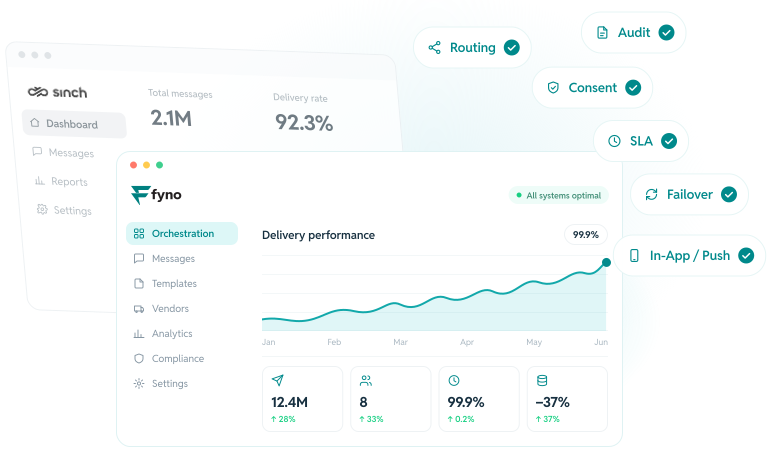
FYNO VS SINCH HUB FOR BFSI
Independent orchestration layer, not bundled middleware
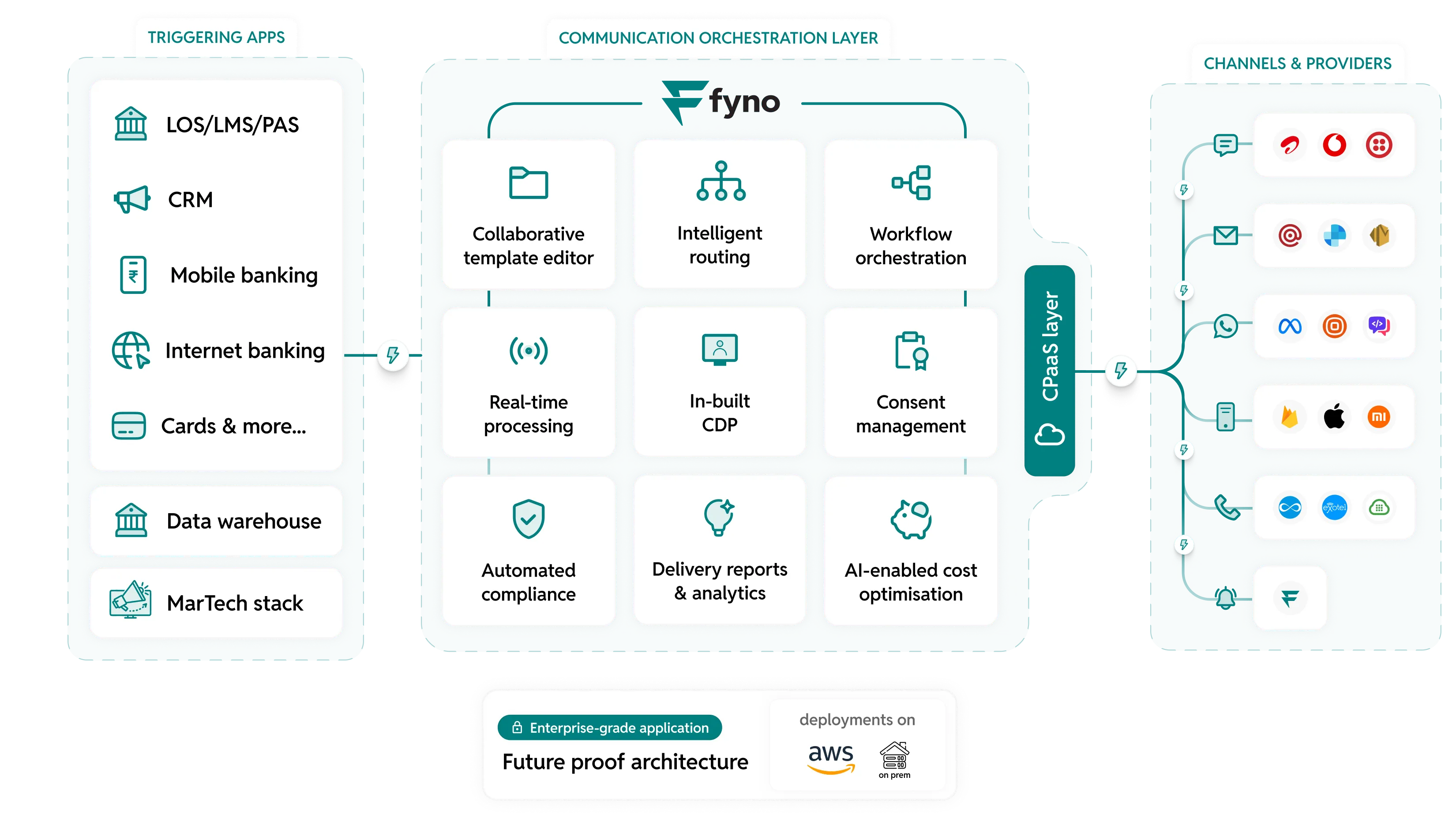
Sinch Hub sits inside the company that bills your volume. Fyno is independent middleware that orchestrates routing, consent and cost decisions for optimised customer communication.
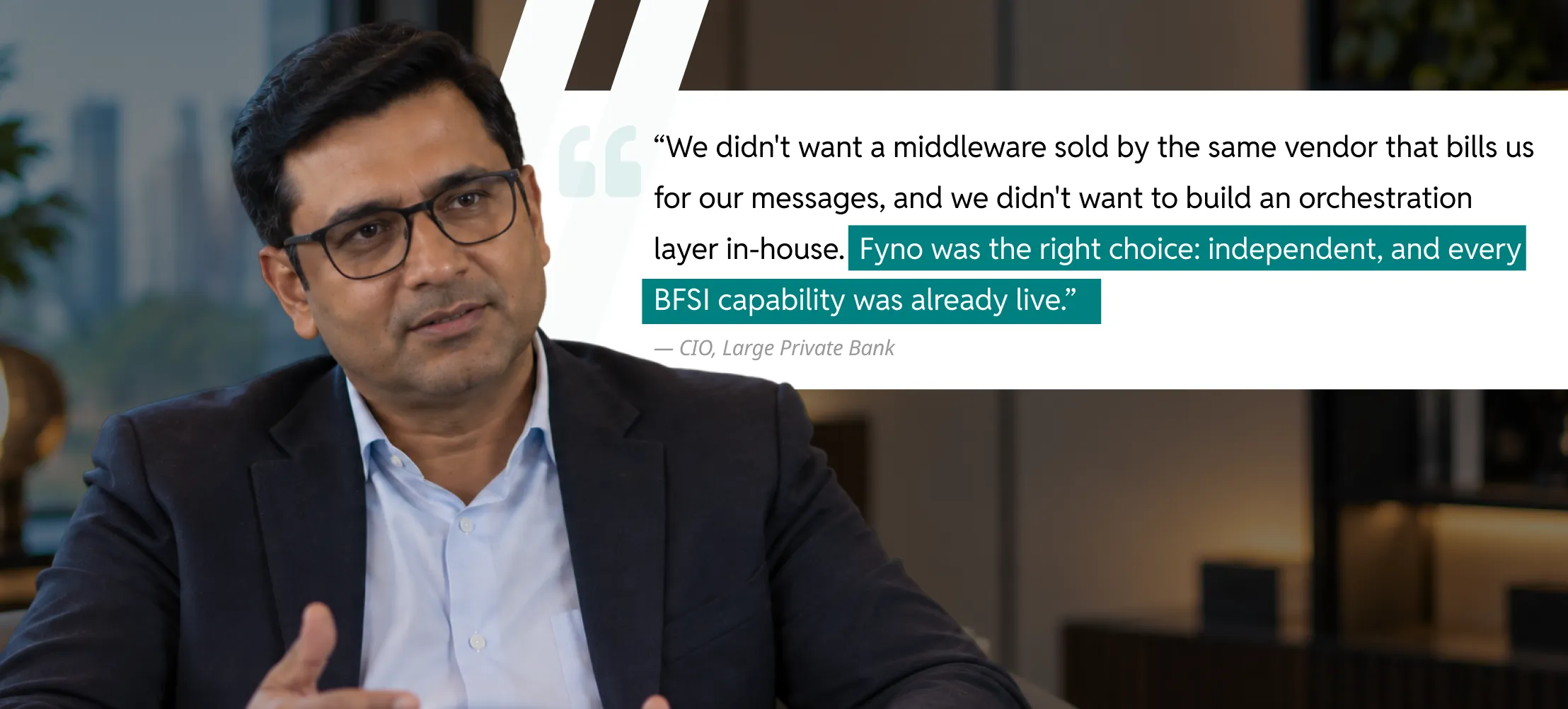
Three BFSI institutions evaluated Sinch Hub. Three chose Fyno.
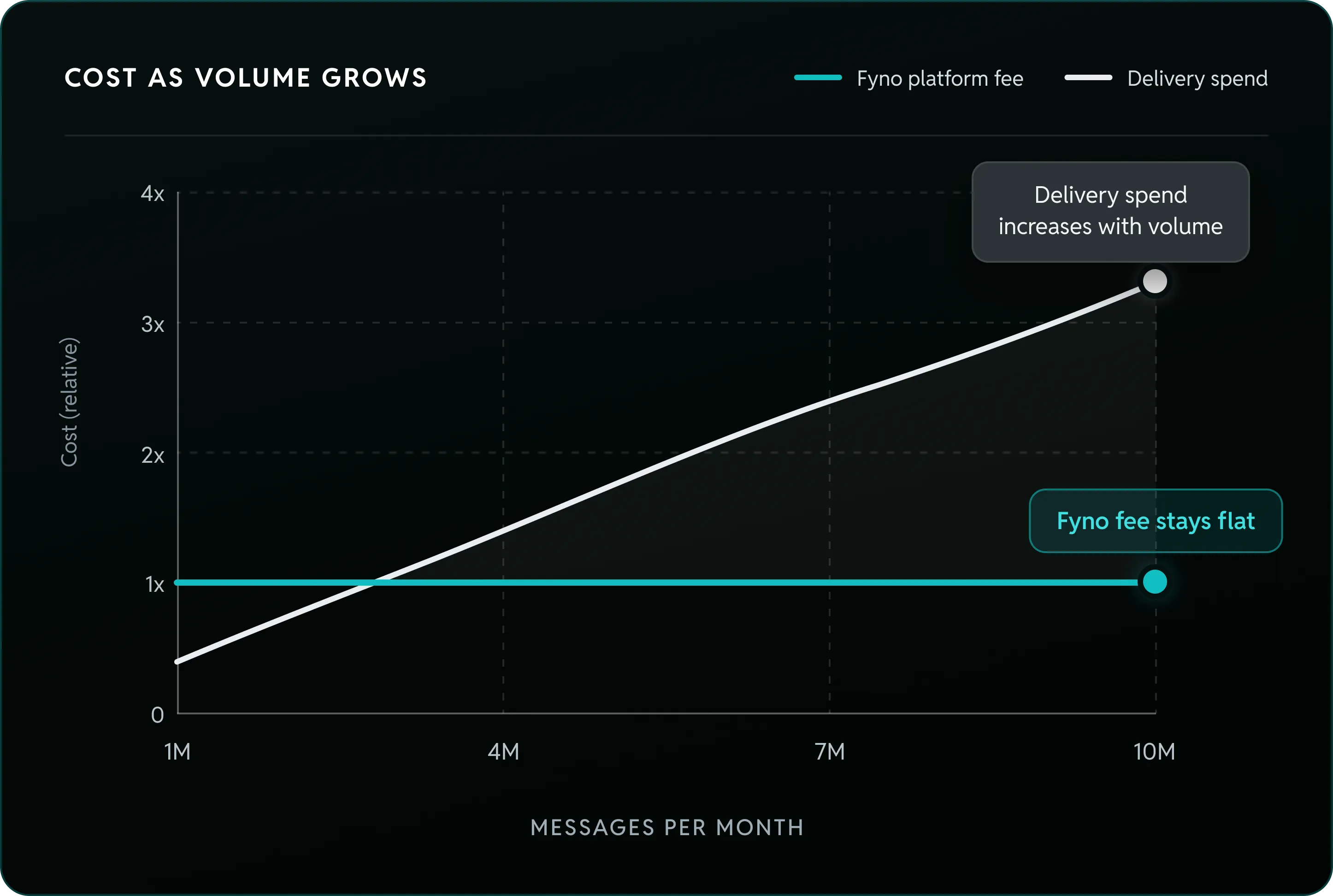
Your middleware should not profit when you send
Fyno earns nothing on delivery, so every routing, fallback and cost call favours your P&L, not a vendor's. Swap any vendor the same day.
NO CONFLICT BY DESIGN
Orchestration that boosts your P&L, not a vendor's
INDEPENDENT P&L
Earns nothing on send
Fyno makes no margin on any message you send, so that every routing, failover and cost decision favours your P&L, never a vendor's delivery revenue.
VENDOR-NEUTRAL
Swap vendors same day
Swap any SMS or WhatsApp vendor from the UI the same day. Fyno charges a flat platform fee, so that its commercials are unaffected by the switch.
IN-PRODUCTION, NOT ROADMAP
Five years, BFSI-live
Five years of production-hardened BFSI development means every capability in a typical middleware BRD is live in Fyno today, not a 12-month roadmap.
BUILT FOR GOVERNANCE
Send-time compliance and control, per message
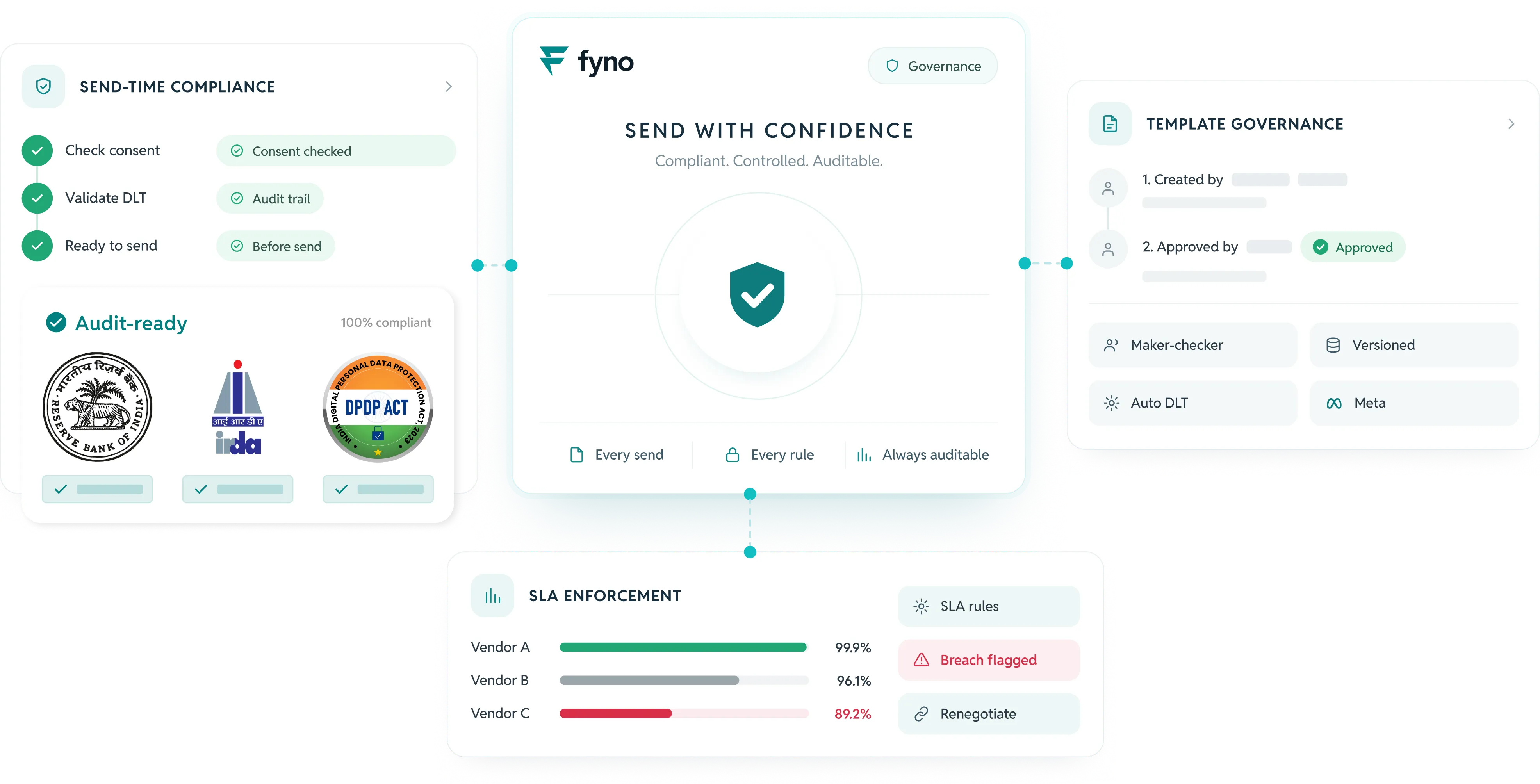
SEND-TIME COMPLIANCE
RBI, TRAI, DPDP enforced
Consent checked before every send. Immutable audit trail per message.
TEMPLATE GOVERNANCE
Maker-checker, auto DLT/Meta
Central editor with one-click approval. 10 days to 36 hours.
SLA ENFORCEMENT
Define SLAs, catch breaches
Define SLAs by category. Fyno flags breaches per vendor for renegotiation.
While you’re still here, check out some other features!
Simplify template management with one powerful, easy-to-use editor
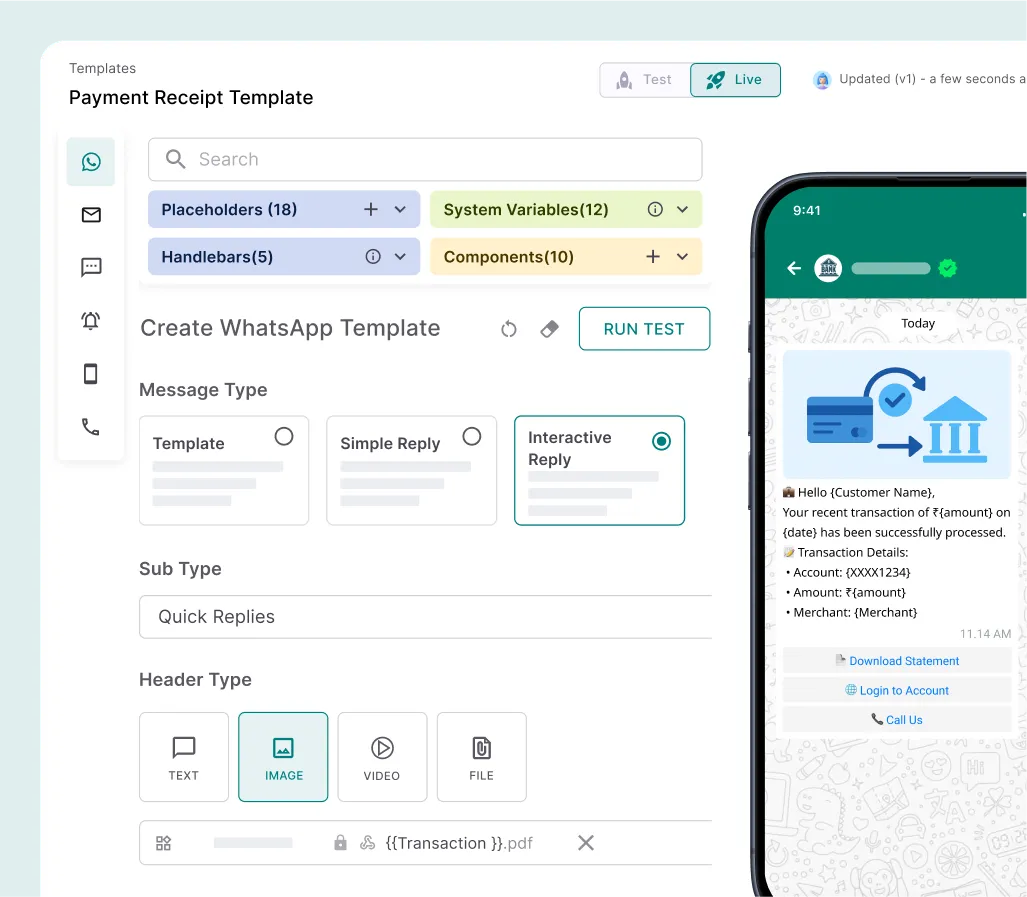
The most powerful communication orchestrator
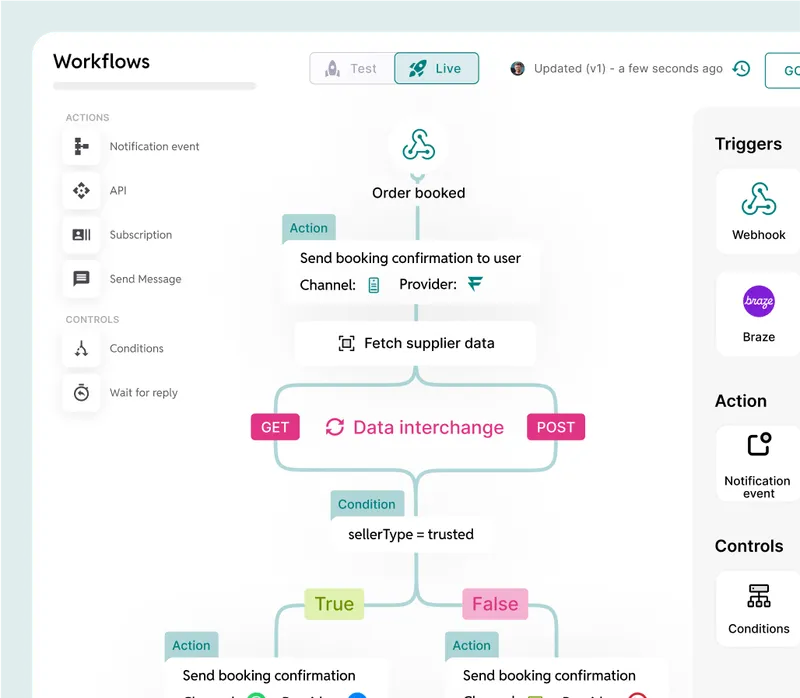
Build and manage complex routing protocols instantly
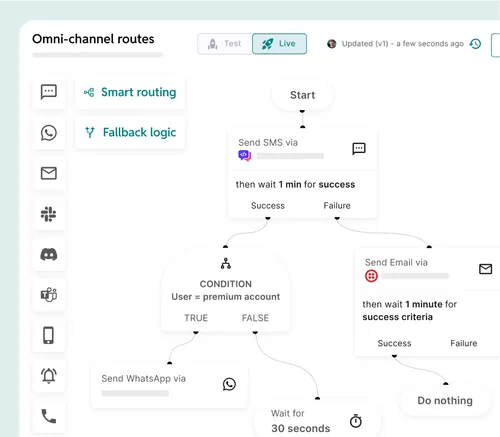
Manage distinct communication requirements better
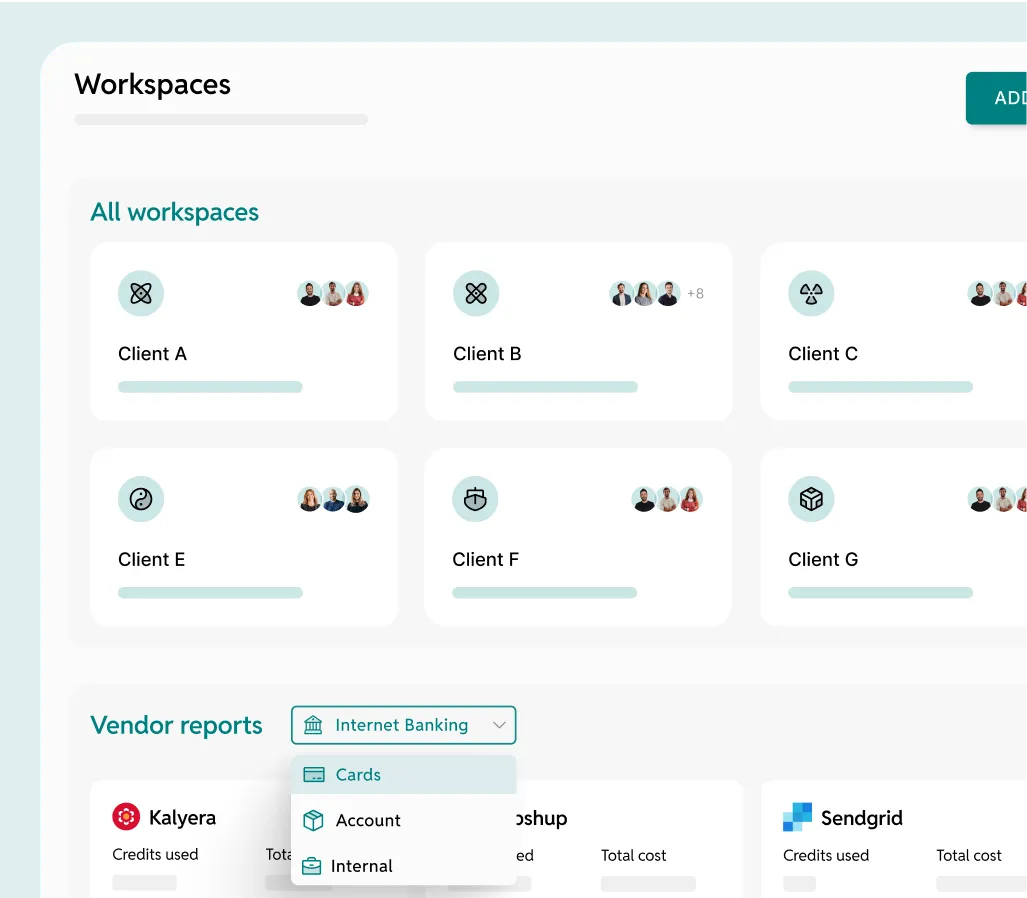
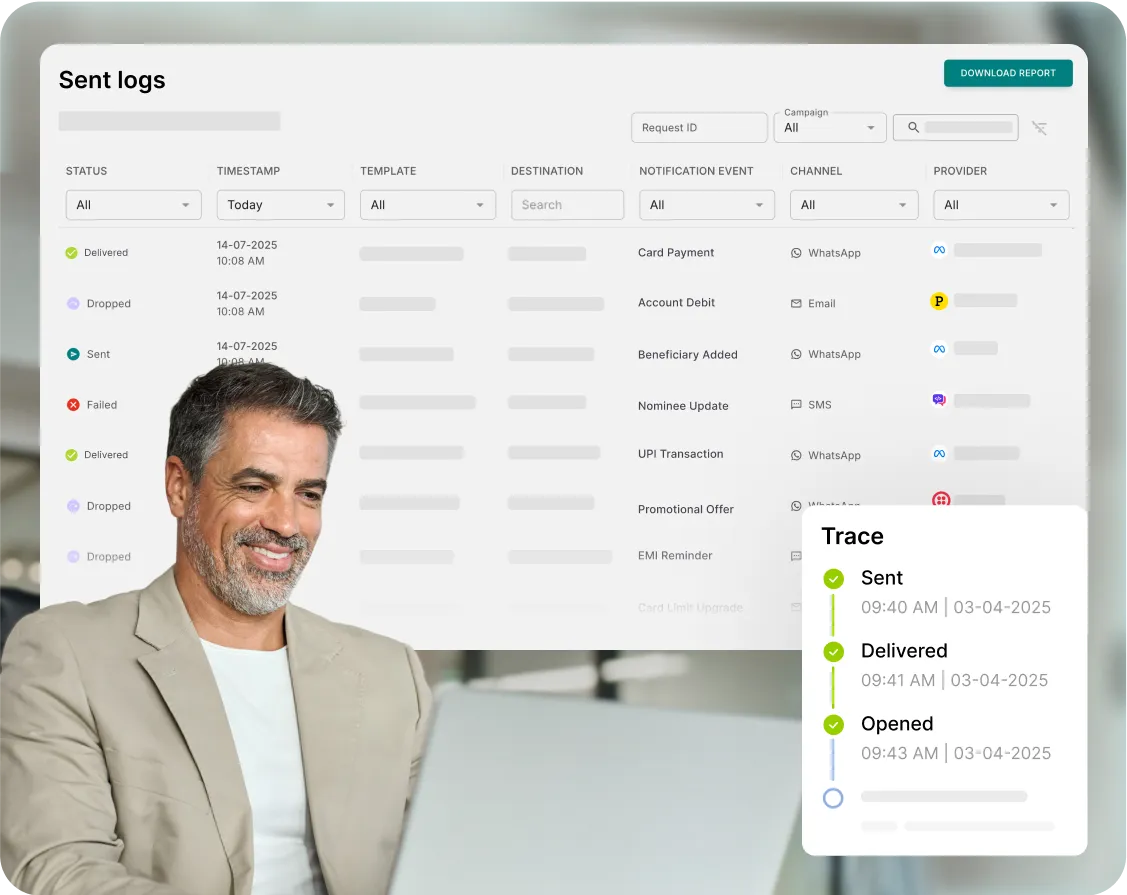
Unified communication logs: complete visibility, effortless compliance
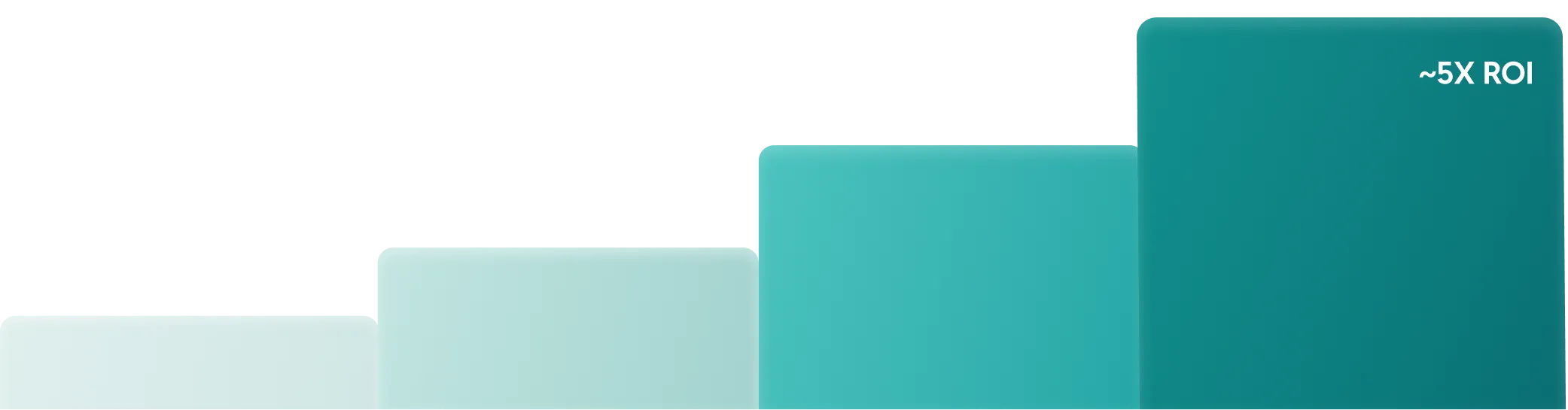
Multiple cost levers, not one. Each one stacks: ~5X ROI in business.
Frequently asked questions about Fyno vs Sinch Hub
Fyno is independent middleware: its P&L does not sit inside the company that delivers your messages. Fyno earns nothing per SMS or WhatsApp message, so that every routing, fallback and cost decision optimises for your cost and deliverability rather than a vendor's revenue. Sinch Hub is orchestration bundled inside a vendor that profits from volume, which creates a structural conflict on exactly those decisions. With Fyno you keep your negotiated provider contracts and can swap any vendor the same day without touching the orchestration layer.
No. Keep Sinch as a delivery vendor. Fyno already integrates Sinch as a provider, and sits above it as the independent orchestration layer. The argument here is about who controls the orchestration and its incentives, not about dropping Sinch's delivery network. You continue to use Sinch (and any other SMS aggregator or WhatsApp BSP) for delivery, while Fyno handles routing, failover, consent, template governance, reconciliation and analytics across all of them.
Two reasons. First, maturity: Fyno has four years of production-hardened BFSI development, so every capability in a typical BFSI middleware BRD is live today rather than on a roadmap. Second, capability depth: Fyno runs In-App and Push channels, an SLA enforcement engine, vendor invoice reconciliation, LOS/LMS workflow journeys, Fyno Connect, an on-infrastructure CDP and Fyno PDF, none of which Sinch Hub offers. And Fyno carries no delivery markup or conflict of interest.
Compliance is enforced at the point of send. Fyno checks consent before every message, applies RBI, TRAI and DPDP rules at the routing layer, and writes an immutable audit trail per message for regulators. Template governance runs through maker-checker approval with automatic DLT and Meta submission, and an in-app consent UI supports DPDP collection inside your own mobile app. The result is regulator-ready logs and audit evidence by default, not paperwork assembled after the fact.
Fyno routes across multiple vendors with time-based failover and SLA enforcement. An OTP can go via WhatsApp, retry over SMS Provider A if undelivered, then Provider B, all inside a defined SLA (for example OTP at 5 seconds). Fyno monitors vendor health continuously and pulls degraded routes automatically. In a Tier-1 BFSI deployment this cut OTP delivery latency from 42 seconds to 8 seconds with no custom code, and lifted delivery toward 100%.
No. Fyno charges a platform fee for the technology and takes zero markup on delivery. You pay your providers their negotiated rate directly, and the provider invoice and the Fyno platform invoice stay separate and transparent. This is the structural difference from a bundled model, where delivery and middleware come on a single marked-up invoice that hides true per-message cost.
Fyno captures the exact credit consumption per message and reconciles it against vendor invoices in real time. Finance teams cross-verify billed volume against actually delivered volume, and banks routinely find 3 to 8% discrepancies they can challenge with evidence. Every message is also tagged by product line and business unit, so cost attribution is automatic rather than a monthly manual reconciliation exercise.
Yes. Fyno runs a parallel rollout: integrate against a sandbox, then move production traffic gradually from 5% to 20% to 50% to 100%, with your existing setup kept as a backup throughout. Because Fyno standardises the payload across channels and reuses your current providers, the cutover needs no rip-and-replace, and you can roll back at any stage. A mid-size NBFC completed full migration in six weeks.
Discover insights
Learn how teams streamline communication, manage templates, and scale faster with Fyno.


.webp)
.webp)
.svg)