AI ANALYTICS
Your communication, visible end-to-end
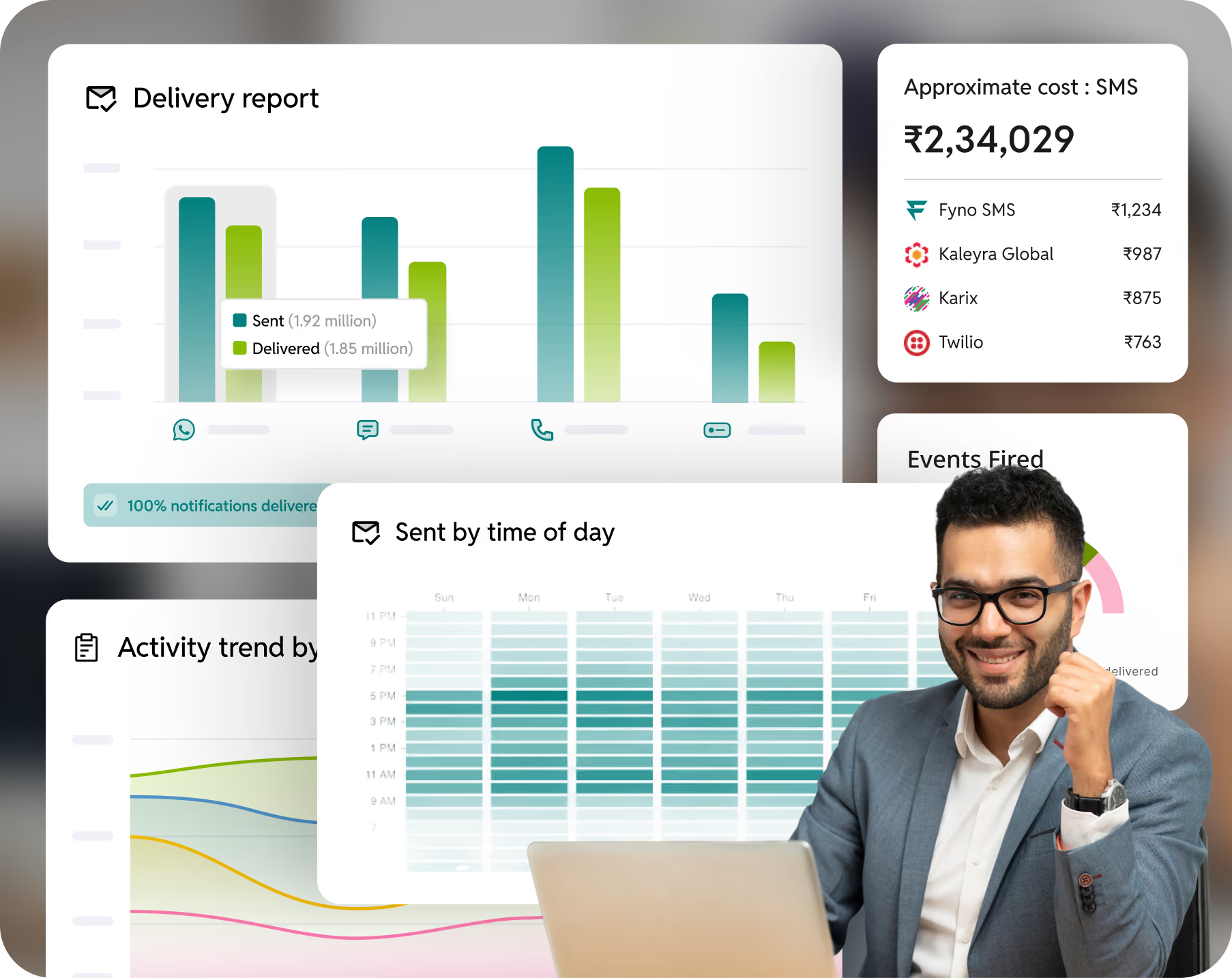
Every CPaaS vendor shows only their data. Fyno consolidates delivery, engagement, SLA, and cost across every channel, so that failures surface faster

.webp)





.svg)
.svg)


.svg)
.webp)

.svg)
.svg)


COMMUNICATION OBSERVABILITY
See every failure, cost, and SLA breach before it hurts
TRACK DELIVERY & ENGAGEMENT
Every channel tracked
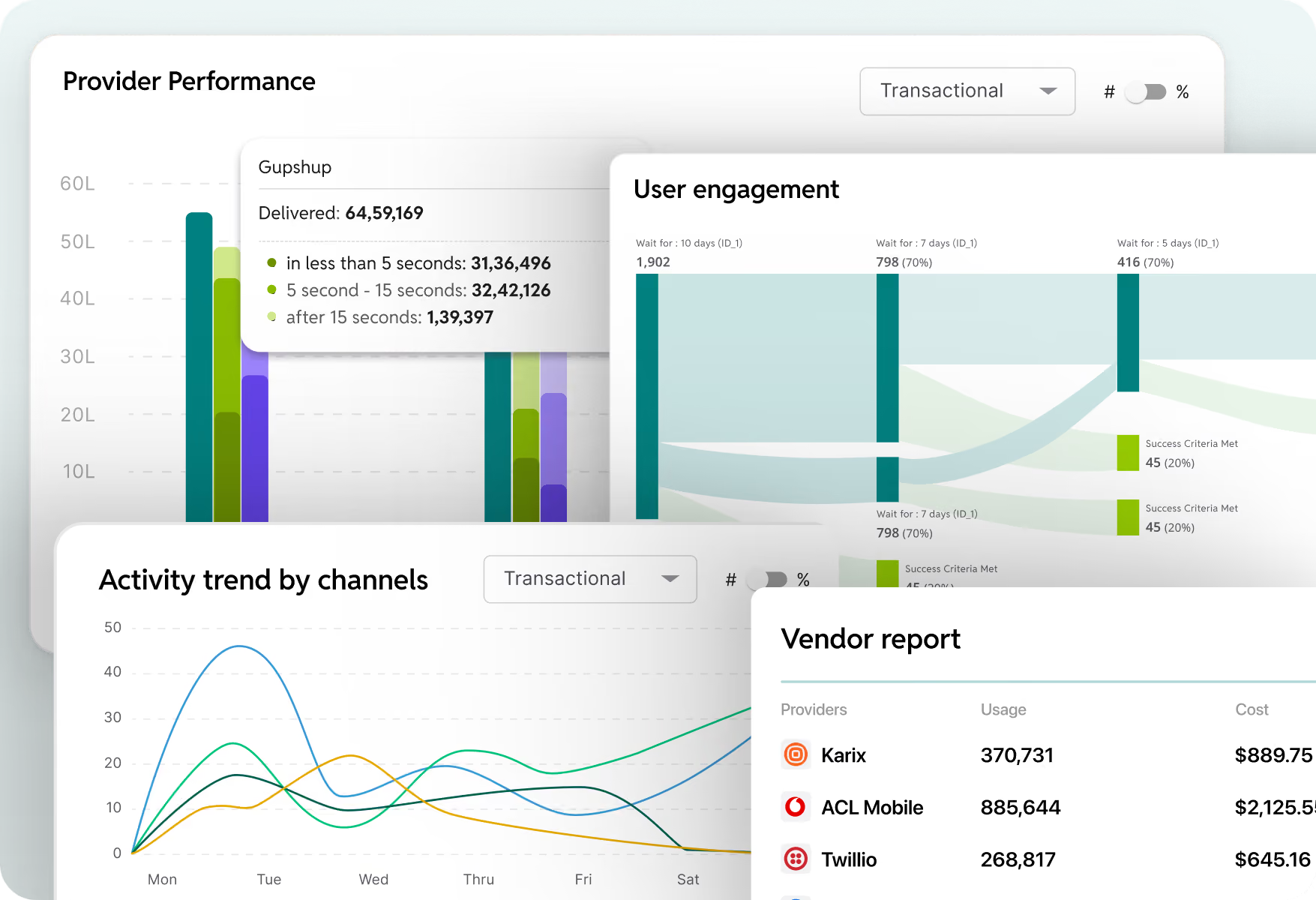
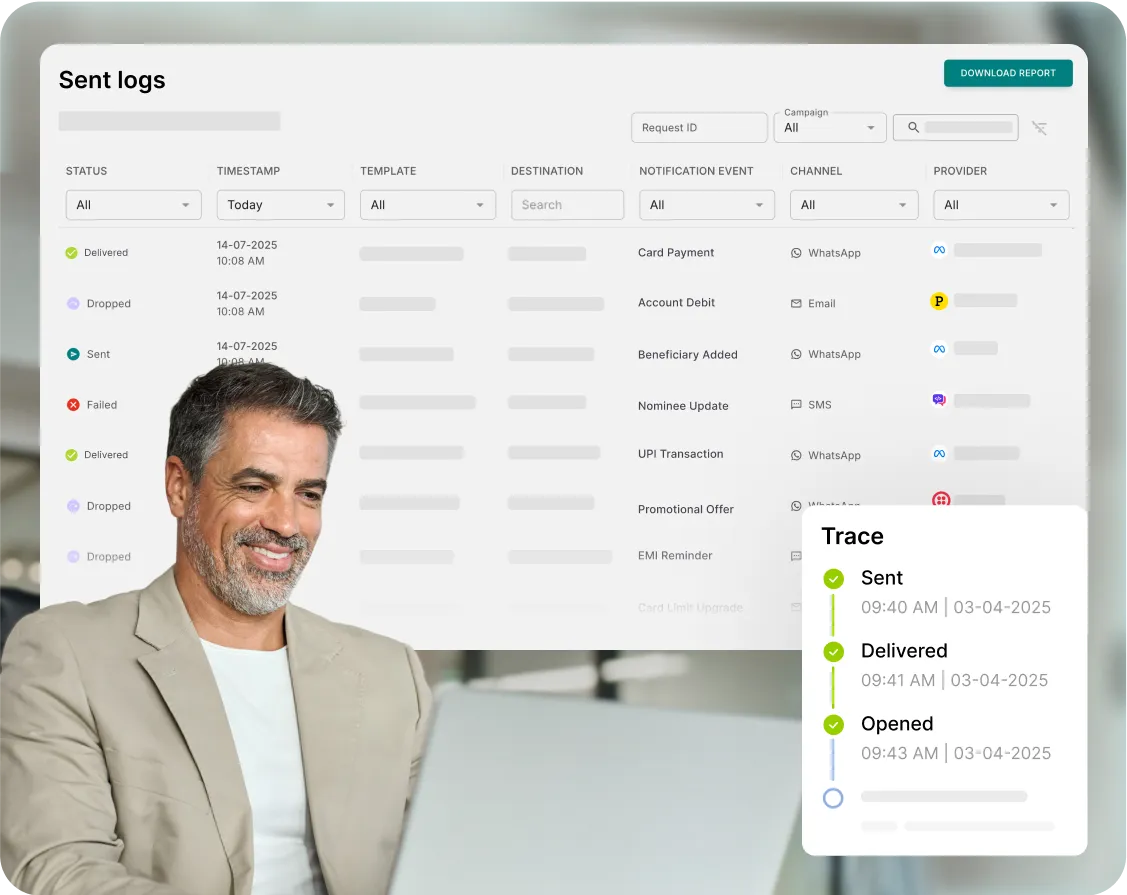
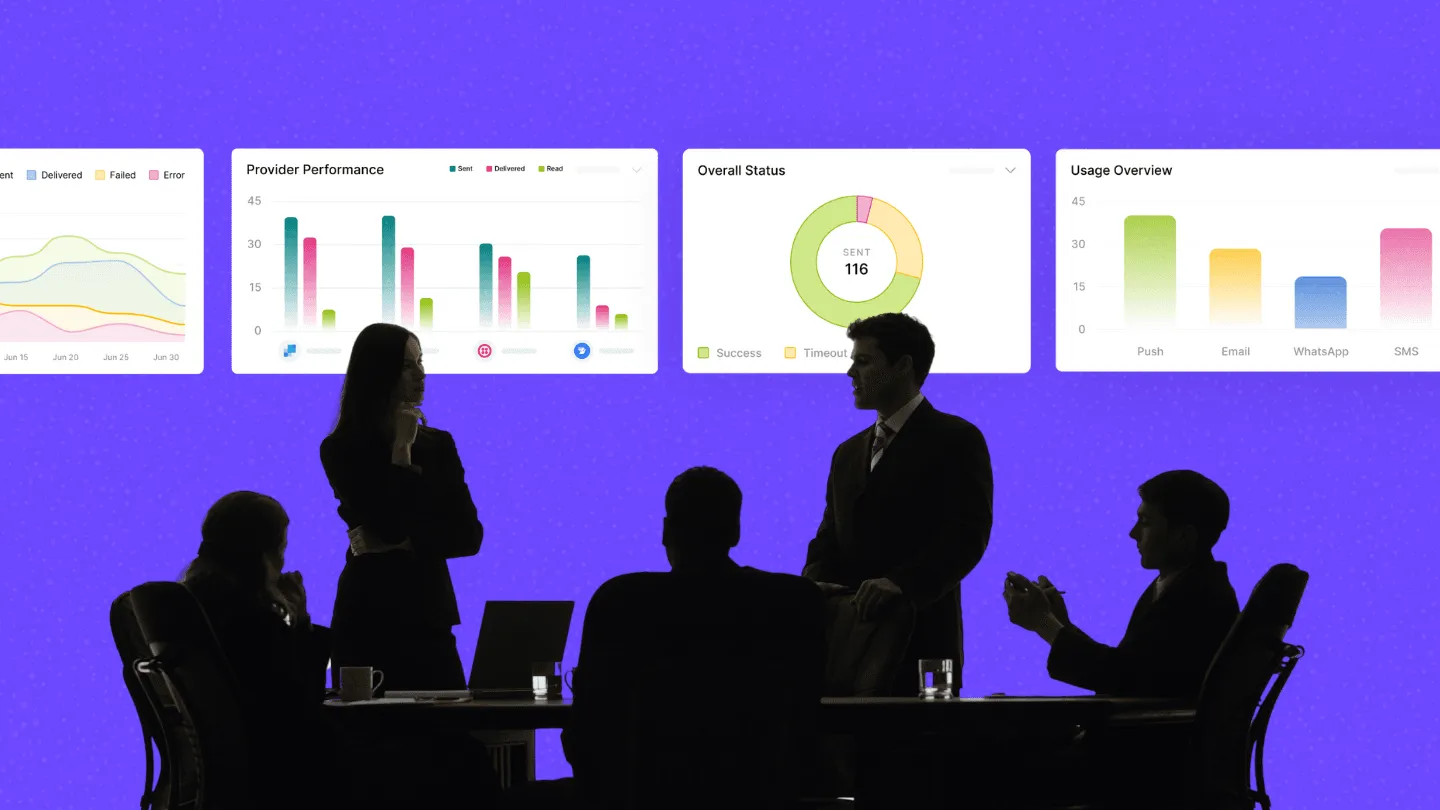
Delivery rates, opens, clicks, and reply rates across SMS, WhatsApp, email, push, and RCS, tracked per vendor in real time. No vendor portal login required.
ANOMALY DETECTION
Alert before they call
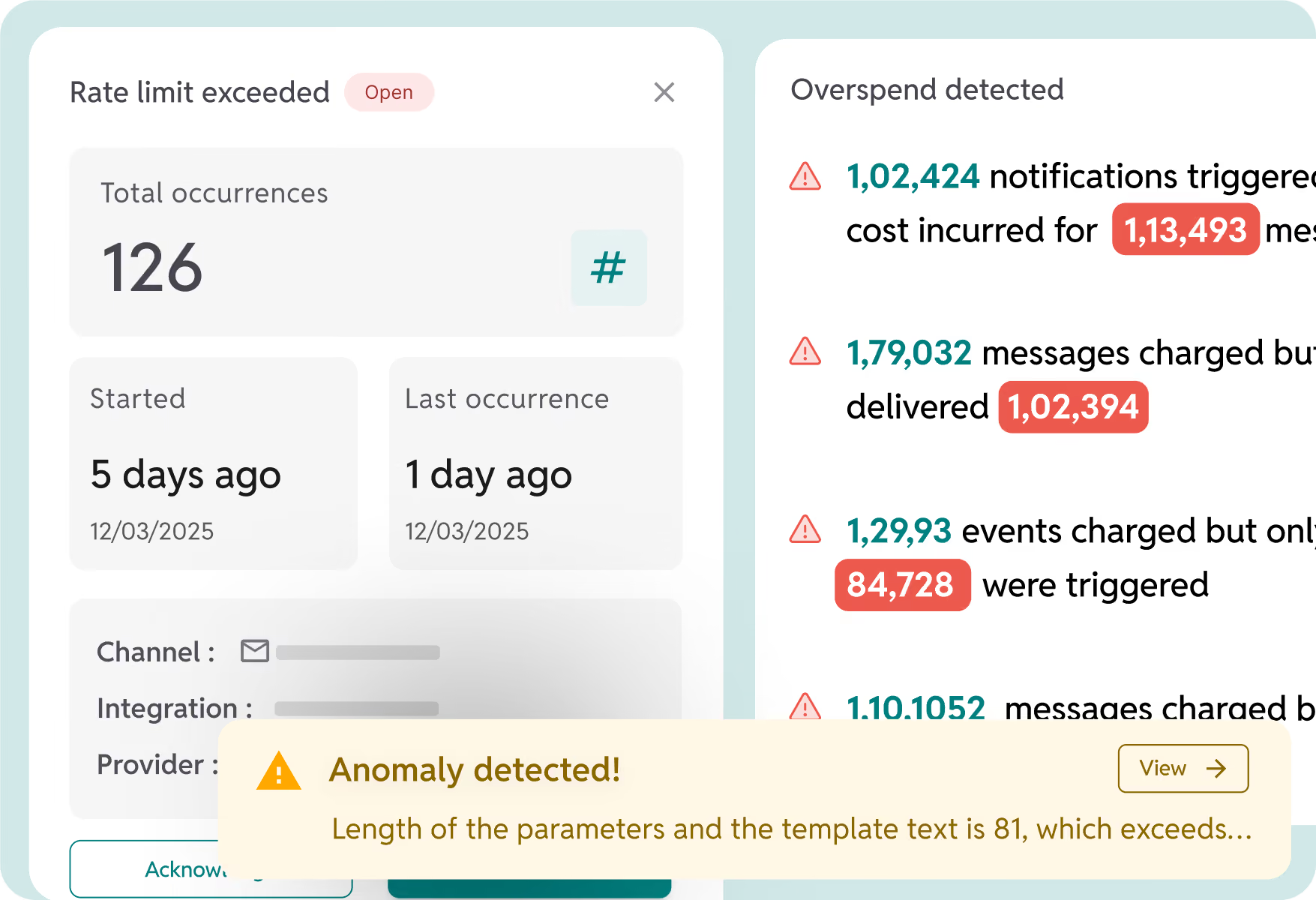
AI learns each vendor's normal delivery pattern. When rates, latency, or callbacks drift, the breach is flagged within minutes with the vendor named.
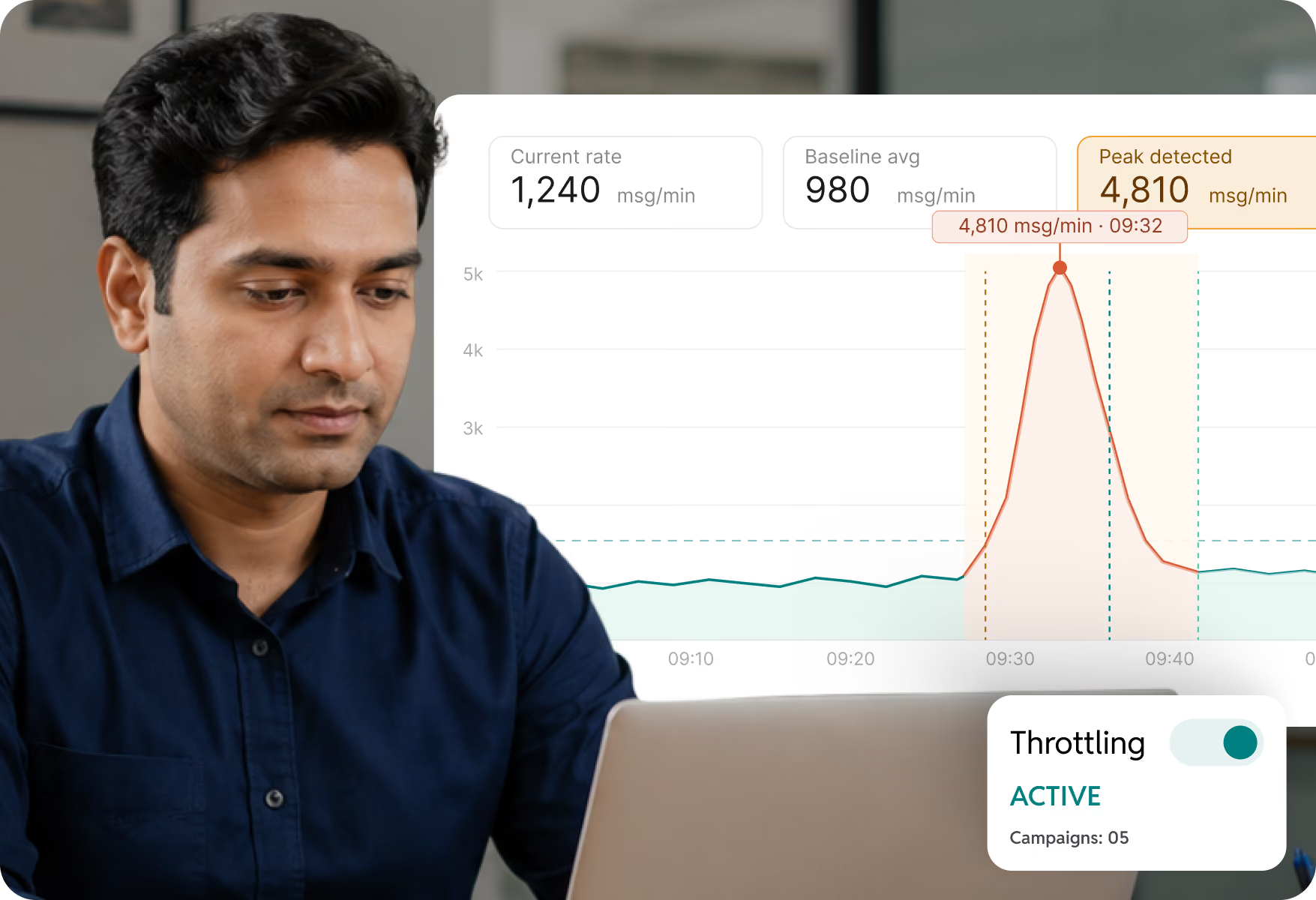
SURGE DETECTION
Detect spike in traffic
Fraud spikes, campaign bursts, and runaway integration triggers detected in real time. Fyno throttles, alerts, and protects vendor capacity downstream.
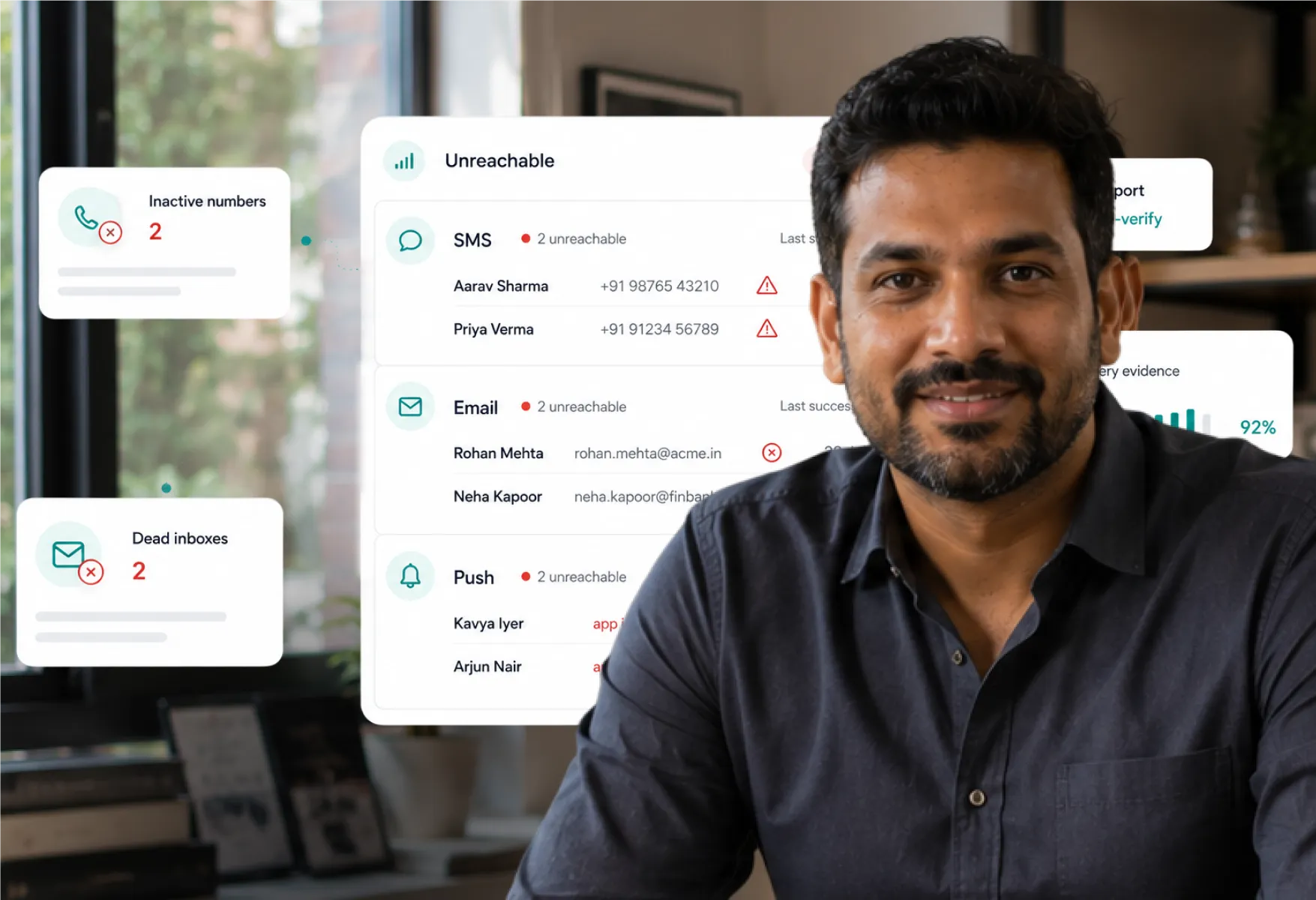
REACHABILITY DETECTION
Find the numbers that stopped working
Inactive numbers, dead inboxes and uninstalled apps identified from your own delivery evidence, exportable for re-verification.
Vendor intelligence
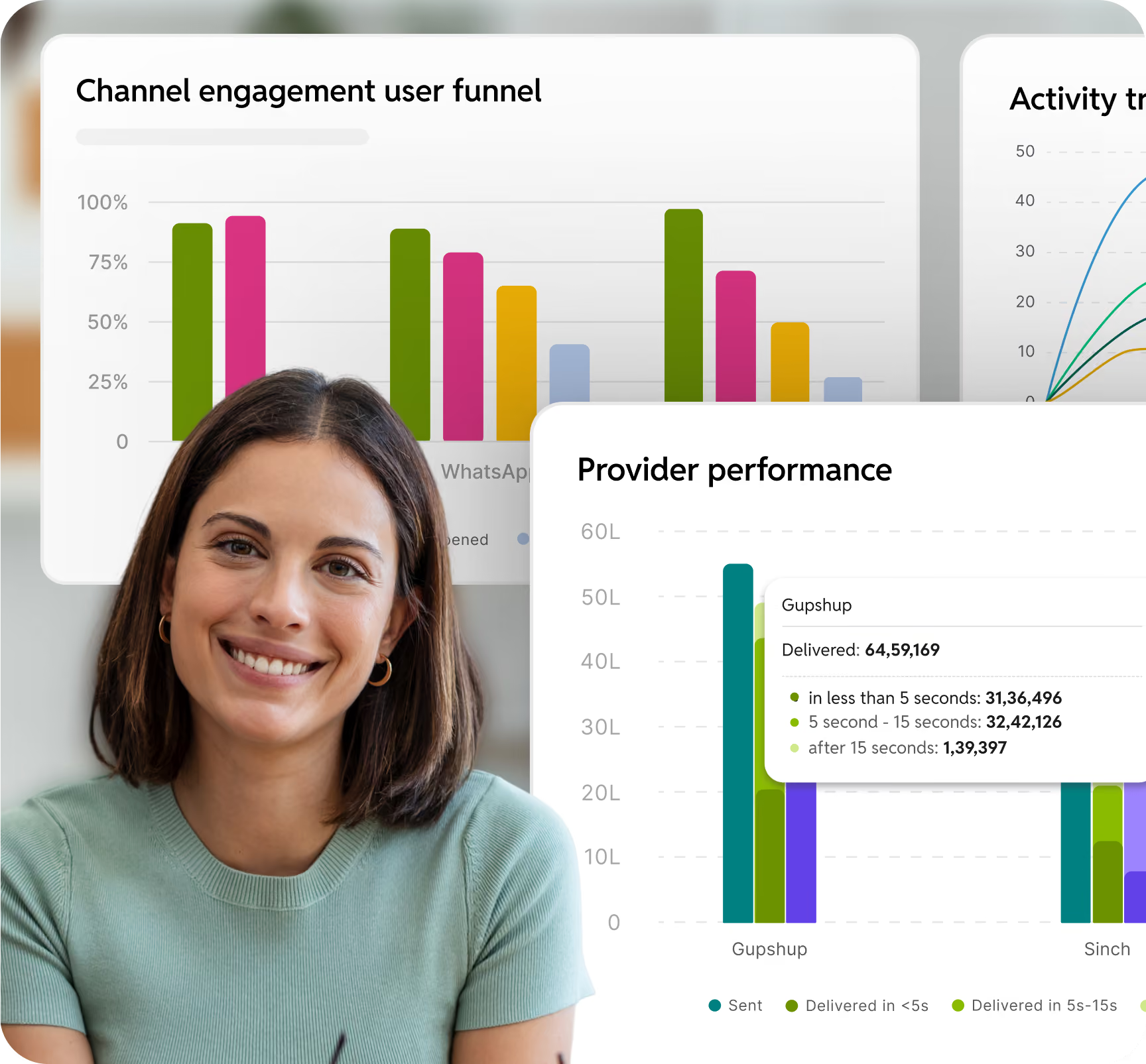
VENDOR PERFORMANCE COMPARISON
Data, not their word
Delivery rate, latency, cost per message across all vendors, side by side.
COST-PER-MESSAGE ANALYSIS
Spot overbilling early
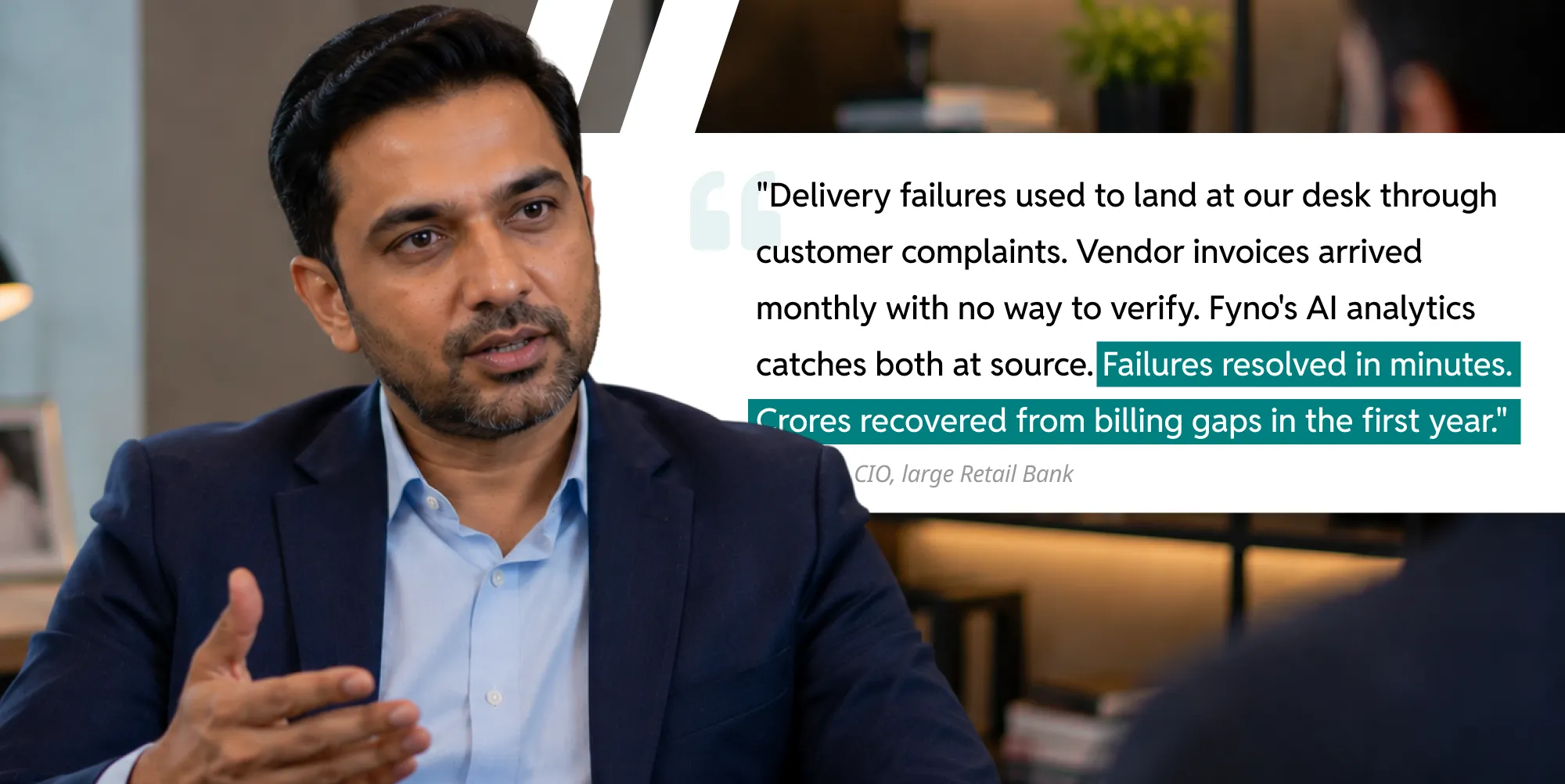
Fyno tracks credits consumed. Banks have recovered crores in billing gaps.
SLA governance & decision making
SLA ADHERENCE MONITORING
Hold vendors to the SLA
OTP delivery tracked against your 10-second SLA. Every breach timestamped.
CHANNEL-WISE ENGAGEMENT
Route by what works
OTP on SMS, collections on WhatsApp, marketing on push. Choose performance, with no added costs
Departmental visibility & reconciliation

COHORT & GEO BREAKDOWN
Every team's own view
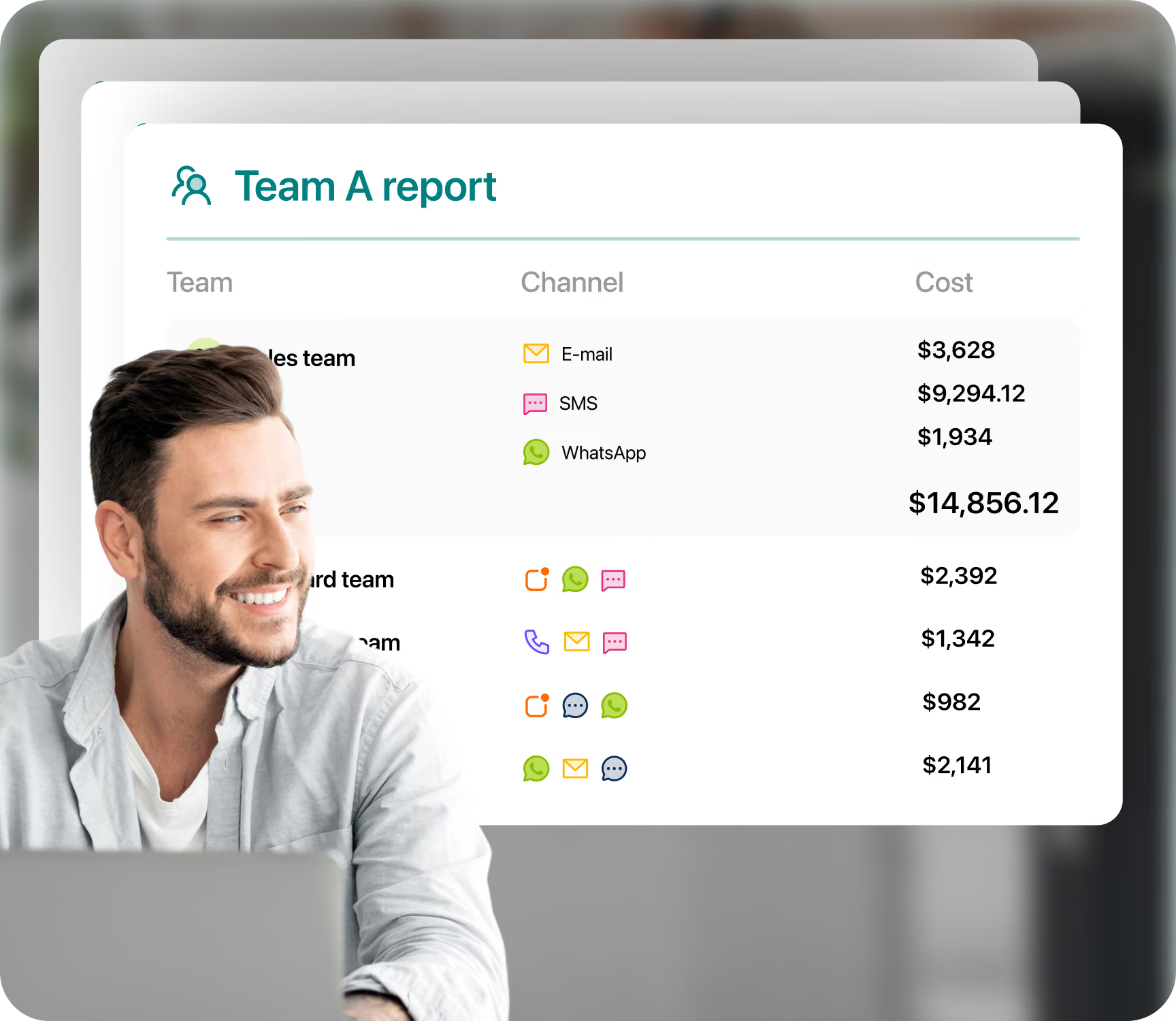
Credit Card, Collections, UPI Alerts - each with their own view and chargebacks.
RECONCILIATION ENGINE
No more spreadsheets
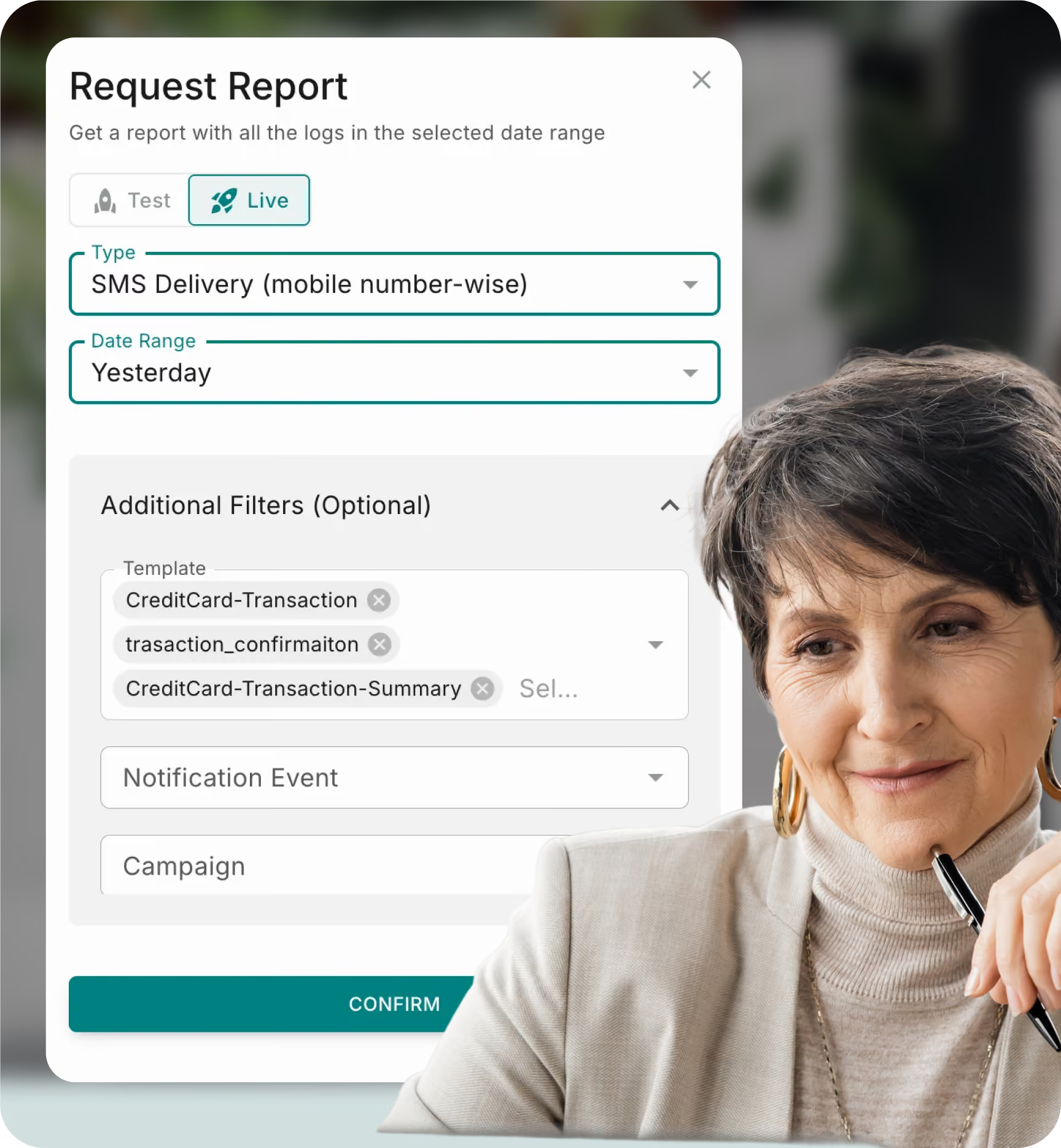
Multipart SMS gaps, WhatsApp overages, per-destination discrepancies flagged.
While you’re still here, check out some other features!
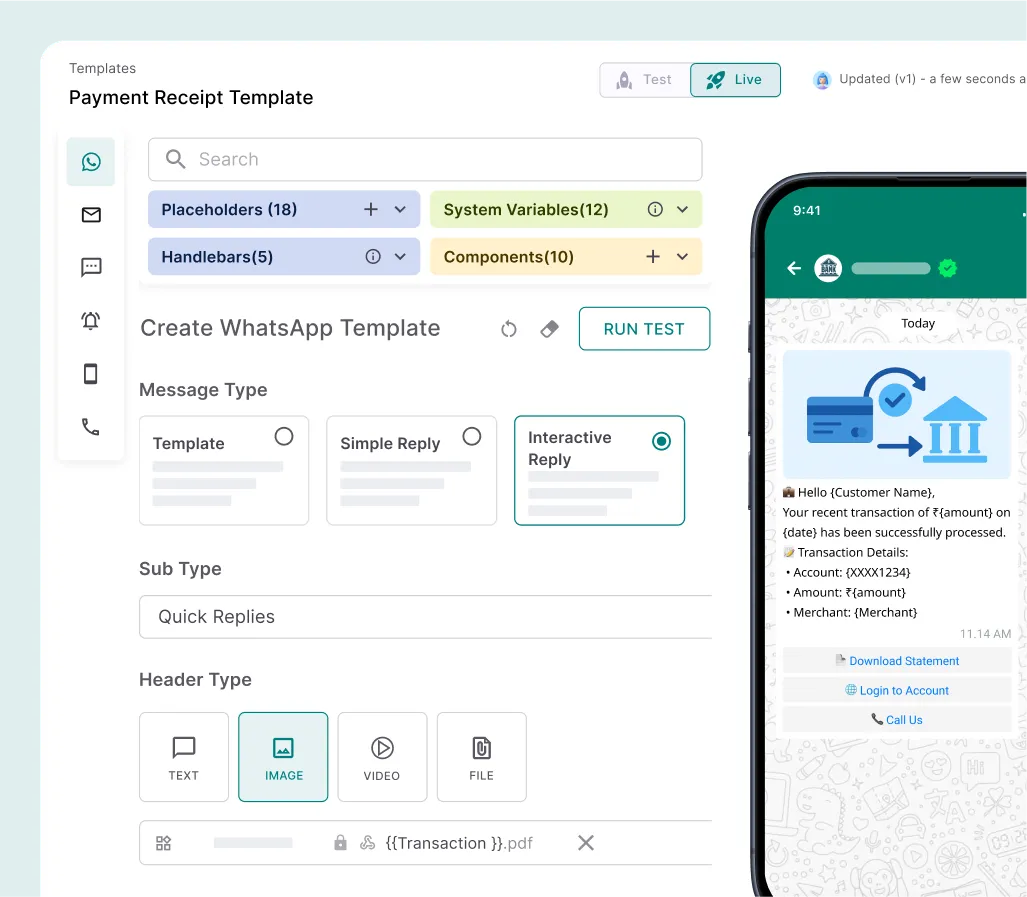
Simplify template management with one powerful, easy-to-use editor
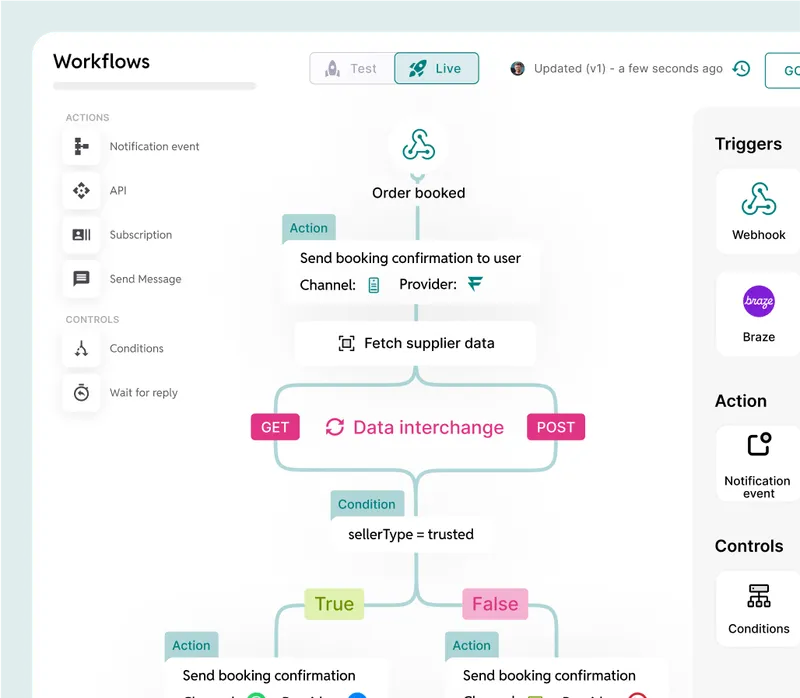
The most powerful communication orchestrator
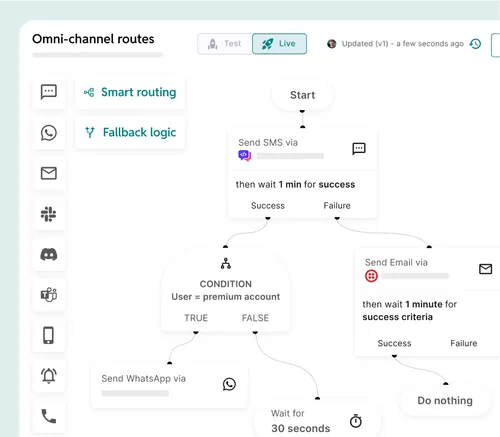
Build and manage complex routing protocols instantly
Manage distinct communication requirements better
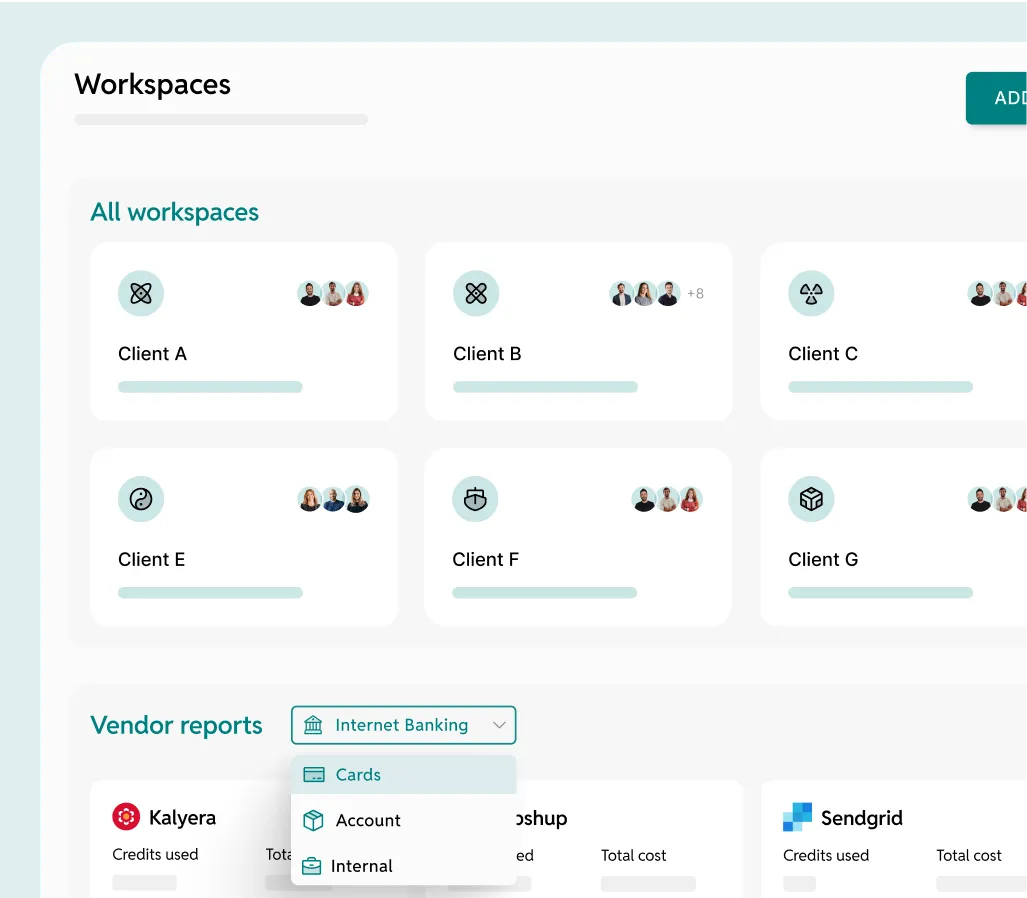
Unified communication logs: complete visibility, effortless compliance
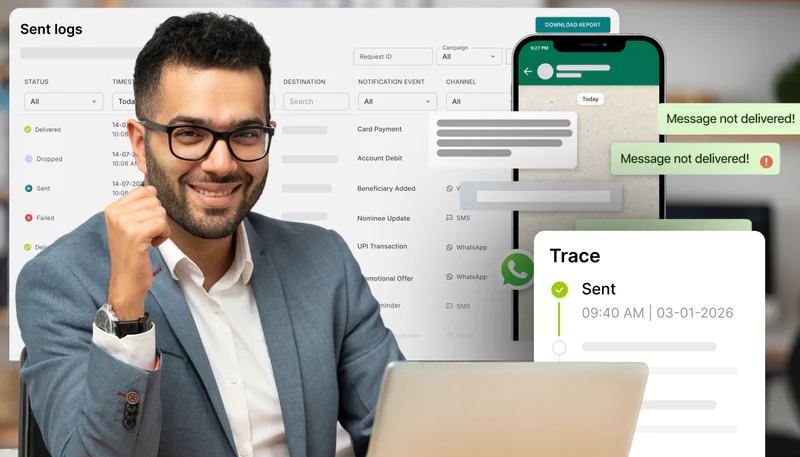
Find the answers that you need
Your CPaaS vendor's dashboard shows only their traffic. Fyno consolidates delivery data from every vendor you use, across every channel, into one place. When an OTP delivery rate drops on one vendor while two others are healthy, your vendor's dashboard shows nothing wrong. Fyno flags the specific vendor, the time window, and the failure root cause. Vendor dashboards also have no incentive to surface overbilling. Two banks we deployed saw a consistent 3–5% gap between Fyno's consumption count and their vendor invoices. Both raised disputes and settled at Fyno's figures.
Delivery rate drops have three common causes: operator-level congestion on specific circles, DLT template rejections that silently fail after submission, and vendor infrastructure issues that surface as increased callback latency before they show up as hard failures. Generic monitoring tools catch infrastructure events but cannot tell you that a specific vendor's delivery rate for OTP traffic to Jio numbers dropped 8% in the last 20 minutes while other vendors are normal. Communication-specific anomaly detection monitors delivery rates, callback latency, and vendor response times separately, so the incident is scoped to the right vendor and message type from the first alert, not after manual comparison.
Yes. The standard approach is to measure message delivery from the trigger to the operator delivery callback, per vendor, per message type, and per time window. For OTPs, the standard track is the 5-second threshold. For transactional alerts, 15 seconds. Every breach should be timestamped and attributable to the specific vendor. This data exports directly. Banks using Fyno have presented this report at contract renewal to negotiate delivered-only billing. IDBI Bank's RFP in early 2025 required exactly this measurement. Fyno built the capability for that evaluation.
You configure workspaces or analytics labels by team: Credit Card, UPI Alerts, Collections, Retail Banking. Every message's cost is attributed to the configured workspace or label in real time. End-of-month summaries export per workspace. For banks that charge customers per message, Fyno generates per-destination delivery counts that feed directly into your core banking or EPM system via webhook or SFTP. Karnataka Gramin Bank uses this to generate per-account message delivery reports for customer billing each cycle.
Yes, and multipart SMS is one of the most common reconciliation gaps in BFSI messaging. A 163-character message submitted as one becomes two billable credits at the operator. The correct approach is to track credits consumed at dispatch, not at the point of submission. Every multipart split should be logged separately. The reconciliation engine compares it line by line against your vendor's invoice and flags every discrepancy. The audit trail should be exportable and meet the evidentiary standard vendor finance teams require for dispute resolution.
No. Fyno's logging layer is asynchronous. It does not sit in the critical path between your system's trigger and the dispatch to your vendor. The log write happens after the delivery instruction is already sent. Fyno's P95 processing time for OTP traffic is under 50ms. Karnataka Gramin Bank and Kerala Gramin Bank process approximately 150 million messages per month through this layer. Neither has observed measurable OTP delivery degradation after deploying Fyno on top of their existing vendor stack.
Communication observability is the ability to see the communication journey in real time — what is happening across every message channel, every vendor, and every customer interaction, from the trigger to the delivery confirmation. For BFSI teams, this matters for three reasons. First, OTP and transaction alert delivery directly affects customer experience and fraud prevention. A delivery failure that goes undetected for 20 minutes affects thousands of transactions. Second, regulators increasingly expect banks to demonstrate traceability of customer communications — which requires a log that no single vendor can provide. Third, with 4–6 CPaaS vendors active in most large banks, no single vendor has visibility into the full picture. Observability fills that gap without replacing any vendor.
The standard approach is to run traffic across multiple vendors simultaneously and measure delivery rate, callback latency, and cost per message per vendor, per circle, and per message type, in real time. This gives your procurement and IT teams a live performance record rather than relying on vendor-provided SLA claims. Banks use this data in three ways: to route traffic dynamically to the best-performing vendor at any moment, to present vendor-specific breach data at contract renewal, and to make the case for renegotiated rates based on actual delivered volume rather than submitted volume. The key is that the measurement must come from your systems, not the vendor's — otherwise the data is not independent enough for a procurement conversation.
There are two approaches. The Mobile Number Revocation List published on the Department of Telecommunications' Digital Intelligence Platform tells an institution which numbers have been revoked or reassigned by the operator, and RBI's circular of 17 January 2025 requires regulated entities to use it to clean their customer databases. Second, is Delivery Evidence which tells an institution something broader: which destinations are not receiving messages at all, whether because the number is revoked, ported, dormant, the app was uninstalled, or the email address is bouncing.The second view is only available to a layer that sees every vendor and every channel. A single provider's console shows failures on its own traffic, so a number that fails on one vendor and was never retried through another looks healthy. Consolidating delivery outcomes across all providers turns scattered failures into a reviewable list of customers the bank cannot currently reach, which is the input to the periodic re-verification of mobile numbers and email addresses that paragraph 76C of RBI's Third Amendment Directions, 2026 requires from 1 January 2027.
Discover insights
Learn how teams streamline communication, manage templates, and scale faster with Fyno.



.svg)