COMMUNICATION ORCHESTRATION PLATFORM
What is a communication orchestration platform?
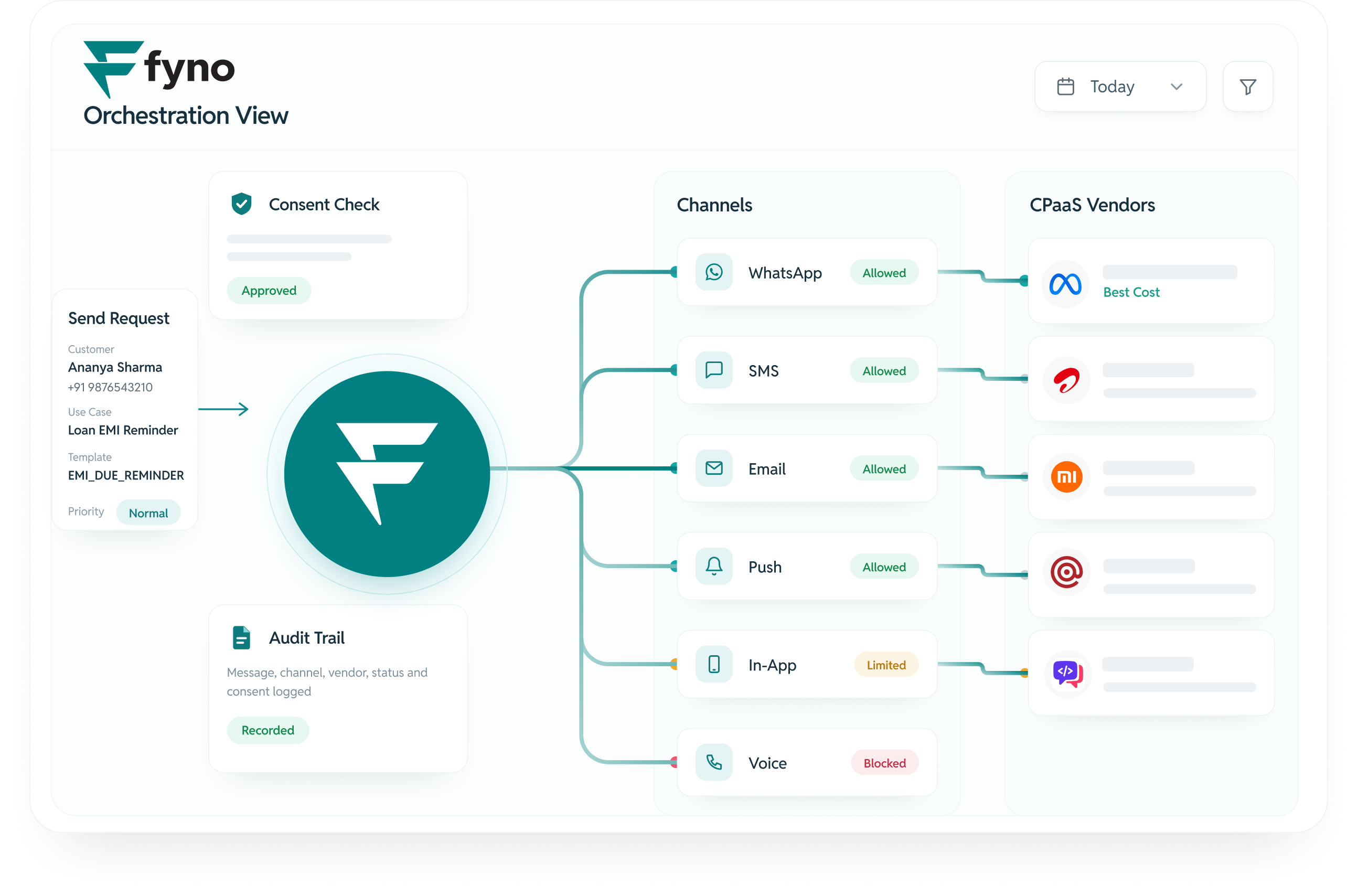
Run event-driven, scheduled, or recurring campaigns from one platform. A/B testing and consent are validated at every dispatch.

.webp)
.svg)
.svg)

.svg)
.webp)

.svg)
.svg)


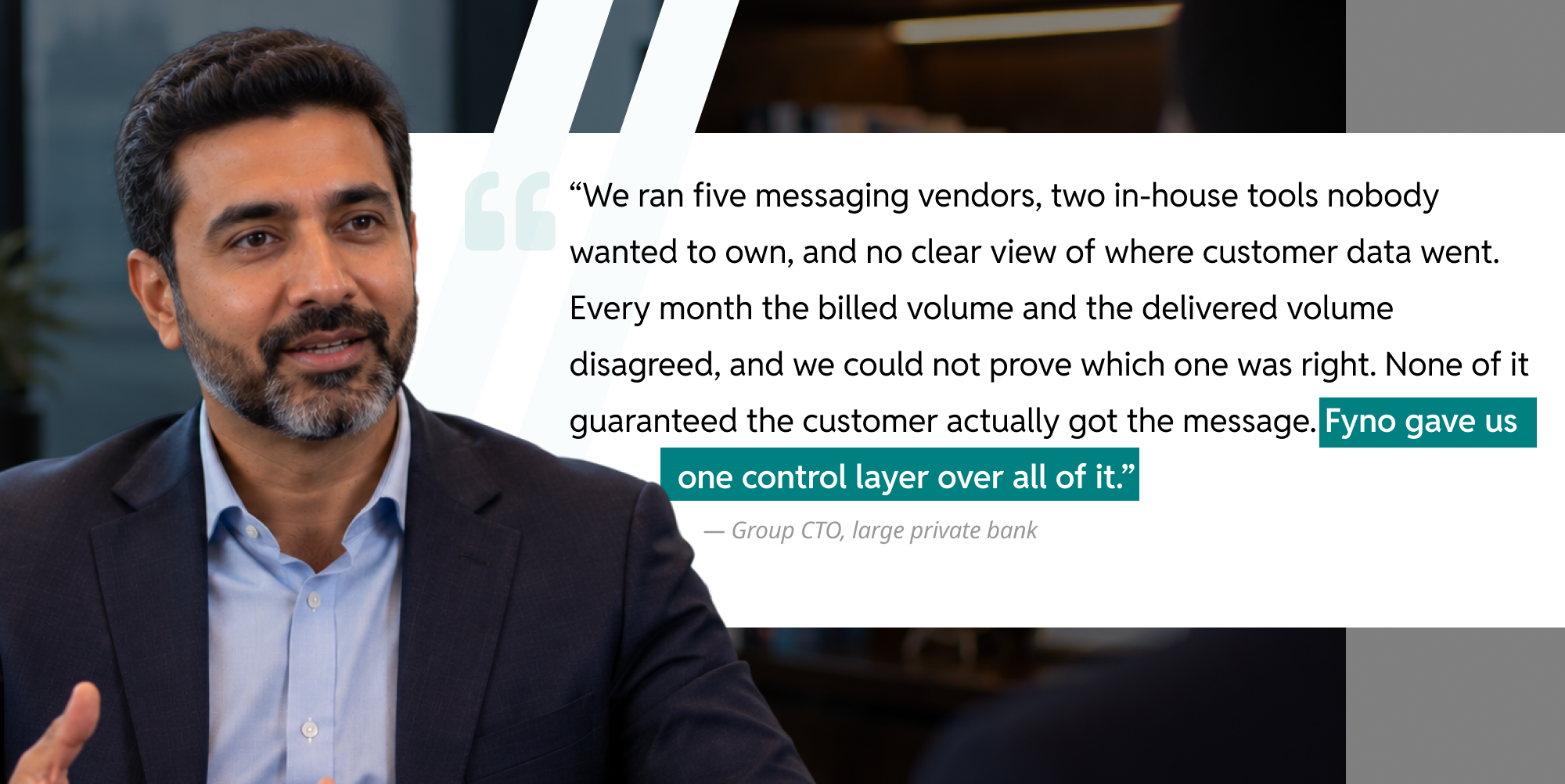
You don't need to replace your stack to control it
WHERE THE LAYER SITS
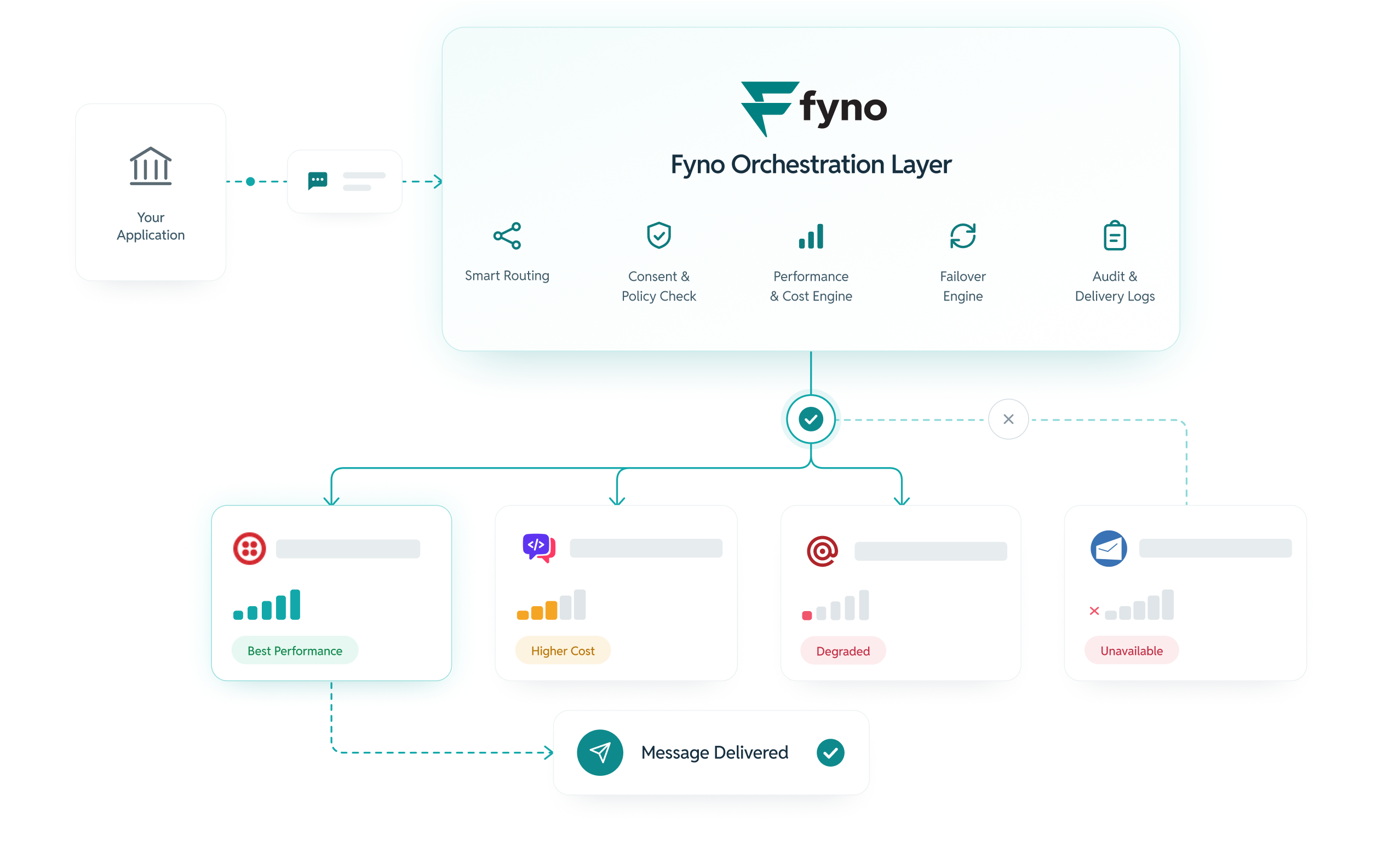
Downstream of your core data systems, CCM and Martech. Upstream of CPaaS.
UPSTREAM OF YOUR CPAAS
Not another CPaaS vendor
CPaaS delivers a message once you hand it over. Everything upstream of that handover is orchestration: which vendor carries it, whether it goes at all, and what happens if it fails.
DOWNSTREAM OF YOUR CCM
Not a document engine
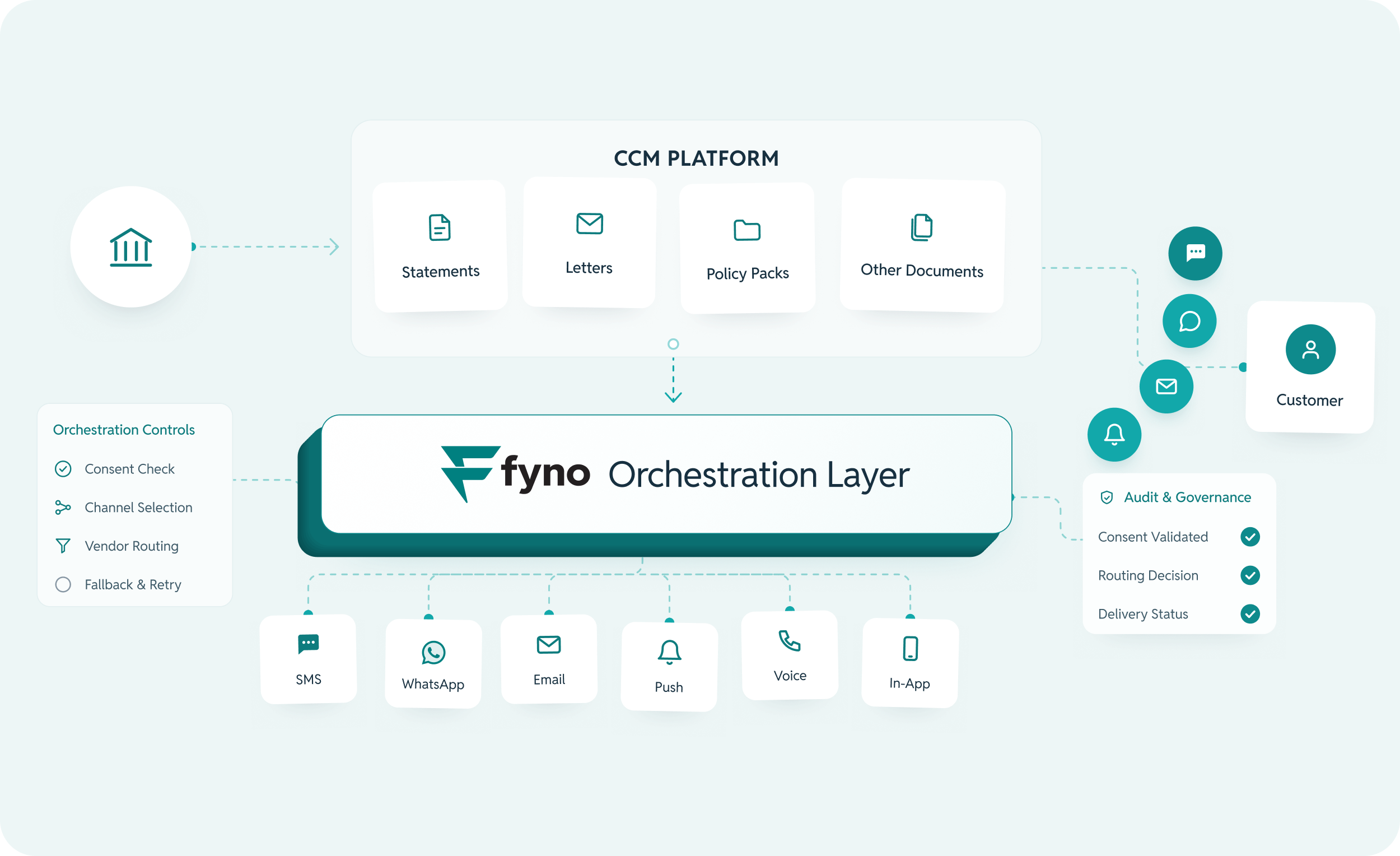
CCM composes statements, letters and policy packs then hands them downstream. Orchestration governs how each one reaches the customer, through which vendor, under what consent.
DOWNSTREAM OF MARTECH
Not your campaign tool
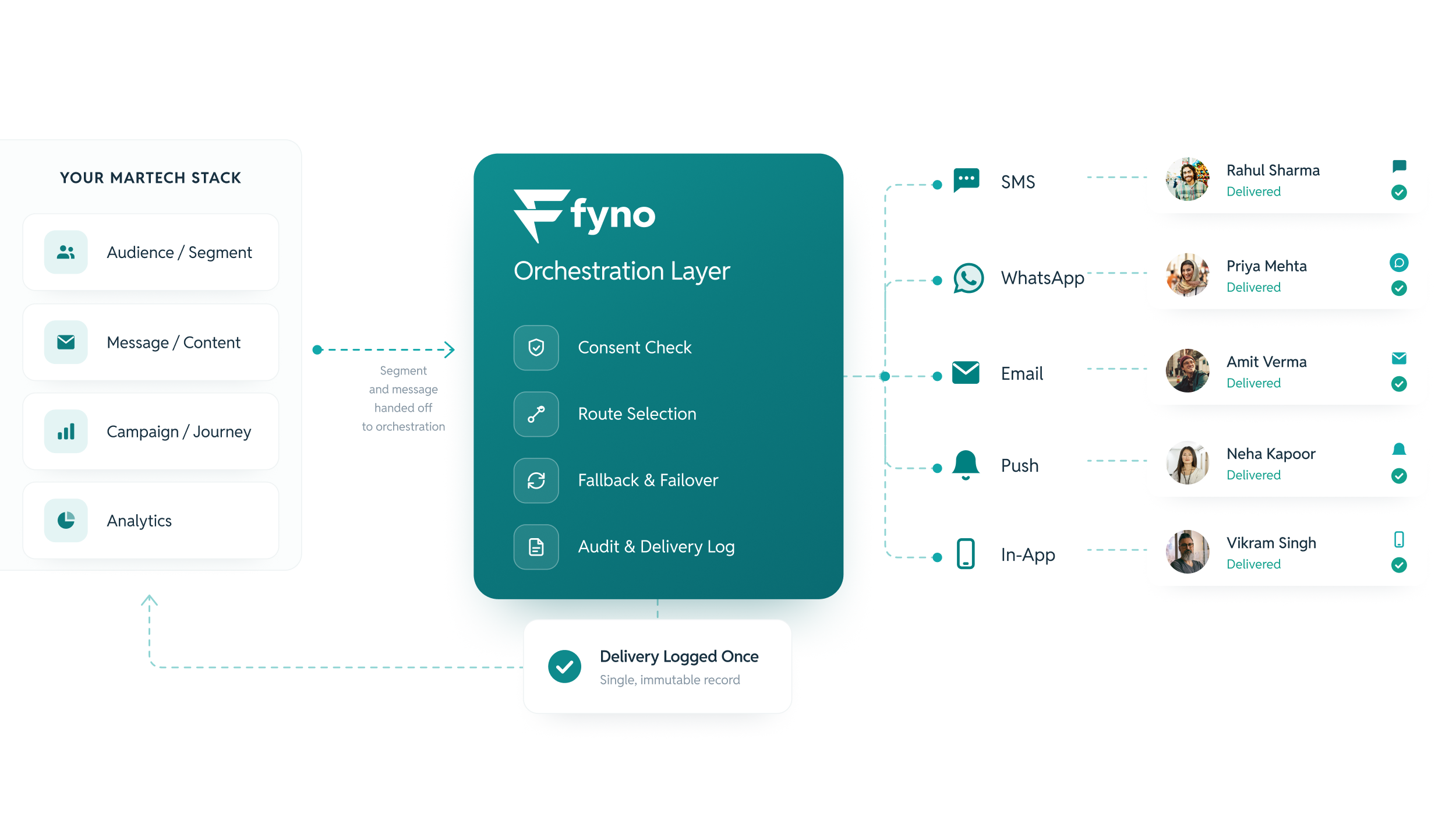
Martech picks the segment and the message, then passes it downstream. Orchestration enforces consent at the moment of send, selects the route, and logs the delivery once.
UPSTREAM: CORE DATA SYSTEMS
Where every send starts
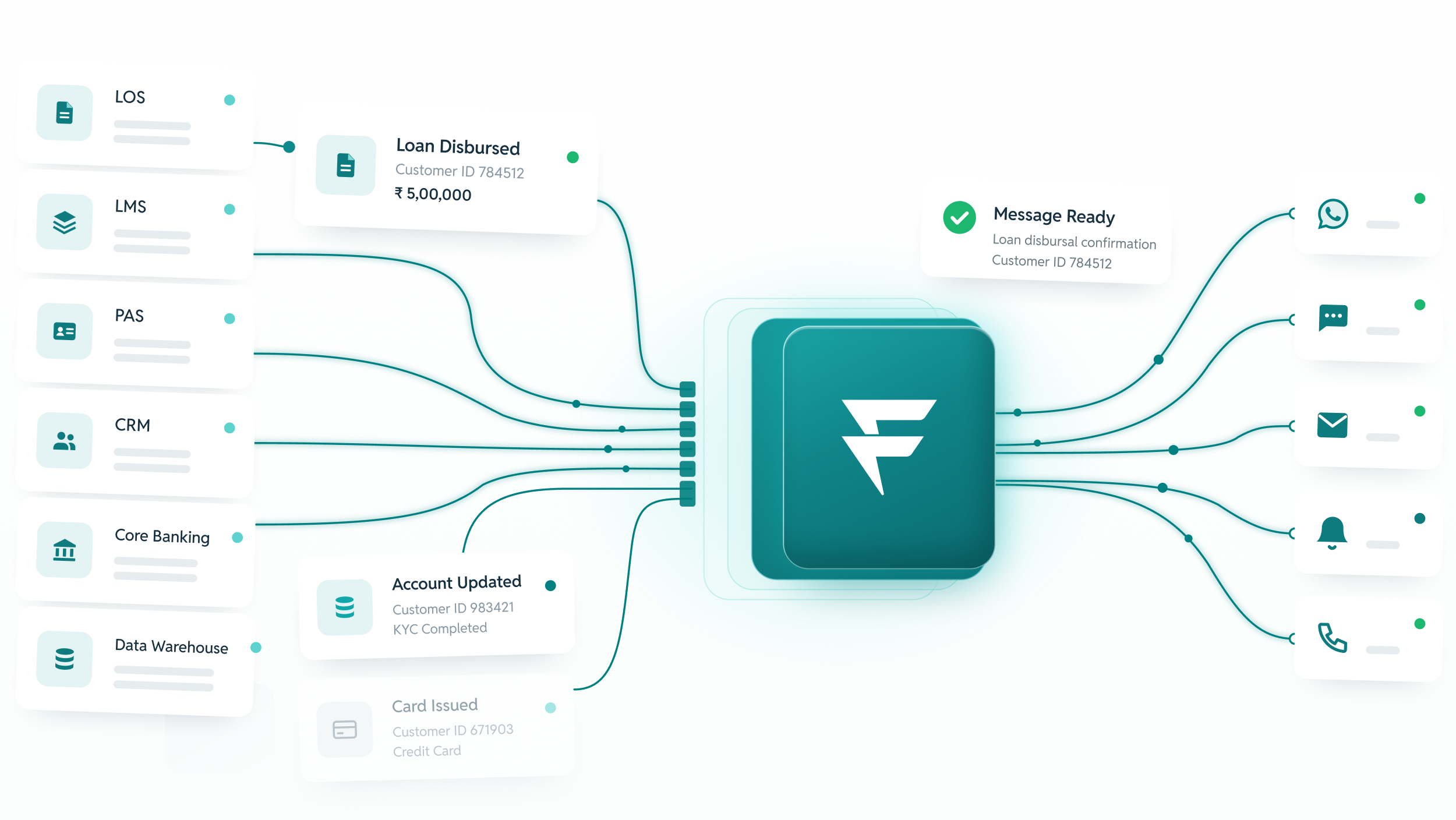
LOS, LMS, PAS, CRM, core banking and your data warehouse trigger the event. Orchestration reads it where it lives and takes over from there.
THE FOUR CONTROLS
Four controls no single vendor can give you
ROUTING ACROSS VENDORS
Performance and failover
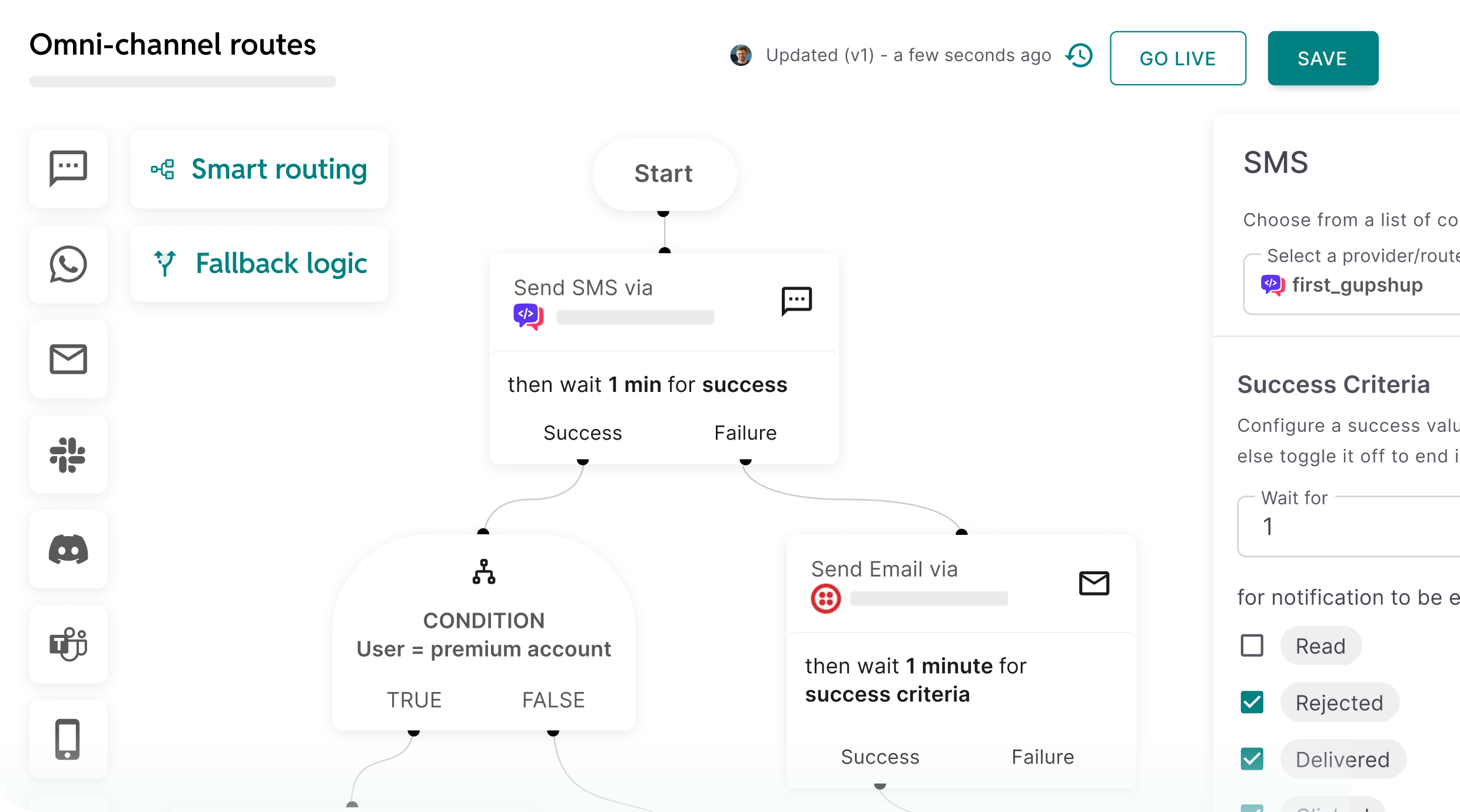
Route by performance and cost. Fail over across vendors in real time.
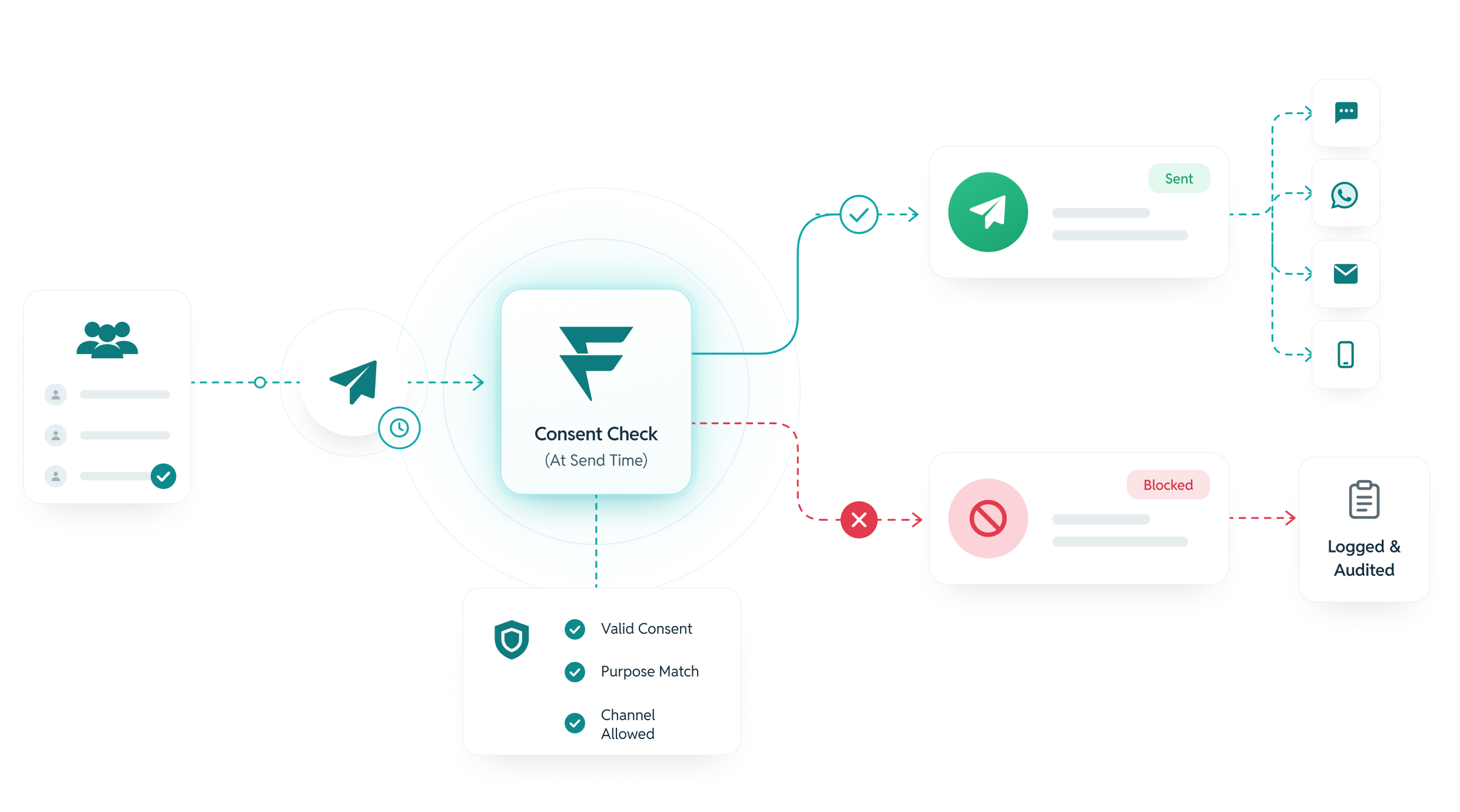
CONSENT AT SEND TIME
Checked at every send
Consent re-validated at the moment of send, not just at segmentation.
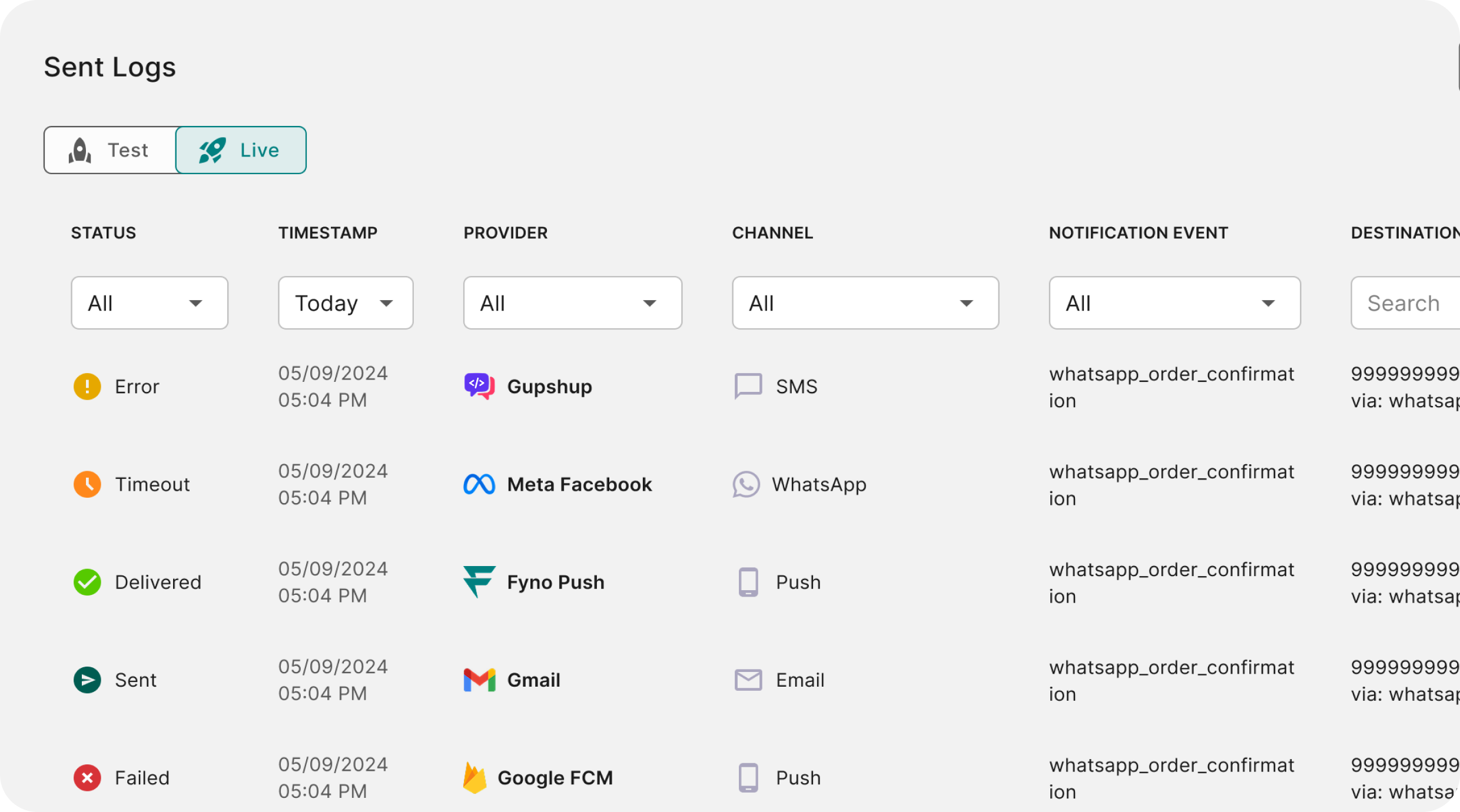
ONE TRAIL, EVERY VENDOR
One log across vendors
Every message, every vendor, in one timestamped, RBI-ready log.
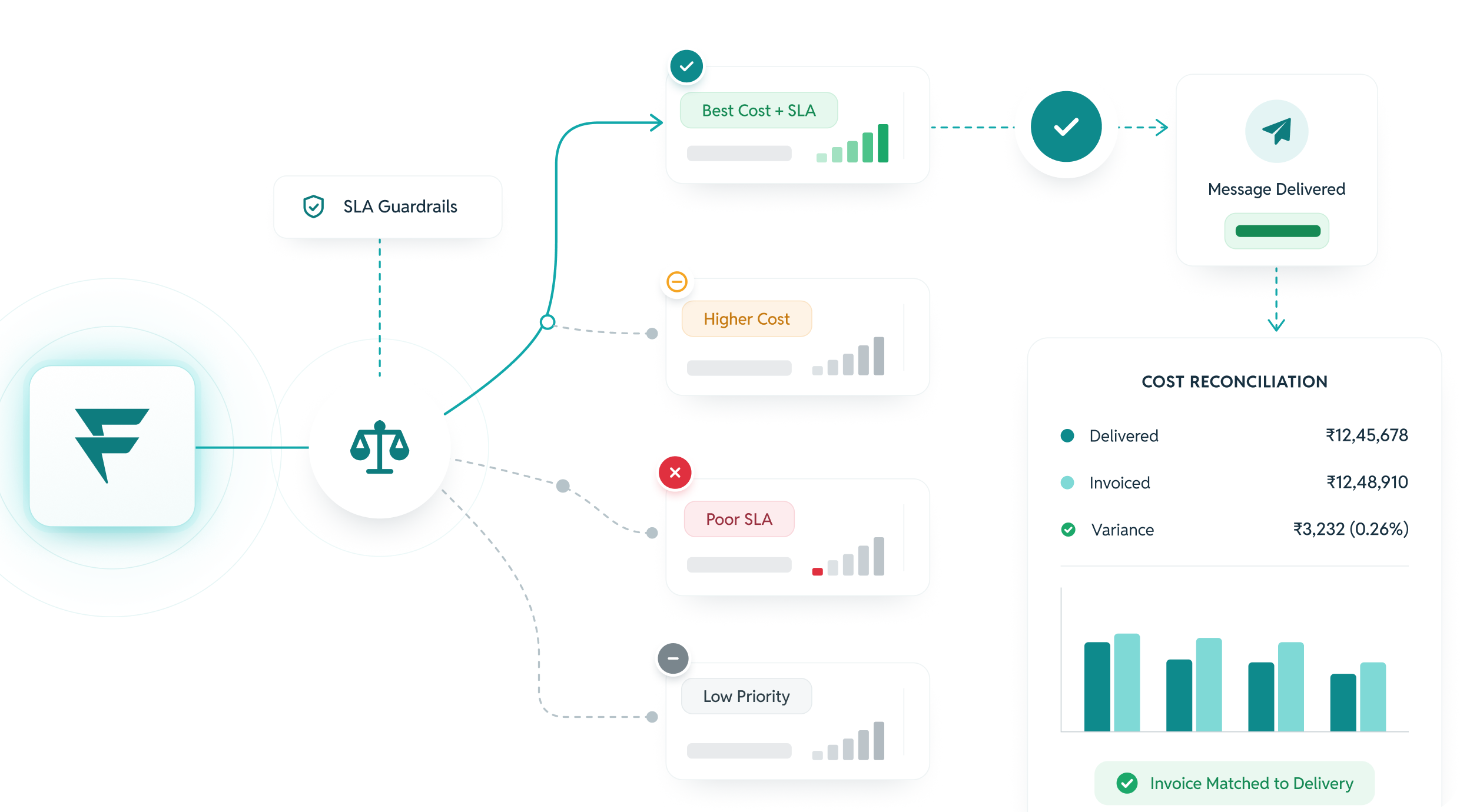
COST YOU CAN CONTROL
Route by cost, keep SLAs
Route by cost without breaking SLAs. Reconcile invoice to delivery.
While you’re still here, check out some other features!
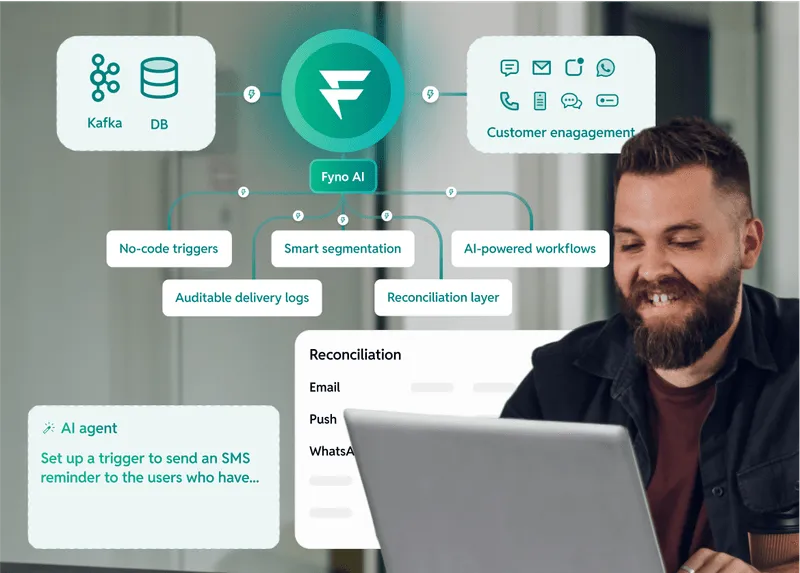
Securely automate communication operations (now with AI)
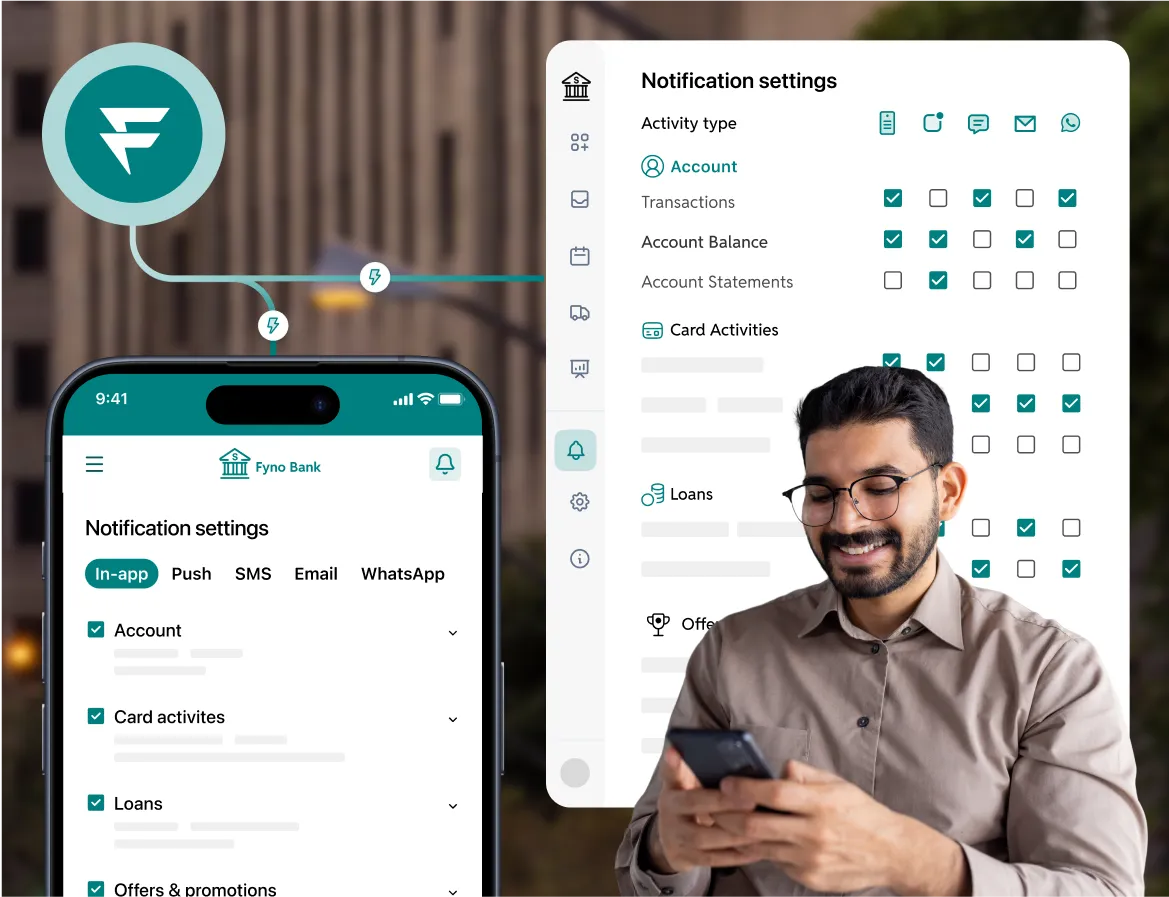
The most powerful notification center for your app
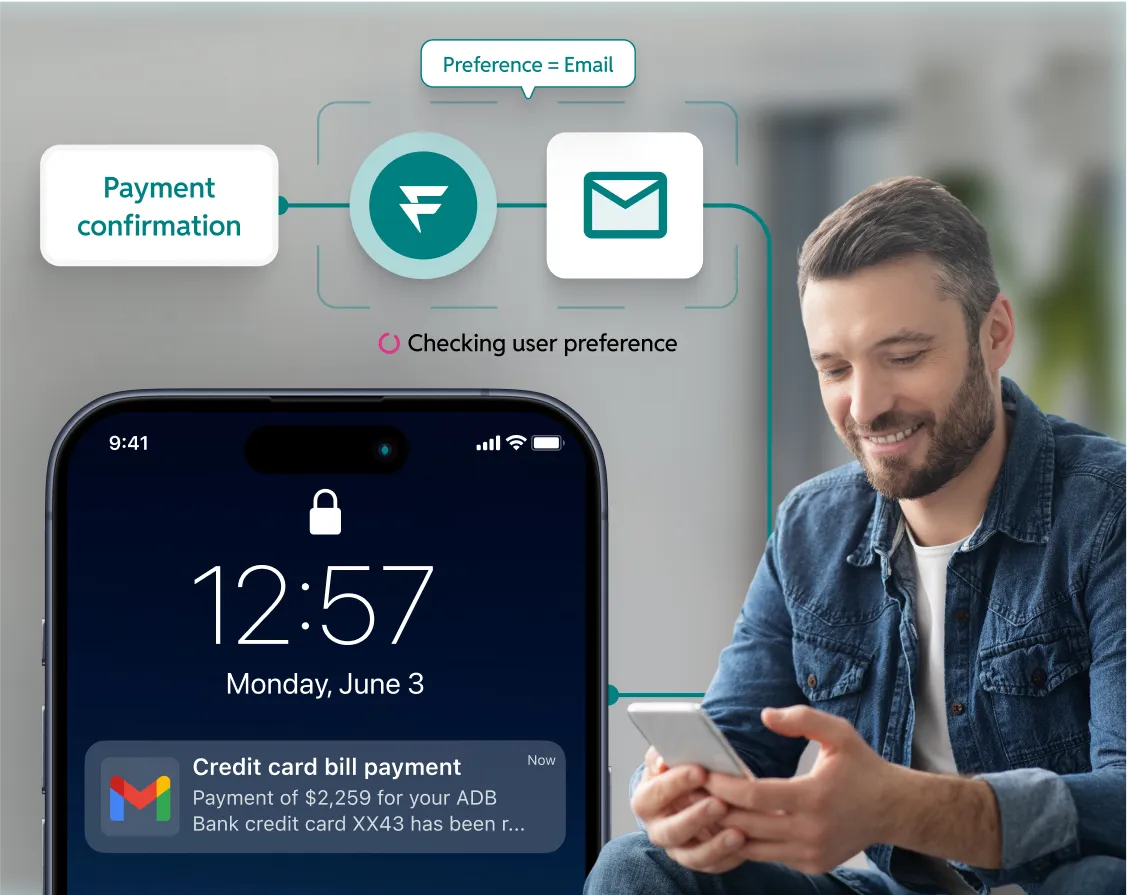
Build trust through intelligent preference management
One layer, every capability, page by page
Find the answers that you need
A communication orchestration platform is a middleware that sits downstream of your core data systems, your CCM and your martech stack, and upstream of the CPaaS vendors and channels that carry the message. It routes every message to the best channel and vendor, enforces consent at send time, and keeps one audit-ready trail, without replacing your existing stack. It governs four things across every vendor: routing, consent at send, audit, and cost. It does not deliver messages the way a CPaaS does, and it does not design campaigns the way martech does. It decides which vendor carries a given message, re-validates consent at the moment of delivery, normalises every delivery receipt into a single timestamped log, and routes by cost without breaking SLAs. For BFSI this is the layer that makes RBI, TRAI and DPDP obligations enforceable at send time rather than reconciled after the fact. Fyno is a communication orchestration platform built for banks, NBFCs and insurers.
A CPaaS is a delivery pipe. Sinch, Karix, Kaleyra, Gupshup and Infobip carry your message over SMS, WhatsApp or email once you hand it over. A CPaaS does not decide which vendor should carry a given message, does not re-check consent at the moment of send, and does not give you one audit trail across the other CPaaS vendors you also run. Its commercial model also works against you: a CPaaS earns on delivery volume, and therefore has no reason to route a message down a cheaper path. Orchestration sits one step upstream of CPaaS. Every routing, consent and cost decision is made before the message reaches the pipe. Orchestration decides how they are used, so that no single vendor becomes a point of failure or a compliance gap.
Customer Communication Management platforms such as Quadient and In10s compose documents: statements, letters, policy packs and templated correspondence. They are strong at content and formatting. They are not built to govern real-time transactional messaging across telecom vendors, enforce consent at the millisecond of send, or route an OTP through the fastest operator with automatic failover. CCM sits upstream. Orchestration sits downstream of it, between the composed document and the vendor that carries it. CCM decides what the document says. Orchestration decides how it goes out, through which vendor, and whether the customer's current consent permits it. The two are complementary. A bank keeps its CCM for statements and uses the orchestration layer to govern delivery of every alert, OTP and reminder across SMS, WhatsApp, email, push and in-app.
Martech and CRM platforms such as MoEngage and CleverTap decide the message and the audience: which segment gets which campaign, and when. That is journey strategy, not execution. They sit upstream, alongside your other core data systems. What they do not do is enforce consent at send time or produce a single audit trail across the vendors that actually deliver. Most martech checks consent once, at segmentation. If a customer opts out after the segment is built but before the message goes out, the campaign tool does not catch it. Orchestration does. It re-validates consent at the moment of send across every connected vendor and logs each delivery in one timestamped record. Your CRM stays the system of record. Orchestration governs what leaves it, so that DPDP consent and RBI audit requirements are enforced at delivery rather than assumed.
No. Orchestration is a control layer, not a rip and replace. It inserts one step between the systems you already run upstream and the vendors you already run downstream. Fyno is pre-integrated with major CPaaS vendors and supports direct operator connections, which RBI and TRAI recommend. You keep the vendors, contracts and channels you already run, and you keep your CCM and your martech. The layer sits in the middle and decides how they are used: routing traffic by performance and cost, failing over automatically when a vendor degrades, enforcing consent, and consolidating every vendor's logs into one audit trail. Nothing about core banking, your LMS or your CRM changes. Fyno Connect reads data where it lives and triggers messages from events, with no customer data moved into a new system. This is why enterprises adopt the layer without a migration project.
Consent at send means consent is re-validated at the moment a message is dispatched, not once when a segment or campaign is built. Consent changes. Under DPDP, consent must be valid at the time the message is sent, and a customer can withdraw it at any point. If consent is checked only at segmentation, an opt-out that happens minutes before delivery is missed and a non-compliant message goes out. The orchestration layer keeps consent and preference records live and checks them at dispatch, across every channel and vendor. When a customer withdraws consent, suppression applies within seconds everywhere. Every message that does go out carries a timestamped record linking the send to the consent status at that exact moment, which is the evidence a Data Protection Board inquiry asks for. The full DPDP compliance deadline is May 13, 2027.
You can, and several banks have started. The pattern is consistent: 12 to 18 months to a working MVP, and another 12 to 18 months to reach parity on routing, consent enforcement, audit and cost controls, at three to five times the cost of the platform. The build is not the hard part. Keeping it current is. Every vendor API change, every TRAI direction such as the November 2025 variable-tagging mandate, and every new channel becomes an engineering ticket on your roadmap instead of a platform update. Meanwhile the compliance clock does not pause. Buying the layer returns that engineering capacity to the products your customers pay for, and gives you the audit trail on day one rather than in year three.
Banks, NBFCs and insurers run more messaging vendors, more channels and more regulatory obligations than most sectors. One OTP failure is a service incident. One consent breach is an RBI or DPDP exposure, with DPDP penalties running up to INR 250 crore. Without orchestration, routing logic, consent enforcement and audit trails sit in each vendor's portal, and reconciling them for an audit is manual work across four to six logins with retention often capped at 90 days. The layer centralises the four controls regulators actually probe: how messages are routed, whether consent was valid at send, whether one immutable log exists per message, and whether communication cost can be attributed per business unit. A failed OTP is traced in under 30 seconds instead of days spent pulling reports from each vendor portal.
Upstream sit your core data systems: loan origination and management systems, policy administration, core banking, cards, internet and mobile banking, the data warehouse, your CRM and martech stack, and your CCM platform for composed documents. They generate the event and the content. Downstream sit the CPaaS layer and the channels that carry the message: SMS operators, WhatsApp business providers, email services, push providers, RCS and voice. They deliver what they are handed. The orchestration layer sits between the two. It reads the upstream event without moving customer data, applies the routing rule, re-validates consent at the moment of send, picks the downstream vendor by performance and cost, fails over when that vendor degrades, and normalises every receipt from every vendor into one timestamped log. Nothing upstream changes its job, and nothing downstream changes its contract. What changes is that the decisions between them stop living in six vendor portals and start living in one governed layer.
Discover insights
Learn how teams streamline communication, manage templates, and scale faster with Fyno.


.svg)